JNU Campus Erupts in Violent Clashes as Student Protest Escalates
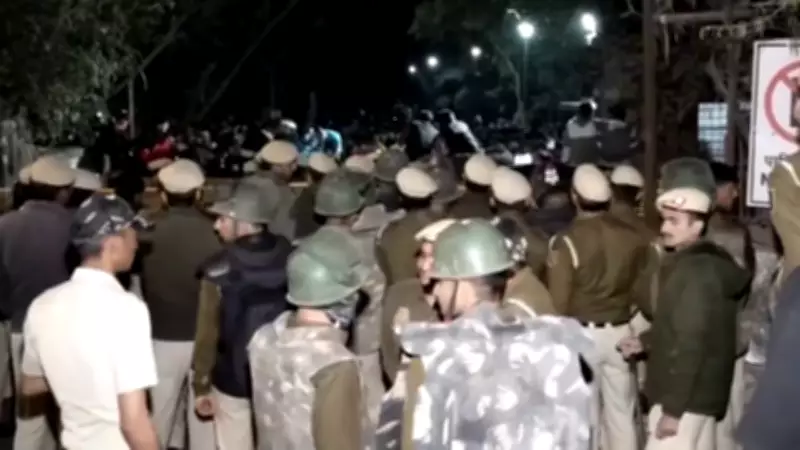
Tensions flared dramatically at Jawaharlal Nehru University (JNU) on Thursday, escalating into violent clashes between protesting students and Delhi Police. The confrontation resulted in the detention of 51 students and injuries on both sides, as confirmed by news agency PTI. The unrest has plunged the prestigious campus into chaos, highlighting deep-seated grievances and sparking widespread condemnation.
Protest March Sparks Heavy Police Response
The unrest began when the Jawaharlal Nehru University Students’ Union (JNUSU) organized a “Long March” from the campus to the Ministry of Education. Students were demanding the implementation of University Grants Commission (UGC) regulations, the proposed Rohith Act, and the resignation of Vice-Chancellor Santishree D Pandit. In response, Delhi Police set up multiple barricades and locked the main gate, deploying heavy security to prevent students from marching out of the campus.
Allegations of Violence and Injuries on Both Sides
According to police officials, the situation turned violent when protesters allegedly pelted sticks and shoes and physically assaulted officers. An FIR has been registered against the students involved. Police reported that around 25 personnel were injured, including senior officers such as ACP Ved Prakash, ACP Sanghamitra, SHO Atul Tyagi, and SHO Ajai Yadav. Shockingly, officials claimed that some officers were even “bitten” during the altercation.

Among those detained were JNUSU president Aditi Mishra and former president Nitish Kumar. Police stated that the students were stopped as they attempted to proceed towards the Ministry without obtaining proper permission, citing security concerns.
Students Allege Excessive Force and Denial of Medical Aid
The students, however, have vehemently denied the police narrative, alleging excessive and brutal force. In a strongly worded statement, JNUSU claimed that “more than 50 students” were detained and taken to “undisclosed locations,” raising concerns about their safety and legal rights. The union further alleged that injured students were deliberately denied medical assistance, exacerbating their suffering.
In a highly charged accusation, JNUSU also claimed that a portrait of B R Ambedkar was damaged during the police action. Videos circulating online appeared to show a photograph of Ambedkar being snatched amid the chaos, fueling outrage among student groups and civil society activists.
Campus Lockdown and Call for Intensified Struggle
Following the mass detentions, JNUSU called for a “complete lockdown” of the campus and announced a second march from the JNU Main Gate to Vasant Kunj Police Station. “We call upon all the students of JNU to intensify the struggle,” the union declared, urging students to gather in large numbers to protest what they describe as authoritarian crackdowns on democratic dissent.
University Administration Condemns Student Actions
The university administration swiftly condemned the protest, accusing JNUSU members of “vandalism and violence against campus property.” In a post on social media platform X, the university clarified that the students were demanding UGC regulations that are currently under a Supreme Court stay, emphasizing that the Vice-Chancellor and Registrar have no authority over those rules. The administration’s statement sought to deflect blame onto the students, framing the protest as unlawful and disruptive.
The incident at JNU underscores ongoing tensions between student activists and authorities, reflecting broader issues of governance, academic freedom, and student rights in Indian higher education. As both sides trade allegations, the campus remains on edge, with fears of further escalations looming large.