The Silent Cost of English-Only Schooling: A Kerala Man's Heartbreaking Language Loss
School days typically evoke warm memories of playground laughter, innocent crushes, and carefree recess conversations. However, for many students in India's English-medium education system, these memories may conceal a quiet, profound loss—the gradual erosion of their connection to their mother tongue. A recent viral story from Kerala has brought this painful reality into sharp focus, revealing how educational policies can create cultural disconnection.
Twelve Years of Schooling, Zero Fluency in Mother Tongue
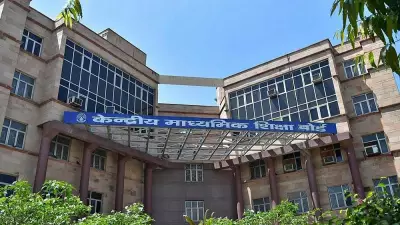
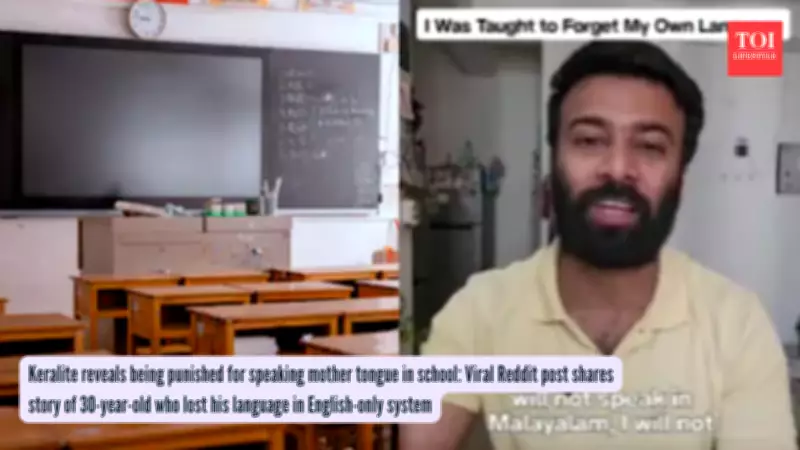
A 30-year-old man from Kerala has captured national attention with his emotional revelation about losing his native language despite growing up in his homeland. After completing all twelve years of his schooling at a Kendriya Vidyalaya (KV) institution in Kerala, he finds himself unable to read or write Malayalam proficiently. His Reddit post and accompanying video have sparked widespread discussion about language preservation in India's education system.
"I studied in a Kendriya Vidyalaya school in Kerala for all 12 years of my schooling," he shares in the viral clip. "In all these 12 years, I was never taught my own mother tongue, my own language, Malayalam—not how to read it, not how to write it."

Punishment for Speaking Malayalam: From Discipline to Internalized Shame
The man's experience goes beyond mere neglect of regional language instruction. He recalls specific punishments designed to discourage Malayalam usage within school premises. "In class 7, if we spoke in Malayalam in school, we were punished," he remembers vividly. "We had to write a hundred times, 'I will not speak in Malayalam'. Line after line, page after page, until the sentence stopped feeling like a punishment and started becoming a belief through repetition."
This repetitive disciplinary action had lasting psychological effects. "Till the language felt like something to be ashamed of, and I carry that," he confesses. The consequence was that he pieced together Malayalam only through daily life interactions, never receiving formal education in reading or writing his native language.
The Cultural Void: Standing Outside Your Own House Without a Key
The emotional impact of this language loss extends far beyond practical communication difficulties. The man describes feeling disconnected from his cultural heritage and literary traditions. "When you are separated from your mother tongue, you are not just losing words, you are losing a way of touching the world, a way of touching your soil," he poignantly observes.
This disconnection manifests most painfully in his relationship with Malayalam literature. "I cannot open a Malayalam book and let it breathe into me," he shares. "I still haven't read Madhavikutty or Basheer or K.R. Meera in Malayalam. I cannot feel the weight of the sentence, the way it was meant to be felt."
He uses a powerful metaphor to describe his predicament: "I am standing outside a house that was always mine, but I do not have the key. Like hearing birds of your land but not knowing their names. Like watching the rain but not knowing the word for the smell of wet earth in your language." This sense of being "a foreigner in your own land" creates what he describes as severe grief and pain, emphasizing that "your mother tongue is the thread that connects you to the soil. It is the soul of the land."
Social Media Reactions: Blame, Explanations, and Solutions
The viral post has generated extensive discussion across social media platforms, with users offering various perspectives on responsibility and solutions.
Criticism of School Policies: Many commenters condemned the punitive approach to regional languages in some educational institutions. One Reddit user wrote, "The whole system in some schools where they fine or punish students for speaking in Malayalam is the most redundant thing." Others pointed to structural issues within the Kendriya Vidyalaya system, noting that the CBSE two-language policy often prioritizes Hindi and English over regional languages like Malayalam or Marathi.

Parental Responsibility Debated: A significant portion of the discussion focused on parental roles in language preservation. "It's the parent's fault, simply. They could've taught him Malayalam at home," argued one commenter. Another shared a contrasting experience: "My kid goes to a German school. We speak Malayalam at home. She is learning to write Malayalam also. So I would say it is a choice."
Broader Societal Pressures: The conversation also touched upon societal attitudes that sometimes devalue regional languages. The man himself noted how some parents proudly boast about their children skipping mother tongue education, prioritizing English fluency for perceived global advantages. He admits to envying peers who maintained fluency in Malayalam while also mastering English.
The Larger Implications for India's Linguistic Diversity
This individual story reflects a broader tension in Indian education between global competitiveness through English and cultural preservation through regional languages. While English-medium schools in Kerala and elsewhere provide valuable skills for international opportunities, this case highlights how exclusive focus on English can come at significant cultural cost.
The emotional testimony serves as a reminder that language is not merely a practical tool for communication but a vital component of cultural identity, historical connection, and personal belonging. As India continues to navigate its multilingual reality in an increasingly globalized world, stories like this one prompt important questions about balancing practical education with cultural preservation in school curricula and family practices.