NCERT Swiftly Removes Controversial 'Judiciary Corruption' Content from Class VIII Textbook Following Supreme Court Outcry
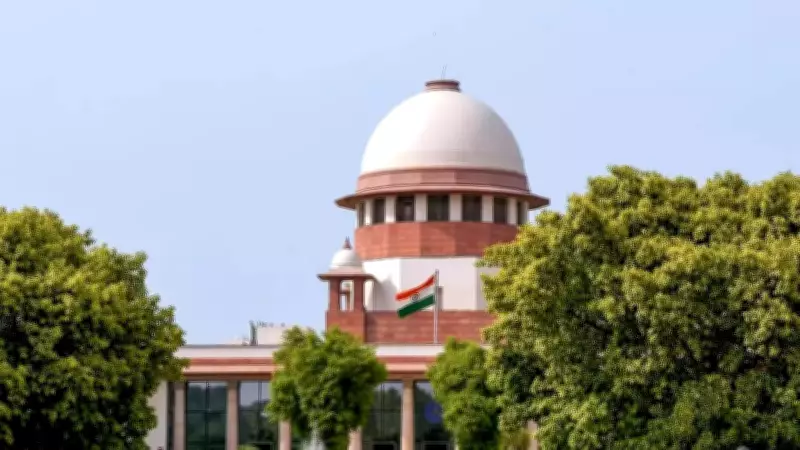
In a dramatic late-night move, the National Council of Educational Research and Training (NCERT) has suspended distribution of its newly released Class VIII social science textbook and removed references to "corruption at various levels of the judiciary" after facing severe criticism from the Supreme Court. The educational body acted swiftly following what Chief Justice of India Surya Kant described as a "deep-rooted conspiracy to defame" the judicial institution.
Supreme Court Takes Suo Motu Cognisance of Textbook Controversy
The controversy erupted when senior advocates Kapil Sibal, Abhishek Manu Singhvi, and Mukul Rohatgi brought the matter before a bench led by CJI Surya Kant at the commencement of judicial work on Wednesday morning. The advocates expressed grave concern that teaching impressionable young students about corruption in the judiciary would bring the institution into disrepute.
"We are deeply disturbed as members of this institution to find that children of Class VIII are being taught about corruption in the judiciary," Sibal told the bench, which included Justices Joymalya Bagchi and Vipul M Pancholi. "This is scandalous and highly objectionable when people repose maximum faith in the institution. We all have a great stake in this institution."

CJI's Strong Reaction and Government Response
A visibly upset Chief Justice Surya Kant responded with strong words, stating: "Judges of the constitutional and district courts are perturbed by this. I have taken suo motu cognisance of the issue. I will not allow anyone on earth to defame the institution or taint its integrity. Whosoever and however high it may be, I know how to deal with it."
The CJI revealed he had been receiving hundreds of calls and messages from citizens, judges, and judicial officers expressing serious concern about the textbook content. "Wait for a day. I have taken cognisance of it. The issue is definitely very concerning for every stakeholder and both the bar and bench," he added.
Facing mounting pressure from the judiciary, government sources expressed contrition, acknowledging that "the controversial section should not have been written." One source emphasized that textbooks should focus on "inspirational aspects" rather than highlighting institutional shortcomings in isolation.
NCERT's Official Response and Textbook Review Process
In an official statement, NCERT confirmed it had put on hold distribution of the textbook after "inappropriate textual material and error of judgement" were identified in the chapter on the judiciary. The council noted that the issue had been flagged both internally and by the Department of School Education and Literacy under the education ministry.
Sources familiar with the textbook development process expressed surprise that the controversial content had made it into the final publication, noting that as per standard protocol, such materials typically undergo multiple layers of vetting before being cleared for publishing. The inclusion was deemed "inappropriate" and unsuitable for school curriculum.
Judicial Concerns About Constitutional Integrity
During the hearing, Justice Joymalya Bagchi raised concerns about the textbook's approach to constitutional principles, specifically referencing the basic structure doctrine. He observed that "constitutional integrity to the basic structure is missing in the structure of the textbook."
Senior advocate Kapil Sibal suggested alternative approaches the textbook could have taken, proposing that the chapter could have instead:
- Focused on the working of the judiciary
- Educated children about challenges faced by courts in deciding cases
- Narrated how the institution has largely enjoyed public faith and confidence
The Supreme Court has listed the suo motu case for hearing on Thursday, indicating the seriousness with which the judiciary views this educational matter. The controversy highlights the delicate balance between academic freedom and institutional respect in educational materials designed for young, impressionable minds.