NCERT Withdraws Disputed Textbook Map Amid Historical Accuracy Debate
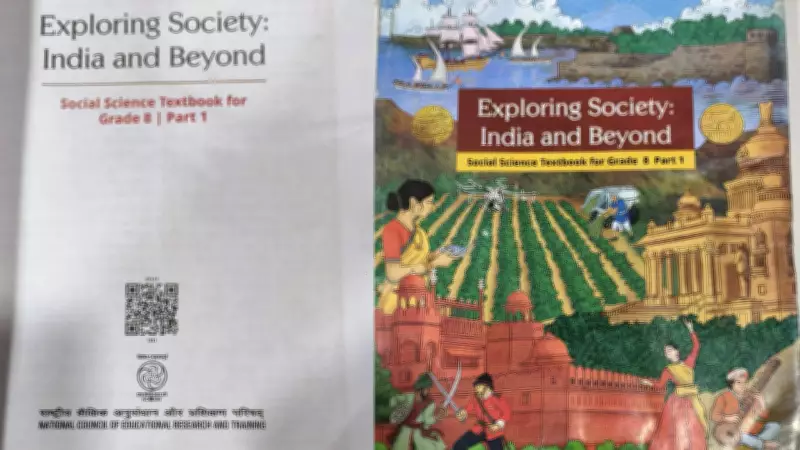
The National Council of Educational Research and Training (NCERT) has removed a controversial map from a Class 8 Social Science textbook that depicted the princely state of Jaisalmer as part of the Maratha Empire. The decision comes after sustained objections from historians, Rajput organizations, and former royal families of Rajasthan, who argued the portrayal distorted historical facts.
How the Jaisalmer Map Controversy Unfolded
At the center of the dispute was Map 3.11 in the textbook, which showed Jaisalmer under Maratha control. Critics, including Maharawal Chaitanyaraj Singh of the former Jaisalmer royal family, condemned it as "historically misleading and factually incorrect." The objections quickly spread, with former royal families from Mewar and Bundi also challenging the depiction of their regions as falling under Maratha administration.
Prominent figures such as Vishvaraj Singh Mewar, Rajsamand MP Mahima Kumari, and former Bundi royal Bhupesh Singh Hada formally submitted representations to the central government, urging Union Education Minister Dharmendra Pradhan to intervene. Historians from the region emphasized that there is no credible evidence of Maratha political presence, taxation, or military intervention in Jaisalmer, making the map academically unsound.

NCERT's Response and Lingering Demands
Faced with mounting criticism, NCERT has withdrawn the map from the revised digital edition for the 2025–26 academic session. While this corrective step has been welcomed locally, it has not fully quelled the controversy. Devendra Pratap Singh, Director of the Jaisalmer Fort Palace Museum, described the removal as necessary but argued that NCERT should also issue a formal apology for the error.
For many in Rajasthan, the issue extends beyond a single map. They point to historical events like the "Dhai Saka"—a moment of sacrifice and resistance in Jaisalmer's past—as evidence of the region's distinct political legacy. The debate underscores a broader concern: ensuring historical accuracy in school education to preserve regional identities and facts.
A Pattern of Textbook Controversies in India
This episode follows another recent NCERT controversy, where the council withdrew an entire Class 8 Social Science textbook after criticism over a chapter discussing corruption in the judiciary. In that case, NCERT issued an "unconditional and unqualified apology" and halted distribution nationwide.
These incidents highlight a recurring challenge for curriculum developers in India:
- Balancing academic freedom with political sensitivity
- Addressing popular perceptions and regional sentiments
- Ensuring textbooks reflect diverse historical realities
Given that NCERT books are used in central government schools and serve as guides for state boards and competitive exams, any perceived distortion can spark national debates. Over the years, controversies have frequently arisen over how history, politics, and institutions are portrayed in Indian textbooks.
The Larger Question: Who Owns History in School Education?
The Jaisalmer map dispute reflects a deeper issue: history is often subject to interpretation, especially as new discoveries emerge. When such interpretations enter school textbooks, they impact millions of students who rely on these materials for knowledge. This has led historians to advocate for a rigorous peer-review process for textbook content to ensure accuracy and objectivity.
In a country where history intersects with identity, politics, and regional pride, textbooks are more than educational tools—they shape collective memory. As India continues to revise its curriculum, the challenge remains clear: maintaining academic rigor while respecting the diverse historical narratives that define the nation.
The recent controversies serve as a stark reminder that teaching history in classrooms carries a public responsibility, where accuracy is not just an academic requirement but a foundational element of informed citizenship.