The arrival of a New Year is a whirlwind of excitement, filled with music, delicious food, and the sound of laughter. It's a perfect time for joy and celebration. For children, this festive period also presents a wonderful opportunity to learn new things and develop positive habits in a way that feels nothing like boring homework.
Transform Your Celebration with a Family Quiz Night
Looking for a unique way to elevate your New Year's celebration? Consider organizing a fun family quiz. While children are accustomed to taking tests in school, a quiz at home is an entirely different and enjoyable experience. It's a chance to laugh together, make guesses, learn fascinating facts, and engage in some friendly competition. This New Year, try turning learning into a game that every family member can enjoy.
In an age dominated by screens, quizzes offer a brilliant way to gently steer children away from gadgets. Participating in quizzes naturally increases a child's curiosity, helps build their confidence, and significantly boosts critical thinking skills. This engaging activity also fosters good study habits and strengthens social connections within the family unit.

Fascinating New Year Facts from Around the World
Do you know when New Year is celebrated globally? While many think of January 1st, different cultures mark the occasion at other times. For instance, the Chinese New Year will fall on February 17, 2026, and the Hindu New Year (as per one calendar) is on March 19, 2026.
Global traditions are incredibly diverse. In Brazil, people often wear white, yellow, and red clothing to attract good luck, money, and love for the coming year. Many celebrations also happen on the beach. In Denmark, a quirky tradition involves breaking plates on friends' doorsteps, which is believed to bring them good fortune. Meanwhile, eating grapes as the clock strikes midnight is a widespread practice for luck.
Some traditions can be startling for the young. In Japan, the New Year can be a scary time for kids due to the traditional Namahage (or Raiho-shin) ritual. During this, men dressed as terrifying, demon-like ogres wearing masks and straw capes visit homes to admonish lazy children.
Test Your Knowledge: A Special New Year Quiz for Kids
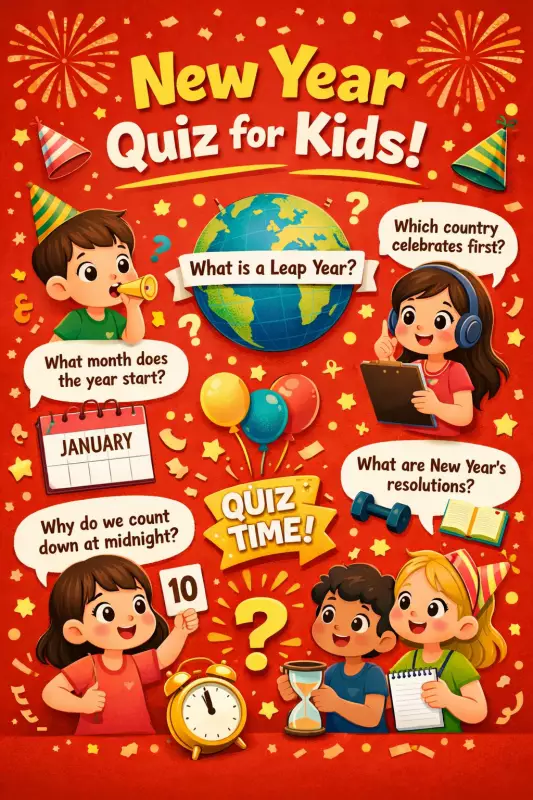
Ready for a challenge? Here are some questions to kickstart your family quiz night about New Year celebrations and calendars:
- What do people usually say at midnight on New Year’s Eve?
- Which animal is a symbol of the New Year in the Chinese calendar?
- Which day comes right before New Year’s Day?
- What calendar do most countries use today?
- Which country is one of the first to welcome the New Year?
- What is the name of the ball that drops in New York on New Year’s Eve?
- Which food is believed to bring good luck in the New Year in many cultures?
- Why doesn’t the New Year start at the same time all over the world?
- What would happen if we didn’t add leap years to the calendar?
- Why do some calendars have 365 days and others 366 days?
- Which civilisation first created a 12-month calendar?
- Why is January considered a month of new beginnings?
- What is one scientific reason people feel hopeful at the start of a new year?
- Why do calendars need rules instead of just counting days naturally?
Quiz Answers:

- Happy New Year
- It changes every year (e.g., Dragon, Rabbit, Tiger)
- New Year’s Eve
- Gregorian calendar
- New Zealand
- Times Square Ball
- Grapes, lentils, or noodles (varies by country)
- Because the Earth is divided into different time zones.
- The seasons would slowly shift and months wouldn’t match the weather.
- Because Earth takes about 365¼ days to go around the Sun.
- The ancient Romans (based on earlier calendars).
- It comes from Janus, the Roman god who looked to the past and future.
- The brain likes fresh starts and new timelines.
- Because Earth’s movement isn’t perfectly even, so rules keep time accurate.
Blending celebration with learning can make this New Year truly memorable for your children. So gather your family, ask these questions, and embark on a fun journey of knowledge and laughter together.