

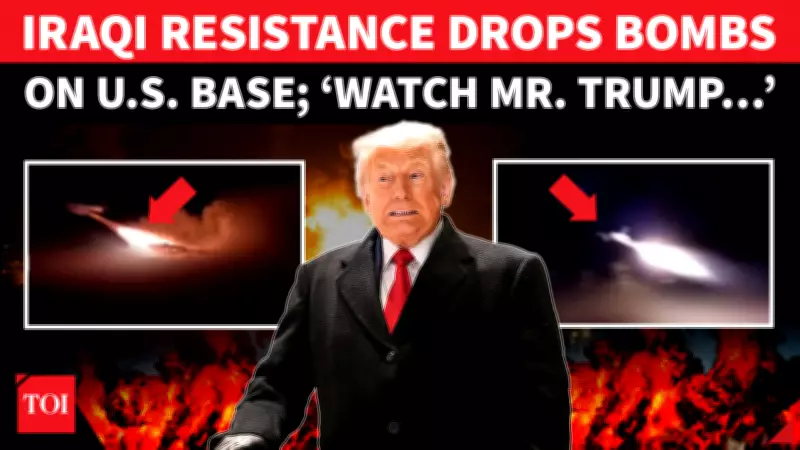
Iraqi Resistance Group Launches Coordinated Attacks on US Bases in Iraq
The Iraqi resistance faction known as Saraya Awliya al-Dam has officially claimed responsibility for a series of five aggressive assaults targeting United States military installations across Iraq. These bold operations were carried out in direct retaliation for recent American military actions aimed at Iranian leadership figures and their regional allies. The strikes represent a significant escalation in the ongoing shadow war between Iran and the United States, with local proxy forces now taking a more assertive role on the battlefield.
Strategic Targets Hit in Erbil and Victoria Base
Among the facilities attacked were a critical U.S. military compound located in Erbil, the capital of Iraq's Kurdistan region, and the strategically important Victoria Base. The selection of these high-value targets sends an unmistakable message of defiance and resistance against American military presence in the region. Each attack was meticulously planned to maximize both military impact and political symbolism, demonstrating the growing sophistication of Iran-aligned militia groups operating in Iraq.
Analysts Warn of New Chapter in Iran-US Proxy Conflict
Security analysts and Middle East experts are sounding alarms that these coordinated assaults mark a dangerous new chapter in the protracted conflict between Iran and the United States. What was once primarily a confrontation between state actors has now evolved into a complex proxy war where local militant groups are increasingly challenging American hegemony through both military force and political theater. Every rocket launched and every drone deployed now carries dual significance as both a tactical strike and a strategic statement in the broader regional power struggle.

The timing and nature of these attacks appear deliberately calculated to send a political message to the Trump administration, which has pursued an aggressive posture toward Iran throughout its tenure. By striking American bases while explicitly referencing U.S. operations against Iranian leadership, the Iraqi resistance is attempting to demonstrate that Tehran's allies can respond in kind to American pressure. This creates a dangerous cycle of escalation where military actions inevitably provoke corresponding retaliatory measures from opposing factions.
Regional Implications and Broader Conflict Dynamics
The expanding scope of these attacks suggests the Iran-U.S. confrontation is spreading beyond traditional battle lines and drawing in additional regional actors. As local resistance groups become more emboldened and better equipped, they present an increasingly formidable challenge to American military planners. The situation creates a precarious security environment where:
- Proxy forces can launch attacks with plausible deniability for their state sponsors
- Every military engagement carries significant political ramifications
- The risk of miscalculation and unintended escalation grows exponentially
- Regional stability becomes increasingly fragile as multiple conflicts intersect
Military strategists note that the Victoria Base attack in particular represents a concerning development, as this facility serves as a crucial logistical hub for American operations throughout the region. Its vulnerability to militia strikes raises serious questions about force protection measures and the long-term sustainability of the U.S. military footprint in Iraq and neighboring countries.
Security Situation Continues to DeteriorateWith tensions between Washington and Tehran showing no signs of abating, and with regional proxy groups growing more capable and confident, security experts predict further attacks on American installations in the coming months. The Iraqi resistance's successful coordination of multiple simultaneous strikes demonstrates organizational capabilities that exceed previous assessments, suggesting these groups have benefited from enhanced training, intelligence sharing, and possibly more advanced weaponry from their Iranian patrons.

The expanding conflict now threatens to draw in additional regional players and could potentially destabilize already fragile governments throughout the Middle East. As both sides continue to test boundaries and probe for weaknesses, the risk of a major confrontation that spills beyond current containment measures grows with each passing week.





