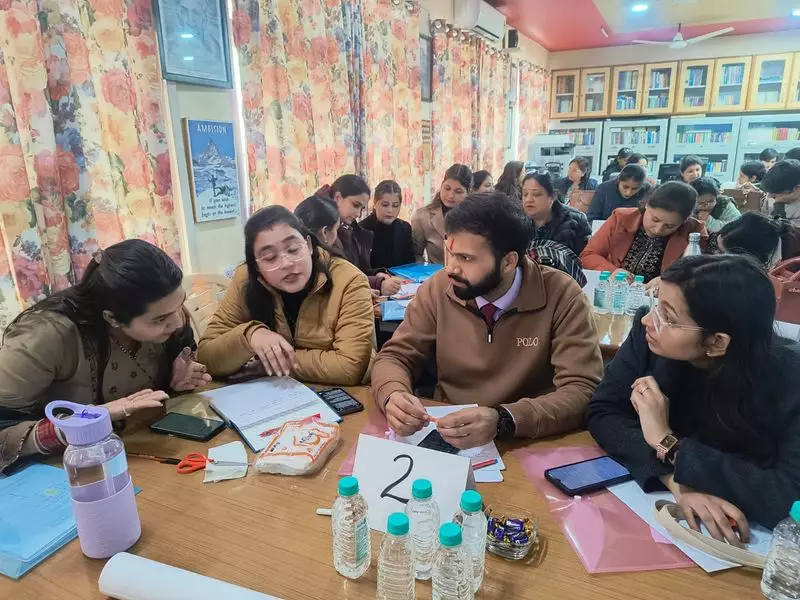
The State Council of Educational Research and Training (SCERT) Punjab has taken a significant step towards enriching classroom pedagogy by organizing a specialized capacity building programme focused on art integration. This initiative, held recently, aimed to equip educators with innovative techniques to make learning more engaging and effective for students across government schools.
Empowering Educators with Creative Tools
The programme saw the participation of over 100 dedicated professionals, including District Institute of Education and Training (DIET) lecturers and master trainers from various districts. The primary objective was to build a robust resource pool of trainers who can cascade the knowledge of art-integrated learning to teachers at the grassroots level. This train-the-trainer model is designed to create a widespread impact, ensuring that the benefits of creative pedagogy reach every classroom.
The resource persons for this pivotal workshop were Dr. Anuradha Gupta and Dr. Rajni Kaushik from the Department of Fine Arts at Punjabi University, Patiala. Their expertise provided the participants with both theoretical understanding and practical skills. The sessions were meticulously planned to cover the core concepts of the National Education Policy (NEP) 2020, which strongly advocates for the integration of arts as a cross-curricular pedagogical tool to foster holistic development.

Aligning with National Education Policy 2020
A central theme of the capacity building programme was the alignment of teaching practices with the visionary framework of the NEP 2020. The policy emphasizes moving away from rote learning and moving towards a more experiential, inquiry-based, and creative approach to education. Art integration is seen as a key driver in this transformation, helping to develop critical thinking, creativity, and socio-emotional skills in students.
Participants were trained on how to seamlessly weave various art forms—such as visual arts, music, theatre, and dance—into the teaching of standard academic subjects like languages, mathematics, science, and social studies. This methodology not only makes complex concepts easier to grasp but also caters to diverse learning styles, ensuring no child is left behind.
The programme underscored the importance of making education a joyful and immersive experience. By using art as a medium, teachers can stimulate students' imagination and curiosity, leading to deeper engagement and better retention of knowledge. The workshop included hands-on activities and collaborative planning sessions where educators designed sample lesson plans incorporating art-based strategies.
Building a Sustainable Model for Educational Reform
The capacity building initiative by SCERT Punjab is not a one-off event but part of a larger, sustainable strategy for systemic educational reform. The master trainers and DIET lecturers who attended are now expected to conduct similar workshops in their respective districts, thereby multiplying the reach of the programme. This cascading effect is crucial for building statewide capacity and ensuring the consistent application of art-integrated learning principles.
The focus on government school teachers is particularly significant, as it aims to bridge resource gaps and provide equitable access to innovative teaching methods for all students, regardless of their socio-economic background. This initiative promises to revitalize the classroom environment, making it more dynamic and student-centric.
In conclusion, SCERT Punjab's capacity building programme on art integration marks a forward-thinking move in the state's educational landscape. By empowering its educators with creative tools and aligning with national policy goals, Punjab is laying a strong foundation for nurturing well-rounded, creative, and future-ready citizens. The success of this workshop is a positive indicator of the state's commitment to transforming its school education system for the better.