UP Board Successfully Concludes High School and Intermediate Examinations
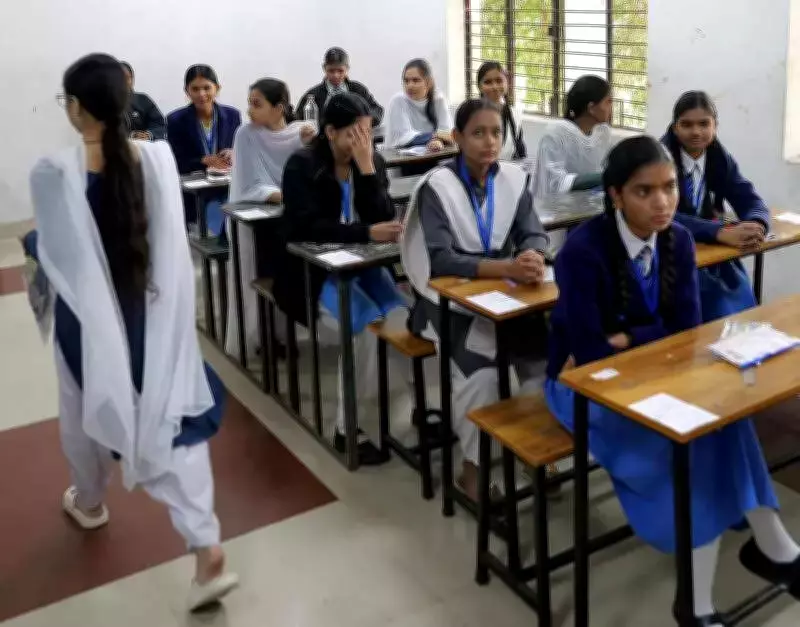
The Uttar Pradesh Secondary Education Board (UP Board) has successfully wrapped up its High School and Intermediate examinations across the state, marking a significant achievement in maintaining integrity and transparency. The exams, which concluded on Thursday, saw massive participation from students, with nearly 26 lakh candidates appearing for the High School tests and around 24.5 lakh for the Intermediate level.
Robust Security Measures Implemented
Board secretary Bhagwati Singh highlighted that despite challenges from copying mafias, solver gangs, proxy candidates, and other disruptive elements, the examinations were conducted in a controlled environment. For the first time, mobile network jammers were installed at 20 examination centres in four districts: Prayagraj, Kaushambi, Ghazipur, and Jaunpur, to prevent electronic device misuse during the tests.
Elaborate security arrangements were made to ensure the sanctity of the exams. The examinations took place at 8,033 centres, covering approximately 1.22 lakh rooms and campuses. These locations were equipped with over 2.89 lakh CCTV cameras fitted with voice recorders, enabling 24×7 online monitoring. This strict vigilance helped authorities detect only 49 cases of proxy candidates statewide, with FIRs lodged under the Uttar Pradesh Public Examination (Prevention of Unfair Means) Act, 2024. Additionally, 18 candidates were caught using unfair means.

Multi-Layer Monitoring and Innovations
A comprehensive multi-layer monitoring system was established to supervise the examination process. Control rooms were set up in every district, while a state-level control room operated from a camp office in Lucknow. Continuous monitoring was also conducted through command and control centres at the board headquarters in Prayagraj and regional offices in Meerut, Bareilly, Prayagraj, Varanasi, and Gorakhpur.
The board introduced several security innovations this year. Reserve sets of question papers for all subjects were made available at all examination centres. Answer sheets were printed in A4 portrait format for the first time, featuring micro-printed margin lines with the board's markings to prevent tampering. To further enhance security, answer booklets included QR codes, serial numbers, page numbers, and the board's logo on each page, and were produced in four different colors for easier identification and monitoring.
Addressing Misinformation and Evaluation Plans
In another significant step, marks for Intermediate practical examinations were uploaded online by examiners through a dedicated portal and mobile app. To counter misinformation on social media, the board formed a Quick Response Team at its headquarters. This team monitored online platforms during the examination period and took action against YouTube channels circulating misleading or edited question papers falsely claimed as leaked board papers, with FIRs registered against such channels.
Singh announced that the evaluation of answer sheets will be carried out from March 18 to April 1 at 250 evaluation centres across the state. Answer booklets will be dispatched from 75 collection centres between March 15 and March 17, with round-the-clock armed police deployment at evaluation centres to ensure security. For High School evaluation, around 4,300 head examiners, 8,550 deputy head examiners, and 83,800 examiners were appointed. Similarly, at the Intermediate level, about 2,590 head examiners, 5,300 deputy head examiners, and 48,990 examiners were assigned evaluation duties.
Show-cause notices were issued to 16 centres in 12 districts for failing to comply with standard operating procedures, and complaints related to copying were received from 17 centres in 11 districts, underscoring the board's commitment to maintaining exam integrity.