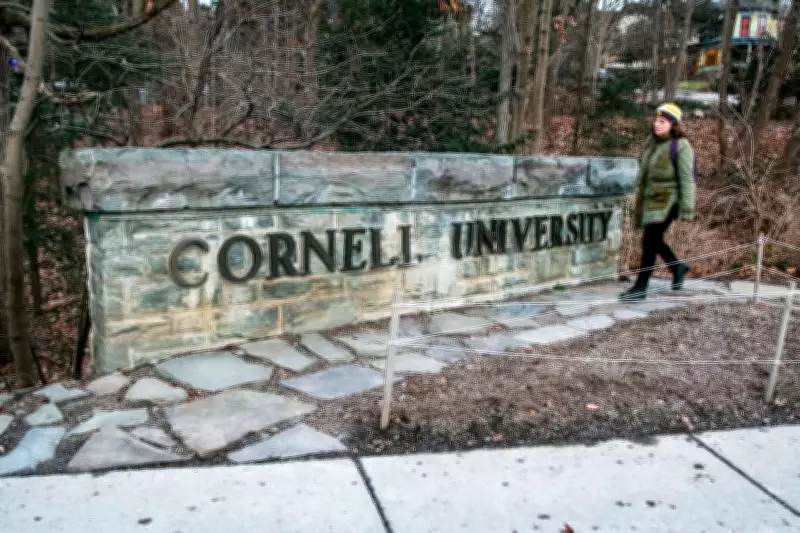
Cornell University Confronts Federal Lawsuit Over Faculty Hiring Discrimination Allegations
Cornell University is currently embroiled in a significant federal lawsuit that accuses the institution of systematically excluding White candidates from consideration for a faculty position. This legal action brings to the forefront complex questions regarding how diversity, equity, and inclusion initiatives intersect with established civil rights legislation in academic hiring environments.
Details of the Discrimination Complaint
The complaint, formally filed as Wright v. Cornell University last week, presents serious allegations against the Ivy League institution. According to the lawsuit, Cornell permitted diversity, equity and inclusion administrators to compile an interview list consisting exclusively of "underrepresented minority scholars." The legal filing contends that Cornell "intentionally discriminated against qualified candidates by brazenly refusing to consider white candidates," which potentially violates Title VII of the Civil Rights Act of 1964.
The plaintiff, who has chosen to pursue this case with legal representation from the America First Policy Institute—a think tank established by advisers to former President Donald Trump—asserts that he possessed "highly qualified" credentials for the faculty role. He further claims he would have submitted an application had the position been publicly advertised in accordance with standard university procedures.

Allegations Regarding Posting Policy Violations
The lawsuit extends beyond racial discrimination allegations to include claims about procedural irregularities. The complaint references internal university emails that allegedly demonstrate Cornell kept the faculty opening confidential, despite having an internal policy mandating that all faculty vacancies be posted on the university's official website for a minimum of five business days.
According to the plaintiff's argument, this alleged failure to properly advertise the position prevented him and other potential applicants from competing for the opportunity. This procedural aspect adds another layer to the legal challenge facing the prestigious institution.
Broader Context of DEI Program Scrutiny
This case emerges during a period of intensified examination of diversity, equity and inclusion programs within higher education institutions and corporate workplaces nationwide. Multiple recent legal challenges have contended that certain DEI practices may conflict with Title VII provisions, which explicitly prohibit employment discrimination based on race, color, religion, sex and national origin.
The U.S. Equal Employment Opportunity Commission has actively encouraged White men who believe they have experienced workplace bias to file formal claims with the agency. Early outcomes from such discrimination claims have produced mixed results, reflecting the complex legal landscape surrounding these issues.
Legal and Institutional Responses
In response to this evolving enforcement climate, employment law attorneys have advised educational institutions and employers to thoroughly reassess their hiring policies and diversity initiatives. Jonathan Segal, a partner at Duane Morris and managing principal of the Duane Morris Institute, emphasized in an August 2025 opinion piece for HR Dive that organizations should critically review whether any initiatives provide preferential treatment based on protected characteristics.
Potential Legal Precedents and Implications
The Cornell lawsuit is poised to test how judicial bodies evaluate hiring practices that prioritize diversity objectives against statutory protections that apply equally to all applicants. The case addresses not only the specific faculty search in question but also explores the permissible boundaries of lawful DEI efforts during a period characterized by increased litigation and political attention toward diversity initiatives.
This legal challenge represents a significant moment for higher education institutions nationwide as they navigate the complex intersection of diversity goals, equal opportunity requirements, and evolving legal interpretations of civil rights protections in academic employment contexts.