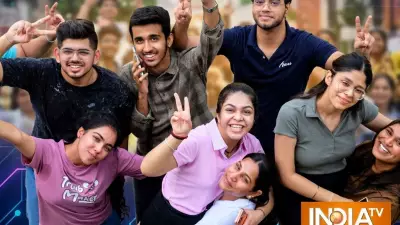
India stands at a pivotal moment in its educational history, witnessing an unprecedented transformation that promises to reshape learning for generations to come. With forty million students currently enrolled in higher education institutions across the nation, this number is projected to soar to seventy million by 2035, creating an educational ecosystem larger than the entire population of many European countries.
The Dawn of a New Educational Era
This remarkable surge in student enrollment represents more than just quantitative growth; it signifies India's evolution from merely expanding educational access to fundamentally redefining learning paradigms for the world's largest youth population. The recent University Grants Commission regulations have opened doors for prestigious international universities to establish full-fledged campuses within India's borders, creating opportunities for global-standard education delivered at Indian costs, by Indian talent, and tailored to Indian aspirations.
Reversing the Brain Drain and Financial Outflow
For decades, India has witnessed a significant outflow of both talent and capital in pursuit of international education. More than 1.3 million Indian students study abroad annually, spending approximately $47 billion on tuition and living expenses, which constitutes nearly 1.7% of the nation's GDP flowing outward. The new regulatory framework aims to transform this dynamic by bringing world-class education directly to Indian soil.

Under the National Education Policy 2020 and UGC's enabling framework, universities ranked within the global top 500 can now establish comprehensive campuses in India, maintaining identical curriculum standards, faculty qualifications, and degree accreditation as their home institutions. Already, three international universities have established operations, with seventeen more expected within the next year, meaning some of the world's most prestigious educational institutions will soon be operating within India's borders.
Tamil Nadu: Leading the Educational Transformation
Tamil Nadu emerges as one of the most compelling regions driving India's higher education revolution. The state boasts an impressive Gross Enrolment Ratio of 47%, significantly surpassing the national average of 28.4%. Even more remarkable is the dramatic increase in government school students entering higher education, which has risen from 45% in 2021-2022 to 74% in 2023-2024.
These statistics reflect not merely improved access but a profound cultural shift that values education as a transformative pathway to personal and societal advancement. Tamil Nadu's robust network of universities, strong faculty ecosystem, and deep industry connections across technology, textiles, automotive, logistics, and manufacturing sectors create an ideal environment for international universities to establish operations.
Operational Campuses and Future Expansion
The transition from policy to practice is already underway with several international campuses becoming operational. Southampton University has established its presence in Gurgaon, while Deakin University and Wollongong University have set up operations in GIFT City, Gujarat. Numerous additional campuses are scheduled to launch by 2026, creating a growing network of international educational institutions across India.
These global universities are bringing more than just academic programs; they're introducing their extensive industry networks to Indian students. Southampton's strong connections with global firms like Deloitte, PwC, and Investec will facilitate real-time consulting projects, internships, and corporate immersion opportunities. Similarly, institutions like Bristol, York, and Liverpool are exploring partnerships with India's technology, analytics, and financial sectors, creating seamless pathways from education to employment.

From Student Exporter to Global Education Hub
If implemented with consistent quality and equitable access, this educational transformation could fundamentally shift India's position from being the world's largest exporter of students to becoming a global center of higher learning excellence. For the first time in history, top-tier international universities are not merely recruiting Indian talent abroad but are establishing physical presence within India to build, collaborate, and contribute to the nation's growth narrative.
This change transcends institutional reforms; it represents a strategic investment in building a future-ready India where global learning standards converge with local opportunities. Students across diverse regions, whether in Coimbatore, Chennai, Chandigarh, Bengaluru, Kolkata, or Rajasthan, can now aspire to world-class education without geographical or financial barriers.
India has opened its doors to global educational excellence, and the world is responding with enthusiasm. The journey toward accessible, affordable, and internationally recognized education has commenced, promising to democratize learning opportunities for millions of aspiring students across the nation and potentially serving as a model for educational transformation throughout the global south.