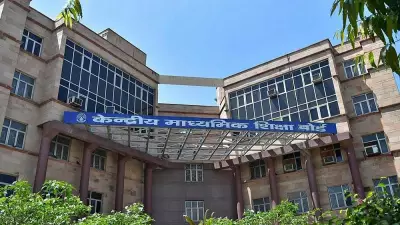
Kashmir's BEd Education Faces Major Crisis as University Limits Admissions to Just Two Colleges
The University of Kashmir (UoK) has triggered a significant upheaval in the region's teacher education landscape with its latest BEd admission notification for the 2025-2027 session. The controversial decision restricts applications to only two private colleges that are recognized by the National Council for Teacher Education (NCTE), resulting in the large-scale de-affiliation of approximately 55 institutions across Jammu and Kashmir.
Far-Reaching Consequences for Employment and Higher Education
This dramatic reduction in recognized BEd colleges carries profound implications for multiple sectors:
- Employment crisis affecting thousands of teachers and non-teaching staff
- Diminished capacity for private higher education in the region
- Reduced attractiveness for students from outside Jammu and Kashmir
- Potential shortage of trained educators for local schools
Professor C L Vishen, president of the Kashmir Private BEd Colleges' Association, revealed that about 75 BEd colleges were operating in the Valley before 2019. The situation changed dramatically after the nullification of Article 370, when NCTE norms became applicable to Jammu and Kashmir.

The Land Transfer Controversy and Legal Challenges
The primary reason for the shrinking number of colleges, according to officials, is that most institutions failed to meet the NCTE requirement of transferring land to the college trust. However, Professor Vishen presents a compelling counter-argument regarding the 2014 NCTE Amendment Act.
- The land transfer provision in the 2014 amendment should not have retrospective effect in Jammu and Kashmir
- Most colleges in Kashmir were established before 2014
- Despite repeated representations to NCTE, colleges have received no formal response
- Even the Chief Minister has recommended their case to Union Education Minister Dharmendra Pradhan without resolution
Institutions on the Verge of Closure
Syed Masroor Andrabi, chairperson of Chinab Valley College of Education, emphasized that BEd colleges in Kashmir now stand at the brink of permanent closure. "This is not merely an academic concern but a serious employment and social crisis," Andrabi stated. "These institutions sustain thousands of students, teachers, and non-teaching staff while serving as a crucial pipeline for trained educators in our schools."
University's Perspective and Future Possibilities
A senior UoK official provided context to the current situation, explaining that after Article 370's nullification, NCTE had granted repeated relaxations to colleges over several years. These extensions allowed institutions time to complete necessary documentation, including the crucial land transfer to college trusts.
Key points from university officials:
- Colleges had multiple opportunities to fulfill requirements but failed to do so
- The land transfer process becomes irrevocable once completed, causing hesitation among some institutions
- Admissions for the current academic year have already concluded
- Colleges that fulfill requirements by next June will be permitted to admit students again
The standoff between private BEd colleges and regulatory authorities continues to unfold, with the immediate future of teacher education in Kashmir hanging in the balance. The resolution of this crisis will significantly impact not only educational institutions but also the broader employment landscape and quality of education throughout the region.