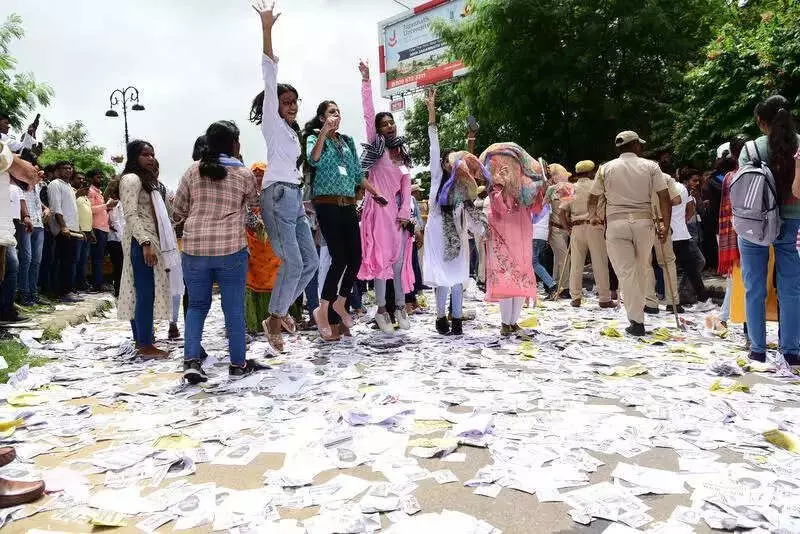
The Rajasthan High Court has issued a significant directive aimed at reviving student union elections at Rajasthan University (RU) and its affiliated colleges, eliciting a spectrum of reactions from student leaders. While some hail the order as a landmark victory for campus democracy, others remain cautiously optimistic, questioning whether it will translate into tangible electoral action in the upcoming academic session.
Court Mandate for Dialogue and Framework
In a pivotal move, the High Court, on Friday, instructed the vice-chancellors and deans of student welfare to organize a crucial meeting with student representatives. This meeting is scheduled for January 19, with the explicit goal of formulating a practical and feasible mechanism for conducting student union elections in the coming years. The court was disposing of petitions that had demanded immediate elections.
Furthermore, the bench has given the university authorities a strict timeline. They are required to finalize an implementable election framework within 15 days following the January 19 conclave. This directive places the onus squarely on the administration to engage constructively with the student body.

A Victory for Some, A Wait-and-See for Others
The petitioner in the case, Jai Rao, celebrated the court's intervention as a major triumph. He emphasized that the directive for university officials to collaborate with student leaders to create a workable modus operandi is a win for all students eager to engage in campus politics. His counsel, Shantanu Pareek, reinforced this view, stating that the court's orders have effectively laid the groundwork for student union elections to be held in future academic sessions.
However, the sentiment is not universally jubilant. Shubham Rewar, a student leader who previously undertook a hunger strike to press for elections, voiced a more measured perspective. He pointed out that students have been demanding elections for an extended period, and even now, the court's order merely initiates another round of deliberations with the administration. Rewar stated he would reserve judgment until after the January 19 meeting to see if it yields concrete results.
Uncertainty and Anticipation Ahead of Key Meeting
A sense of ambiguity persists among several students on the ground. One student leader, who chose to remain anonymous, highlighted that the High Court's directive contains several conditional aspects. According to them, the true implications and the path forward will only become clear once the proposed meeting between the administration and student leaders takes place. The campus atmosphere is now one of anticipation, with all stakeholders keenly awaiting the outcomes of the January 19 dialogue, which will determine the future of student electoral politics at Rajasthan University.