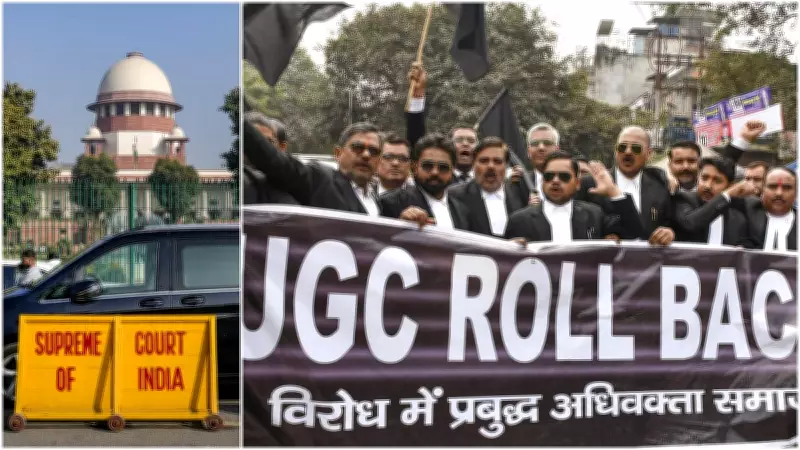
Supreme Court Raises Concerns Over UGC Equity Regulations
The Supreme Court of India has made a significant observation regarding the University Grants Commission (UGC) equity regulations, stating that they prima facie suffer from ambiguities and that the possibility of misuse cannot be ruled out. This development comes as the court examines challenges to these regulations, which are designed to promote equity in higher education institutions across the country.
Petitioners Challenge the Foundation of UGC Regulations
In a detailed submission, the petitioners have argued that the UGC equity regulations are built on an unfounded presumption. They claim that the rules proceed on the assumption that caste-based discrimination is necessarily unidirectional, meaning it only flows from dominant castes towards marginalized groups. The petitioners contend that this framework ignores the reality that discrimination can sometimes operate against persons belonging to non-reserved or general categories as well.
This legal challenge highlights a critical debate in India's education sector, where policies aimed at social justice must balance inclusivity with fairness. The Supreme Court's preliminary remarks suggest a need for clearer guidelines to prevent potential abuses of the regulations, which could undermine their intended purpose of fostering an equitable academic environment.

Implications for Higher Education in India
The UGC, as the apex body for higher education in India, plays a pivotal role in shaping policies that affect universities and colleges nationwide. The equity regulations in question are part of broader efforts to address historical injustices and promote diversity on campuses. However, the court's scrutiny indicates that:
- The regulations may lack precise definitions, leading to inconsistent implementation.
- There is a risk of misuse, which could harm the very communities the rules aim to protect.
- A more nuanced approach might be required to account for complex social dynamics.
As the case progresses, stakeholders in the education sector are closely watching for potential revisions to the regulations. The outcome could set important precedents for how equity measures are designed and enforced in Indian institutions, ensuring they are both effective and just.
This legal proceeding underscores the ongoing tension between affirmative action and merit-based systems in India. It also reflects broader societal discussions about caste, privilege, and access to education, which remain central to the country's development goals.