UGA Event Cancellation Ignites National Debate Over Trust and Accountability
The abrupt cancellation of a scheduled appearance by Vice President JD Vance at the University of Georgia has rapidly escalated from a local controversy into a significant national discussion concerning public trust, institutional safety protocols, and media accountability. What was initially presented as a necessary security precaution has unraveled into conflicting narratives, leaving observers questioning the veracity of the claims made by event organizers.
Conflicting Reports and a Media Firestorm
The incident began when the highly anticipated event, organized by conservative group Turning Point USA, was called off at the last minute. Organizers, led by Erika Kirk, cited imminent safety threats as the primary reason for the cancellation. This explanation immediately triggered intense media scrutiny and public speculation.
However, subsequent reporting, including from mainstream outlets like CBS, introduced a stark contradiction. According to these reports, the United States Secret Service conducted an assessment and found no credible threats specifically linked to the venue or to the Vice President's safety. This significant discrepancy between the initial justification and later official findings has created a credibility chasm that continues to widen.

Candace Owens Launches Scathing Critique
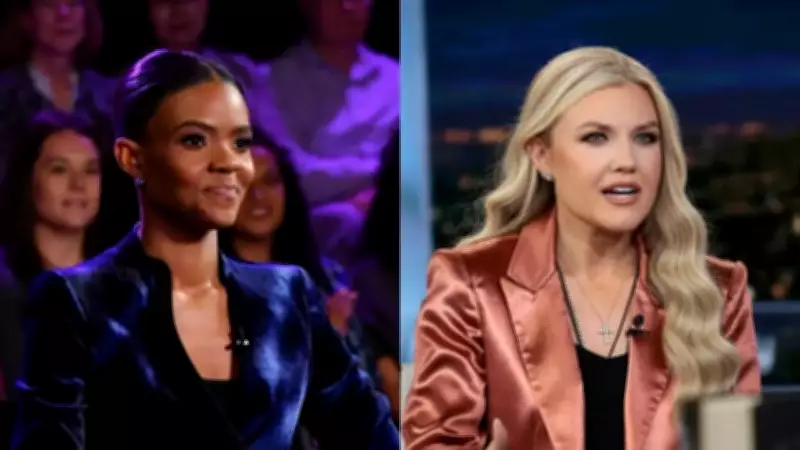
Conservative commentator Candace Owens has emerged as a central figure in challenging the official narrative. On her popular podcast, Owens delivered a pointed analysis, characterizing the situation as both absurd and deeply damaging to public trust.
"It's objectively hilarious... Turning Point USA has turned into a sitcom," Owens remarked. "Somehow, Erika really thought that she was just going to get away with saying that... You definitely shouldn't just say stuff when you have the vice president of the United States with you... That would actually rise if there was a credible threat against you, or a national security threat, right? You're saying my life was at risk."
Owens further emphasized the significance of the conflicting reports, noting, "This is in Barry Weiss's CBS, no less. Okay, so this is like she's got contacts at CBS. And even they had to just run this headline," suggesting that even media outlets typically sympathetic to such narratives could not ignore the evident contradictions.
Social Media Accusations and Detailed Allegations
The controversy intensified on social media platforms, where Owens published a detailed thread directly accusing Kirk and Turning Point USA of deliberate deception. Her posts outlined a specific timeline and circumstances that she claims undermine the safety threat narrative.
Owens alleged: "The public should continue to be outraged over this recent lie from Turning Point USA. To recap, Erika Kirk flew into Athens, Georgia from Palm Beach on Tuesday after a weekend bridal shower at Mar A Lago. She flew in aboard a massive, apartment-sized jet owned by Vegas billionaires. She landed into a terminal which had been secured, since Monday, by our nation’s secret service."
She continued: "There was both a military and police presence waiting at that terminal to escort the VP who was due to land about an hour and 30 minutes after her. After learning of the crowd size, Erika decided she no longer wanted to do the event. Rather than simply cancelling, she instructed her PR team to make up a demented lie about imminent threats against her travel safety."
In her concluding remarks, Owens stated: "Again, she was ALREADY IN GEORGIA sitting upon a federally cleared pathway. Her PR agent and the Vice President then shamelessly lectured the audience about these invisible threats, suggesting they were the public’s fault for having criticized her. UTTERLY INDEFENSIBLE AND PSYCHOPATHIC."
Turning Point USA's Defense and the Broader Implications
In response to these mounting accusations, Turning Point USA spokesperson Andrew Kolvet has maintained the organization's position. Kolvet insists that the safety concerns were genuine but clarifies that they were primarily related to travel logistics and potential disruptions, rather than direct threats to the venue or the Vice President.

This ongoing back-and-forth has transformed the episode from a simple event cancellation into a multifaceted examination of how information is managed and disseminated in the public sphere. The core issues now extend beyond the University of Georgia campus, touching on:
- Public Trust: How do institutions rebuild credibility after contradictory narratives emerge?
- Media Responsibility: What role should media outlets play in verifying security claims before publication?
- Political Messaging: How quickly can public narratives fracture when faced with conflicting evidence?
- Accountability Mechanisms: What processes exist to verify security claims involving high-profile government officials?
As both sides continue to present their versions of events, the controversy serves as a potent case study in contemporary media dynamics and the fragile nature of public trust. The resolution of this dispute may have lasting implications for how similar situations are handled by political organizations, media entities, and security agencies moving forward.