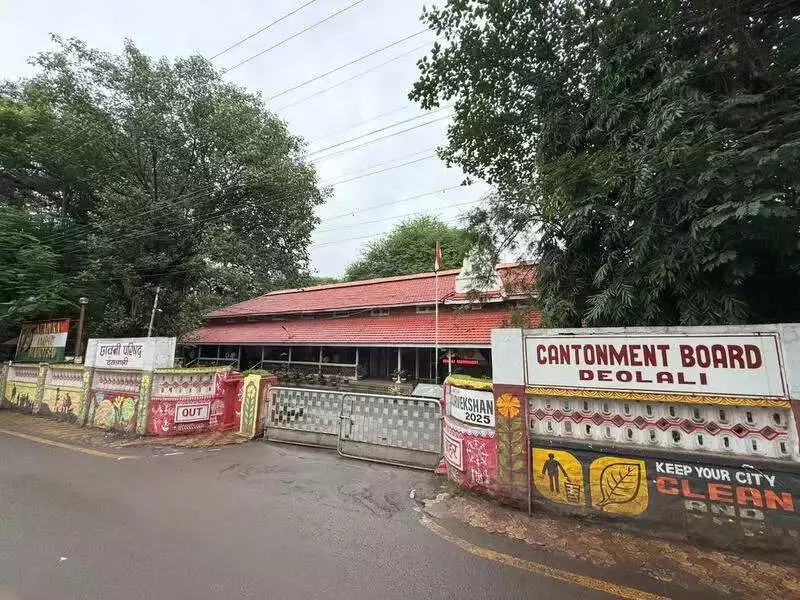
The Deolali Cantonment Board (DCB) in Nashik has achieved a significant national accolade, securing the prestigious Raksha Mantri's 'Swachha Chhavani Swastha Chhavani' award for the year 2025. This recognition highlights the board's sustained excellence in maintaining cleanliness and hygiene within its jurisdiction.
A Track Record of Cleanliness Excellence
Deolali Cantonment has held the top position among all seven cantonments in Maharashtra consistently since 2021. In the latest Swachh Sarvekshan rankings for 2024-25, its performance was recognized on a national scale, where it secured an impressive second position among cantonments across India. The award ceremony is scheduled for December 16 at the National Institute of Defence Estates Management (NIDEM) complex in New Delhi.
Attributing this success to a philosophy of continuous improvement, CEO Abhishek Mani Tripathi stated that while Deolali benefits from a natural green environment, concerted efforts have been made to preserve and enhance its beauty. "We have consistently put in efforts to ensure the cantonment area remains clean and beautiful," Tripathi said.

Innovative Initiatives Driving Change
The board's success is built on a series of concrete and innovative measures. Key projects include the renovation and beautification of four public gardens. A rigorous door-to-door waste collection system ensures that garbage is transported for scientific disposal at a dedicated processing plant.
In a push for sustainability, the board has installed solar power pumps at public toilets to guarantee an uninterrupted supply of water and electricity. The operational capacity was also boosted with the purchase of new machinery, including a sewage suction machine and a mechanical sweeping machine in the past year.
Health Superintendent Aman Gupta shed light on their creative approach. "We introduced new ideas to beautify open spaces. Scrap material from our offices is being reused to create artistic installations in our gardens," Gupta explained. The board also utilizes fiber-reinforced plastic (FRP) models for decoration. To ensure inclusive sanitation, two new tankers and e-rickshaws were procured to extend garbage collection services to slum areas.
Financial Management and Ongoing Challenges
Officials noted that while Central government funds have been regular, the board successfully augmented its internal revenue. This was achieved through marginal increases in service charges, bringing previously unassessed properties into the tax net, and intensifying drives to recover tax arrears.
Despite the achievements, challenges remain. CEO Tripathi identified issues such as stray dogs and cattle on roads, and the ongoing task of convincing residents to completely avoid open dumping of garbage. The Deolali Cantonment Board, a Class 1 cantonment, serves a population of approximately 80,000 residents.
Contrast with Pune Cantonment's Struggles
The article draws a sharp contrast with the situation at the Pune Cantonment Board (PCB), which is grappling with a severe funds crunch affecting garbage collection. Despite being one of the largest cantonments and once ranking among the country's best, it was placed 26th nationally last year.
A senior official pointed out that Pune generates nearly five tonnes of waste daily and has several open dumping spots requiring maintenance. The funds shortage has restricted PCB's ability to add new garbage collection vehicles or strengthen operations. "These efforts need to be implemented on the ground, but we have been unable to do so due to a paucity of funds," a senior PCB official admitted.
Another official provided context, noting that Deolali is smaller in both area and population. Unlike Pune, it lacks major commercial hubs like MG Road and East Street, which generate a significant volume of waste and complex hygiene issues, making cleanliness management relatively more straightforward in Deolali.