

Sunabeda Wildlife Sanctuary Transforms into Leopard Habitat After Maoist Clearance
Sunabeda Wildlife Sanctuary, a proposed tiger reserve located in Nuapada district of Odisha, is witnessing a remarkable ecological transformation following its recent declaration as Maoist-free. Forest officials now indicate that this sanctuary may soon establish itself as a significant leopard habitat, marking a new chapter in its conservation journey.
Camera Trap Revelations and Leopard Population
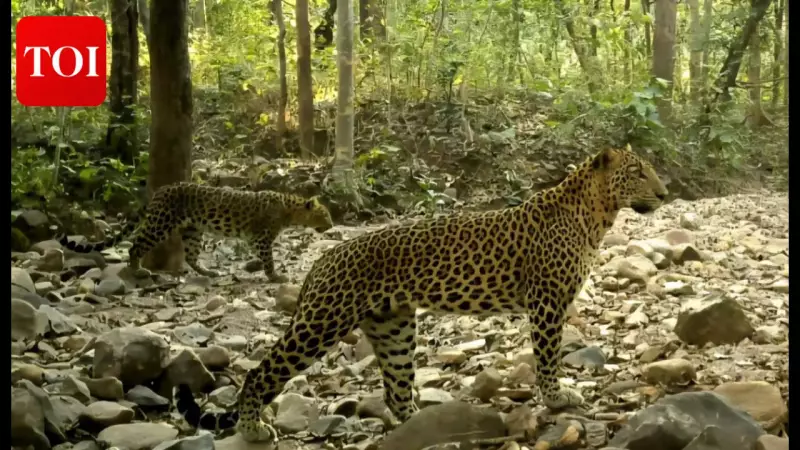
During the recent all-India tiger estimation exercise, whose official data remains pending, Sunabeda authorities made a startling discovery. Approximately 90% of camera traps installed throughout the sanctuary captured images of leopards, alongside other wildlife signs. Based on this extensive photographic evidence, officials estimate the sanctuary now hosts more than 70 leopards.
Divisional Forest Officer (DFO) of Sunabeda, Sameer Sahu, explained this development: "With a significant drop in Maoist presence and habitat management becoming robust, leading to increased prey density, we found an encouraging number of leopards in the sanctuary. The sanctuary has all varieties of prey, starting from deer and chowsingha to wild boar and bison."

Impact of Maoist Presence on Wildlife Monitoring
The absence of Maoist activity has fundamentally changed wildlife monitoring capabilities in the 600 square kilometer sanctuary. Unlike previous years when conservation efforts were severely hampered, wildlife personnel can now install camera traps in every sector without fear.
A wildlife officer detailed the previous challenges: "Earlier, Maoists used to remove some cameras to avoid being captured. Wildlife wing personnel were not able to install camera traps at many vantage locations, fearing Maoist attack. Almost 50% of the area of the sanctuary was under Maoist influence."
This comprehensive camera trap network now provides authorities with a clear understanding of carnivore and herbivore populations throughout the sanctuary.
Tiger Population History and Current Status
The sanctuary's journey as a potential tiger reserve has been complex:
- The 2016 state-level census recorded four tigers in Sunabeda (three females and one male)
- One additional tiger was sighted in Khariar division, outside the sanctuary's boundary
- However, the latest tiger census report released by the Centre on July 29 last year found no tigers in Sunabeda
Experts attribute this decline primarily to Maoist influence affecting conservation efforts over the years. With the improved security situation, they remain hopeful that future census results will show positive developments.
Historical Maoist Influence and Regional Connections
Maoist presence in Sunabeda dates back to 2009 and caused substantial damage to forest infrastructure, including attacks on forest personnel. The insurgents primarily operated from the forest near Sikaser dam in Chhattisgarh's Gariabandh district, which borders Sunabeda.
A police officer explained the geographical advantage Maoists exploited: "For long, the Maoists used Sikaser as their place of stay, while Sunabeda provided them a safe hideout."
This region's contiguous forests, including Udanti Wildlife Sanctuary also located in Gariabandh district, created an interconnected landscape that facilitated Maoist movement and operations across state boundaries.
Human-Leopard Conflict and Future Prospects
Nuapada district has consistently reported man-leopard conflict, a concern that may intensify with the growing leopard population. However, forest officials view the current developments positively, seeing them as evidence of ecological recovery following the removal of security threats.
The transformation of Sunabeda Wildlife Sanctuary from a Maoist-affected area to a potential leopard stronghold represents a significant conservation achievement for Odisha's wildlife authorities, offering hope for the region's biodiversity recovery.






