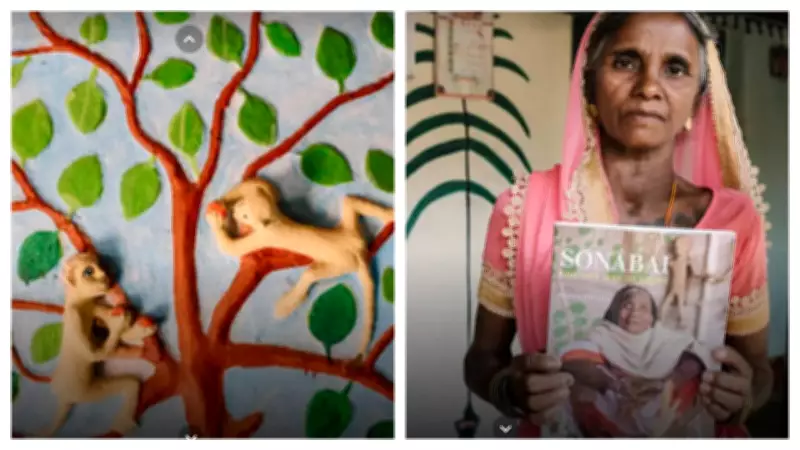
For Sonabai Rajawar, art was never a choice or a simple hobby. It became her only lifeline. At just 25 years old, she was completely cut off from the outside world, locked inside a windowless house by her jealous husband, Holiram Rajwar, who was ten years her senior. For 15 long years, Sonabai lived as a captive in her own home, forgotten by the world. Yet, within that crushing darkness and silent agony, her yearning for freedom gave birth to some of the most extraordinary masterpieces of Indian folk art.
Toys Born from Isolation
Her isolation became her greatest motivation. Sonabai had absolutely no formal artistic training. Her journey into art began purely as a mother's desperate attempt to keep her young son entertained. To pass the time, she dug up clay from the edge of the family well, shaping small toys and figurines with her hands. What started as simple playthings quickly evolved. Before long, her dark, empty home began filling with sculptures, each one a testament to her unbroken spirit. She created these sculptures, and her home became filled with them. The sculptures were truly beautiful.
Engineering an Escape from the Heat
The summer months were intensely hot. The house was like an oven because it had no windows. Sonabai sought to escape the heat and came up with an ingenious idea. She made clay lattices, or jalis, using bamboo stems. She shaved the stems, made them thin, bent them into shapes, wove them into patterns, and secured them between the pillars of her courtyard.

Turning Mud into Masterpieces
Sonabai built a framework with wood, then covered it with clay. She molded the clay around every curve and opening, turning mud into extraordinary objects. The clay was thick and covered the entire framework. As it dried, it formed beautiful, perforated screens. These lattices did more than circulate air to cool the house; they filtered the harsh Indian sunlight, casting soft, delicate patterns across the deep corridors of her prison.
Painting with the Earth
Sonabai did not stop at sculpting. To make her artwork real, she created her own paints from scratch. She ground spices and herbs into tiny pieces, then mixed them with minerals from the earth to produce colors. With these natural pigments, she transformed her prison into a vibrant space, filling every corner with amazing carvings and colorful clay figures.
From Captive to National Icon
Sonabai's world was finally discovered in 1983. People from Bharat Bhavan in Bhopal visited her home and found all the remarkable things she had made. Art enthusiasts were astonished by her innate talent, despite having no formal training. That year, her skill was officially recognized. She received the Tulsi Samman award, which cemented her status as a renowned Indian folk artist. Her story remains a powerful testament to creativity and resilience in the face of unimaginable hardship.