The 2016 Nostalgia Wave Sweeping Social Media
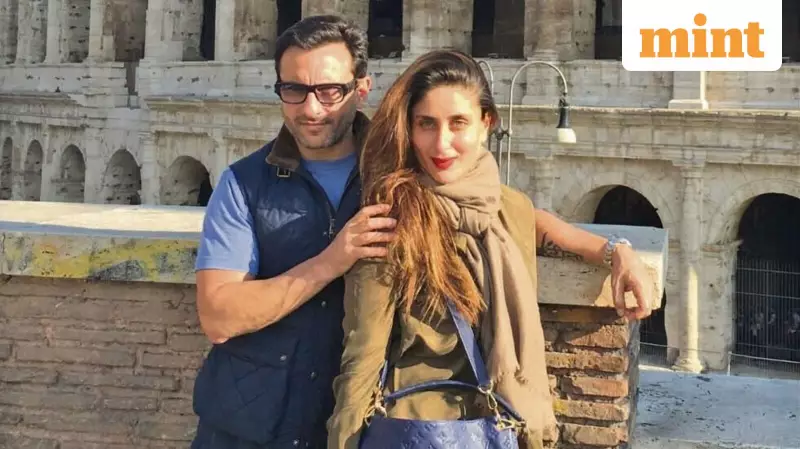
As a new year unfolds, social media platforms appear to have traveled back in time to 2016. Prominent Indian celebrities including Kareena Kapoor Khan and Alia Bhatt, alongside global icons like Kylie Jenner, are actively sharing throwback content from that distinctive era. The digital landscape is now flooded with familiar visual markers: flower crown filters, dog-ear Snapchat effects, Mannequin Challenge videos, black plastic chokers, and characteristically blurry mirror selfies.
Individuals who feel confident enough to publicly share what they now consider their "cringe" phases are experiencing genuine enjoyment, openly laughing at and reconnecting with versions of themselves they have long since outgrown. This phenomenon, however, extends far beyond mere fashion revivals or aesthetic choices.
Beyond Fashion: The Psychological Pull of 2016
The collective return to 2016 signifies a profound longing not just for a specific year, but for an emotional state and a version of life that felt significantly safer and more hopeful. In our current era, marked by widespread burnout, persistent economic anxiety, lingering pandemic aftershocks, and a constant sense of global instability, looking backward has evolved into a genuine form of comfort. Memory itself has become a sanctuary, a refuge from present-day pressures.

Historically, nostalgia was once classified as a medical condition. The term was originally coined in the 1600s to describe the acute physical distress Swiss mercenaries experienced while stationed in foreign lands, yearning intensely for their alpine homeland. It was viewed as a debilitating form of homesickness requiring a cure. Contemporary psychology offers a different perspective. Today, we understand nostalgia not as a lethal affliction, but as a sophisticated mechanism for emotional regulation.
Scientific research increasingly suggests that nostalgia functions as a psychological buffer during periods of stress. It represents the mind's instinctive retreat to what feels emotionally secure and familiar when the demands of the present become overwhelming.
2016: A Threshold Moment for a Generation
For late millennials and the earliest members of Generation Z, 2016 represented a critical threshold. Many individuals were completing their school education, stepping into college campuses, or tentatively entering adulthood. Life during that period still maintained a sense of linear progression. There existed a quiet, pervasive belief that diligent effort would naturally lead to orderly outcomes.
Rajat Mitra, a clinical psychologist and professor at Amity University in Noida, observes that 2016 was a year when "a lot of people, especially Gen Z, were re-ordering their lives." He explains that "many felt a profound sense of loss with the rapid, unprecedented changes in technology and the nature of personal relationships." The current nostalgia, therefore, is not merely for a calendar year, but for a specific psychological state: a time when change felt exhilarating rather than utterly exhausting.
Mumbai-based clinical psychologist Poonam Chordia adds crucial context, noting that the current wave of 2016 reminiscence is deeply connected to the accelerated pace of modern adulthood. The past decade has been densely packed with global and personal disruptions, leaving minimal mental space to pause and process experiences. Looking back, in this context, becomes a vital method for individuals to measure their own growth and comprehend the scale of transformation they have undergone.
The Core Longing: A Lighter, More Reversible Time
For countless people, the magnetic pull of 2016 fundamentally revolves around missing an era when life felt perceptibly lighter, personal choices seemed more reversible, and the future sparked more curiosity than it did pressure. Chordia further elaborates that swift transformations in lifestyle, relentless technological advancement, and shifting social rhythms have collectively distorted our perception of time. This distortion makes the last decade feel as though it passed in a bewildering flash, much faster than anyone anticipated.

It is essential to recognize that 2016 was not some flawlessly golden year. It was, quite simply, the last period in our collective memory that feels relatively uncomplicated. Even during 2016, people were likely glancing backward, romanticizing 2006 with its endless Orkut scraps, heartfelt testimonials exchanged in cyber cafes, custom caller tunes blaring Bollywood hits from flip phones, grainy digital camera photos uploaded with low-resolution pride, and evenings that concluded with the flickering of streetlights rather than the dropping of a Wi-Fi signal.
Nostalgia has always operated in intricate layers, with each successive layer softening the rough edges of the one that preceded it. If the cultural obsession of 2025 with all things retro has taught us anything, it is that trends are inherently cyclical. Perhaps this time next year, our social media feeds will be inundated with wistful throwbacks to the sounds, styles, and sensations of 2017.