Every time a film shakes up India's established cultural landscape, a common critique emerges: it's political messaging, not pure storytelling. This accusation is often presented as a concern for artistic integrity, suggesting that politics taints cinema. However, filmmaker Vivek Ranjan Agnihotri, in an opinion piece published on December 19, 2025, poses a more critical question. Who holds the power to decide which films earn the "political" tag, and why is this label applied so selectively?
The Inherent Politics of Storytelling
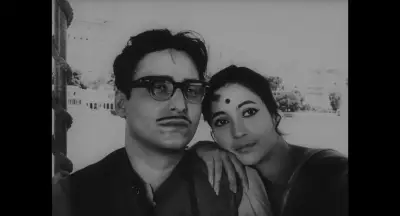
Agnihotri argues that cinema has never existed in an apolitical bubble. From the nationalist themes of the 1950s to the social critiques of parallel cinema in the 1970s, Indian films have consistently carried moral viewpoints and ideological frameworks. Movies are a reflection of society's internal struggles. Yet, he observes, only specific narratives face persistent accusations of ideological bias, while others are seamlessly welcomed into the realm of "serious art." This discrepancy points to a deeper issue: the battle over narrative ownership.
For decades, Agnihotri suggests, an unspoken code governed acceptable storytelling within India's cultural ecosystem. Films that examined the state, tradition, or identity from certain approved perspectives were hailed as courageous and nuanced. Conversely, works that challenged elite consensus, revived uncomfortable historical chapters, or spotlighted marginalized victims were often met with skepticism and dismissal. In this framework, some politics is celebrated as art, while other politics is condemned as propaganda.

The Kashmir Files and the Breaking of Narrative Rules
The filmmaker cites his own work, The Kashmir Files, as a definitive fault line. He contends the film's controversy stemmed not from breaking cinematic conventions, but from shattering narrative rules. It thrust a suppressed tragedy into the mainstream discourse without the cushion of familiar ideological framing. It bypassed traditional elite mediators and connected directly with a massive audience.
The backlash, according to Agnihotri, was revealing. Instead of engaging with the film's factual basis or its cinematic choices, much of the criticism targeted its perceived intention. Reviews were withheld or gave zero-star ratings. The film was branded as "dangerous" and "divisive," and even its audience came under scrutiny. This reaction signaled a failure of the usual cultural arbitration systems. When a film succeeds outside established gatekeeping channels, Agnihotri argues, the language of artistic craft is often weaponized to delegitimize it.
Narrative Zamindars and the Fear of Losing Control
Agnihotri describes this dynamic as a structural issue, not an isolated one. He refers to the gatekeepers as Narrative Zamindars—entities wielding inherited authority over storytelling norms. When their control is threatened, they exhibit what he terms Narrative Monopoly Syndrome: a panic triggered when audiences begin forming their own judgments, bypassing traditional arbiters.
This is not a plea for films like The Kashmir Files or others to be above criticism. Agnihotri emphasizes that criticism only holds credibility when its standards are applied uniformly. When "political messaging" becomes a selective charge, it ceases to be an artistic metric and functions instead as a tool to police boundaries.
The modern media environment, with social media and streaming platforms, has democratized access. Audiences are no longer solely reliant on critics or festivals for validation. This democratization is perceived by traditional taste-makers not as healthy pluralism, but as a loss of control. The anxiety around certain films follows a pattern: questioning intentions when facts are inconvenient, shaming the audience when the response is overwhelming, and replacing debate with moral labelling.

The core discomfort, Agnihotri concludes, is less about the quality of storytelling and more about who decides which stories matter. The debate transcends cinema, touching on the ownership of cultural memory in a diverse democracy. True storytelling has always unsettled societies and challenged power. To mistake that unease for artistic failure is to confuse gatekeeping for taste and habit for principle. The future of Indian narratives depends on embracing perspectives from multiple, unapproved directions.