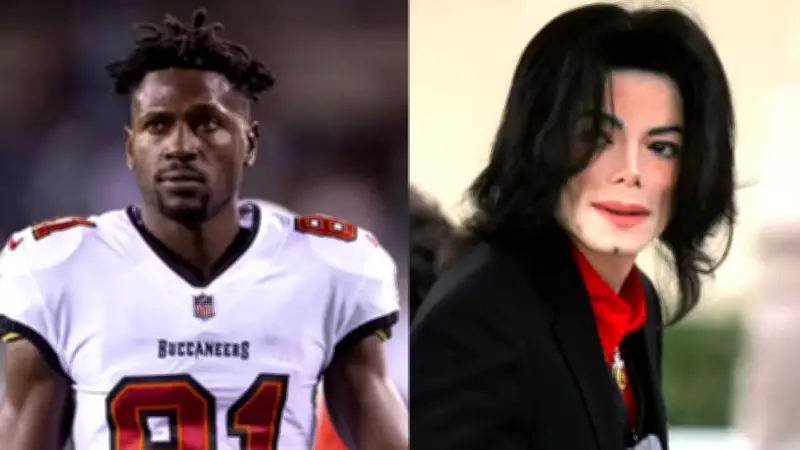
Michael Jackson's Timeless Grammy Moment Reignites Social Media Frenzy
A brief but powerful clip from Michael Jackson's appearance at the Grammy Awards has resurfaced online, captivating social media platforms and reminding audiences worldwide why he remains the undisputed King of Pop. The video showcases Jackson effortlessly commanding the stage with a simple gesture—removing his sunglasses and flashing a confident smile—demonstrating his unparalleled stage presence without uttering a single word.
Antonio Brown's Unfiltered Reaction Amplifies Viral Phenomenon
The clip gained renewed traction when former NFL star Antonio Brown shared it with his characteristically candid commentary. Known for his unfiltered and often controversial social media presence, Brown added his own provocative spin to the viral moment, writing: "this nigga was really Mr. Bitches." This blunt response immediately drew widespread attention, not only for its explicit language but for how it contextualized Jackson's lasting impact within contemporary pop culture discourse.
Brown's comment generated polarized reactions across digital platforms. Some viewers appreciated the raw acknowledgment of Jackson's charismatic authority and legendary status, interpreting it as a nod to his enduring appeal. Others expressed concern over the language used, debating whether such commentary crosses boundaries of respect while discussing iconic figures. Regardless of perspective, the exchange highlighted how modern social media interactions can reshape public perception of historical moments.

The Enduring Power of Jackson's Minimalist Performance
At its core, the viral clip underscores Michael Jackson's unique ability to captivate audiences through subtlety rather than spectacle. In an era dominated by elaborate productions and over-the-top performances, Jackson's simple act of removing his glasses became an iconic moment of pure theatrical magic. This minimalist approach—relying on a look, a smile, and a pause—demonstrates his mastery of nonverbal communication and emotional connection with viewers.
The resurgence of this footage illustrates how digital platforms preserve and propagate cultural legacy. Short-form videos introduce Jackson's artistry to new generations while allowing longtime fans to rediscover moments that never fade from collective memory. Such content bridges temporal gaps, linking past achievements with present-day conversations and ensuring that Jackson's influence remains relevant in the rapidly evolving digital landscape.
Social Media's Role in Recontextualizing Cultural Icons
Antonio Brown's reaction exemplifies broader trends in how contemporary audiences engage with historical events and figures. Immediate, emotionally charged responses on social media platforms frequently alter how younger demographics interpret older content, injecting modern perspectives into timeless moments. This dynamic interaction between past and present creates ongoing dialogues that keep cultural icons like Michael Jackson at the forefront of public consciousness.
The viral phenomenon also raises questions about the nature of fame in the internet age. Jackson's ability to command attention effortlessly contrasts sharply with today's often manufactured virality, reminding us of the authentic star power that transcends technological changes. As clips like this continue to circulate, they reinforce why Michael Jackson remains one of the most discussed and analyzed figures in entertainment history, his legacy continually renewed through digital rediscovery and reinterpretation.