Screenwriter Apurva Asrani's profound personal loss has become the emotional bedrock for his latest cinematic endeavor, The Pact. This poignant short film, which recently premiered on YouTube, represents the inaugural project under his newly established production house, Apurva Asrani Films. Featuring the acclaimed actor Parambrata Chattopadhyay, the film delves into themes of grief, reconciliation, and the complex dynamics of father-son relationships.
The Personal Journey Behind The Pact
During the prolonged illness of his father, Apurva Asrani found himself confronting the daunting prospect of a future without his paternal figure. He harbored a deep-seated desire to resolve lingering differences before time ran out, yet this reconciliation remained elusive. In the aftermath of his father's passing three years ago, Asrani discovered a new dimension to their bond. "I have found myself having conversations with him, not as a parent and a child, but as friends," he reflects. "It's like I knew the father but never met the man till after he passed."
A particularly haunting memory from his childhood served as the catalyst for the film. Asrani recalls a rare instance of vulnerability when his father, overwhelmed with emotion after a physical altercation, broke down in tears. In a moment of profound remorse, his father made a solemn promise that such an incident would never recur, even formalizing this commitment by signing a pact on a random piece of paper. The Pact is Asrani's artistic exploration of this pivotal agreement and the man behind it.

Plot and Production Insights
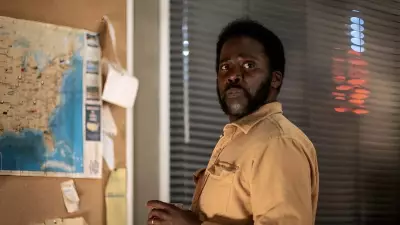
The narrative of The Pact centers on Raghav, portrayed by Parambrata Chattopadhyay, a corporate professional who returns to Pune to settle what he perceives as the final vestige of his past: his late father's home in a railway colony. As Raghav revisits the familiar spaces of his childhood, he comes to a poignant realization about the invisible yet foundational sacrifices that shaped his life.
Asrani co-produced the film with Lakshami Iyer, who also directed it. The screenplay's first draft was completed in August of the previous year, with shooting commencing by September. Remarkably, post-production digitization and music were finalized by November. "The last time I saw such a quick turnaround was when I made the Tera Mera Pyar music videos that launched Nimrat Kaur," Asrani notes. "There's a certain kind of honesty in projects that don't over-marinate."
Philosophical Underpinnings and Industry Critique
For Asrani, whose illustrious career includes acclaimed projects like Satya, Shahid, Aligarh, and Criminal Justice, the essence of meaningful cinema lies in its fidelity to original intent. "The more independent the process, the less diluted the emotion," he asserts. The decision to release The Pact on YouTube was a deliberate one, rooted in a desire for creative autonomy. "It's not about bypassing platforms; it's about taking responsibility for the film, how it's made, shared and finds its audience."
Asrani expresses concern over the contemporary film landscape, lamenting the erosion of auteur-driven cinema. "I fear we have almost lost the auteur, the original thinker, the trendsetter. What we have now are clever products with saleable one-liners that are a marketing team's delight." He envisions a middle ground between big-budget spectacles and abstract art-house films—a space for relatable, emotionally resonant stories about family, relationships, and empathy.
Collaborative Synergy and Future Aspirations
The collaboration with Parambrata Chattopadhyay emerged serendipitously. While initially uncertain about engaging the Kolkata-based actor due to logistical constraints, co-producer Lakshami Iyer fortuitously encountered him at a Mumbai coffee shop the very next day. Asrani shares, "It felt like he too wanted to say something deeply personal through the film. As we spoke more, I understood the grief he was still carrying after losing both his parents. Lakshmi and I were striving for truth, but Parambrata became it."

Looking ahead, Asrani aims to cultivate this niche of cinema, where modest budgets, talented actors, and well-crafted scripts converge to create films that provoke introspection and endure beyond box-office metrics. "I want to build in that space, where a modest budget, good actors and, most of all, a well-cooked script can create an entertaining film that begins some sort of inquiry in the viewer; a film that will be remembered far beyond box-office collections."