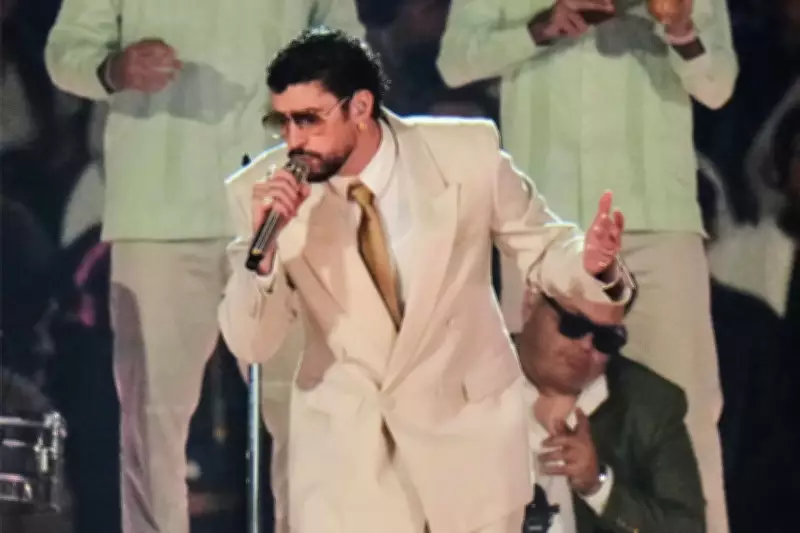
Bad Bunny's Spanish Super Bowl Performance Ignites Language Learning Movement
The upcoming Super Bowl halftime show is generating unprecedented excitement as Puerto Rican superstar Bad Bunny prepares to deliver his entire performance in Spanish. This historic decision has sparked a remarkable phenomenon, with fans across the United States rushing to learn the language before Sunday's big game.
From SNL Warning to Grammy Triumph
Bad Bunny, whose real name is Benito Antonio Martinez Ocasio, first hinted at this cultural moment during his October appearance on Saturday Night Live. The artist opened the 51st season with proud Spanish remarks, followed by an English declaration: "If you didn't understand what I just said, you have four months to learn!"
This bold statement further intensified conservative criticism against the singer, who has been vocal in opposing former President Donald Trump's immigration policies. Last year, Bad Bunny canceled the U.S. portion of his tour over concerns that Immigration and Customs Enforcement agents might target his concert attendees.

The anticipation reached new heights last weekend when his album "Debi Tirar Mas Fotos" made history by becoming the first Spanish-language album to win the Grammy Award for Album of the Year. During his acceptance speech, Bad Bunny didn't shy away from addressing immigration issues, stating in English: "Before I say thanks to God, I'm going to say ICE out. We're not savage, we're not animals, we're not aliens. We are humans and we are Americans."
The Language Learning Frenzy
Across social media platforms, a remarkable trend has emerged as fans document their journeys to learn Spanish specifically for the halftime show. Niklaus Miller, a 29-year-old fan, began studying Bad Bunny's lyrics months ago after the SNL appearance. "I am delusional enough to be like 'this would be easy. I could pick it up pretty quickly,'" Miller admitted.
For Miller, this language pursuit feels like a form of protest against anti-immigrant rhetoric. "What can I do right now besides what everyone is doing that is trying to help? It just feels good," he explained. While he hasn't mastered Bad Bunny's entire discography, Miller has learned portions of six songs he believes will feature in the halftime performance, including "Titi Me Pregunto," "DtMF" and "Baile Inolvidable."
O'Neil Thomas, a 28-year-old New York City actor and content creator, began learning Bad Bunny's catalog immediately after the halftime announcement. "I was just so excited because he wasn't an artist that I expected," Thomas said. "And given how we are right now with the state of the country I think he is the perfect person to headline such a humongous stage."
Thomas has received overwhelmingly positive responses to his TikTok videos documenting his Spanish learning journey, with many Puerto Rican viewers expressing pride that someone outside their community is engaging with their culture.
Cultural Impact and Political Divisions
Vanessa Diaz, associate professor of Chicano and Latino studies at Loyola Marymount University and co-author of "P FKN R: How Bad Bunny Became the Global Voice of Puerto Rican Resistance," notes that interest in Latin music has been driving Spanish language learning for years. "The Super Bowl itself is an additional push for a trend that was already happening," she explained.
According to U.S. Census data, Spanish is the most spoken language at home after English nationwide, with over 13% of residents aged five and older speaking it regularly. Bad Bunny's clear messaging through his lyrics, videos, and performances has amplified this linguistic interest significantly.
However, the selection has proven politically divisive. Former President Trump called the choice "ridiculous," while conservative groups have labeled it anti-American, despite Puerto Ricans being U.S. citizens by birth. Turning Point USA is organizing an alternative "All-American Halftime Show" featuring Kid Rock as a counter-programming effort.

This controversy unfolds against the backdrop of increased targeting of Latino and Spanish-speaking communities in immigration enforcement actions. For the NFL and Apple Music, the halftime show represents a delicate balancing act: celebrating diversity while avoiding controversy that might alienate advertisers.
The Learning Challenge and Cultural Significance
Both Miller and Thomas acknowledge that learning Puerto Rican Spanish in such a short timeframe presents unique challenges. Thomas notes that casual listening differs dramatically from active lyric study: "Listening to his music is really fun. The amount of times I've pressed rewind just to get a phrase, I can't even count."
Miller finds the Puerto Rican dialect particularly challenging due to its speed and tendency to shorten words. "It's fun but then stressful because I am a Type-A person, so that's been hard, honestly," he confessed. "I'm firing on all cylinders."
Petra Rivera-Rideau, associate professor of American studies at Wellesley College and co-author of "P FKN R," points to America's long history of criminalizing Spanish. Bad Bunny, she argues, is making the language culturally desirable and reshaping its narrative. Diaz adds that while the performance may not immediately transform perceptions of Latinos in the U.S., it will certainly spark important conversations about representation.
"At a time when the U.S. is targeting Latinos and migrants and Spanish speakers or even those who are just perceived to be any of those things in a way that we haven't seen in our lifetimes," Diaz emphasized, "his visibility is powerful."
As Sunday approaches, Bad Bunny's halftime show represents more than just musical entertainment—it stands as a landmark moment for Latino culture, language preservation, and cultural resistance on one of the world's largest stages.