Bollywood is often celebrated for its song, dance, and spectacle, but its most enduring legacy lies in films that dared to challenge the status quo. A select group of movies have moved beyond mere entertainment to spark vital social conversations, question deep-rooted norms, and inspire a generation. These films used the power of mainstream storytelling to address issues like gender justice, religious exploitation, educational reform, and national identity, leaving an indelible mark on Indian society.
Challenging Gender Norms and Injustice
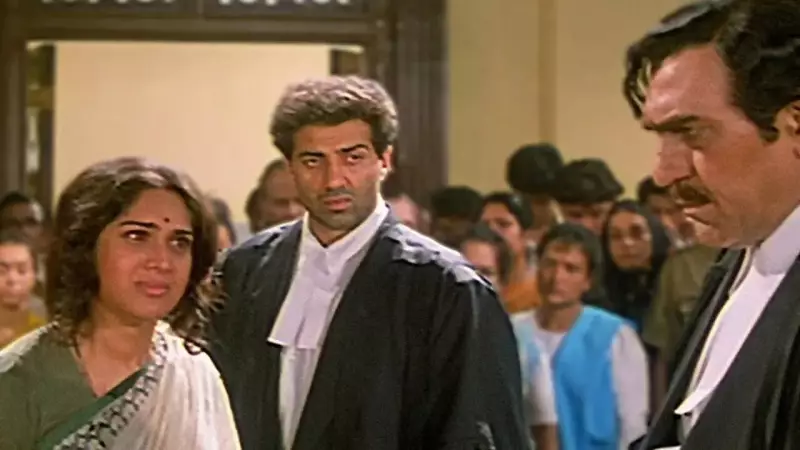
The early 90s witnessed a seismic shift with the release of 'Damini' in 1993. The film, starring Meenakshi Seshadri in the titular role, presented a powerful narrative of a woman who confronts immense social and familial pressure to seek justice after witnessing the assault of her housemaid. Sunny Deol's fiery portrayal of a lawyer, which won him a National Award, became iconic. The film boldly highlighted issues of sexual violence and moral courage, cementing its place as one of Hindi cinema's most referenced woman-centric films.
Even earlier, in 1982, Raj Kapoor's 'Prem Rog' took on the deeply entrenched taboo of widow remarriage. Set in a conservative society, the film featured Rishi Kapoor as Devdhar and Padmini Kolhapure as Manorama, a young widow grappling with severe social ostracism. By portraying Devdhar's support for Manorama's right to rebuild her life, the film offered a compassionate alternative narrative at a time when widows faced harsh restrictions, contributing significantly to mainstream discussions on social reform.

Questioning Faith, Governance, and Civic Duty
In 2012, 'OMG! Oh My God' tackled the sensitive subject of religious commercialization with a blend of satire and rationality. Starring Akshay Kumar and Paresh Rawal, the film questioned blind faith and the exploitation of devotees in a deeply religious society. Its success proved that a film could encourage rational thinking and critique dogma while maintaining a balanced tone, receiving widespread acclaim from audiences and critics.
The issue of youth apathy and government accountability was powerfully addressed in Rakeysh Omprakash Mehra's 'Rang De Basanti' (2006). The story of carefree university friends whose lives are transformed after a friend's death in a MiG aircraft crash resonated deeply. The film's portrayal of youth-led activism and its iconic candlelight vigil scene became a blueprint for real-world public protest across India, highlighting its immense cultural and social influence.
Reforming Systems: Education, Sports, and Patriotism
Bollywood has also played a pivotal role in spotlighting systemic flaws. 'Taare Zameen Par' (2007) brought the struggles of children with learning disabilities like dyslexia into the living rooms of millions. By following Ishaan's journey from being misunderstood to being nurtured, the film championed empathy, alternative teaching methods, and inclusive education, sparking nationwide conversations.
Similarly, Rajkumar Hirani's '3 Idiots' (2009) delivered a blockbuster critique of India's pressure-cooker education system. Through the lives of three engineering students, played by Aamir Khan, R. Madhavan, and Sharman Joshi, the film questioned the relentless focus on grades and rote learning over passion and creativity. Its message that education should be about understanding, not just rankings, broke box office records and resonated universally.
In the realm of sports, 'Chak De! India' (2007) did more than entertain; it revitalized interest in women's hockey. Shah Rukh Khan's portrayal of coach Kabir Khan, who unites a team divided by regional bias and gender discrimination, became a symbol of team unity and national pride. The film's impact extended off-screen, with sports figures often referencing it, and it even received tax exemptions in states like Bihar to promote its message.

Finally, Ashutosh Gowariker's 'Swades' (2004) offered a poignant reflection on brain drain and social responsibility. Shah Rukh Khan played an NRI NASA scientist whose return to a rural Indian village reshapes his worldview. The film highlighted the transformative potential of education and technology in underdeveloped areas and inspired discussions about contributing to one's homeland, growing in stature as a cult classic over the years.
These eight films stand as powerful testaments to Bollywood's ability to mirror society's flaws and inspire its evolution. They prove that commercial cinema can be a formidable catalyst for social change, using compelling narratives to challenge audiences, redefine mainstream storytelling, and leave a legacy far beyond the box office.