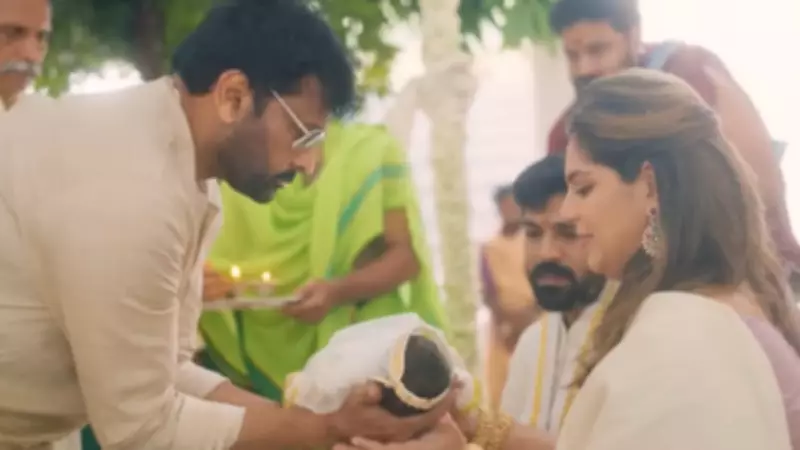
Chiranjeevi's Statement on Grandsons Continuing Legacy Triggers Widespread Criticism Online
Megastar Chiranjeevi, one of the most revered figures in Indian cinema, recently found himself at the center of a social media storm. The controversy erupted after the veteran actor made a comment suggesting that grandsons are the ones who carry forward family legacies. This remark, made during a public appearance, did not sit well with a large section of netizens, who quickly took to various platforms to express their disapproval.
Understanding the Context of the Controversial Remark
While the exact event or interview where Chiranjeevi made this statement has not been specified in detail, it is clear that his words touched upon the sensitive topic of familial inheritance and legacy in Indian society. The actor, known for his illustrious career spanning decades and his philanthropic efforts, likely intended to highlight the importance of family traditions. However, the specific emphasis on grandsons as the primary bearers of legacy was perceived by many as exclusionary and reflective of outdated patriarchal norms.
In many Indian households, discussions around legacy and inheritance often revolve around male heirs, a practice that has been increasingly challenged in modern times. Chiranjeevi's comment, therefore, struck a chord with those advocating for gender equality and the recognition of daughters and granddaughters in continuing family traditions and values.

Social Media Erupts with Disapproval and Debate
The reaction on social media was swift and vocal. Users across platforms like X (formerly Twitter), Instagram, and Facebook expressed their disappointment and anger. Many pointed out that such statements from influential public figures can perpetuate harmful stereotypes.
- One user wrote, "In an era where we talk about women empowerment, such comments from a superstar are regressive. Legacy is not gender-specific."
- Another commented, "Chiranjeevi sir, with all due respect, daughters and granddaughters are equally capable of upholding family honor and traditions."
- A third user highlighted, "This mindset is why we still struggle with gender bias in families. Time to change the narrative."
The backlash was not limited to criticism alone; it sparked a broader conversation about the evolving definitions of legacy in contemporary India. Several users shared personal stories and examples of how women in their families have been instrumental in preserving cultural and familial heritage, challenging the actor's viewpoint.
Examining the Broader Implications for Public Figures
This incident underscores the heightened scrutiny that celebrities and public figures face in the digital age. Every word they utter is subject to public interpretation and can quickly become a topic of national debate. For someone of Chiranjeevi's stature, whose fan base spans generations, the expectation to be mindful of social sensitivities is particularly high.
It also raises questions about the responsibility of influencers in shaping societal attitudes. While Chiranjeevi has often been praised for his humble demeanor and contributions to society, this episode serves as a reminder that even well-intentioned remarks can have unintended consequences. The rapid spread of such controversies on social media amplifies their impact, making it crucial for public personalities to communicate with care.
The Legacy of Chiranjeevi: A Career Beyond Controversy
Despite the recent backlash, it is important to acknowledge Chiranjeevi's monumental contributions to Indian cinema and public life. With a career that includes over 150 films, numerous awards, and significant philanthropic work through his Chiranjeevi Charitable Trust, his legacy is multifaceted. He is celebrated not just as an actor but as a social reformer and a beloved figure in Telugu and Indian culture.
However, this controversy highlights how public perceptions are constantly evolving. As society progresses towards greater inclusivity, even revered icons are expected to align with contemporary values. The discussion generated by Chiranjeevi's comment may prompt deeper reflections within the entertainment industry and beyond on how legacy is defined and discussed in public forums.

In conclusion, while Chiranjeevi's remark about grandsons continuing legacy was likely made without malice, it has ignited a necessary conversation about gender roles and familial inheritance in modern India. The social media backlash reflects a growing demand for more inclusive narratives, reminding us that in today's interconnected world, words carry significant weight and must be chosen wisely.