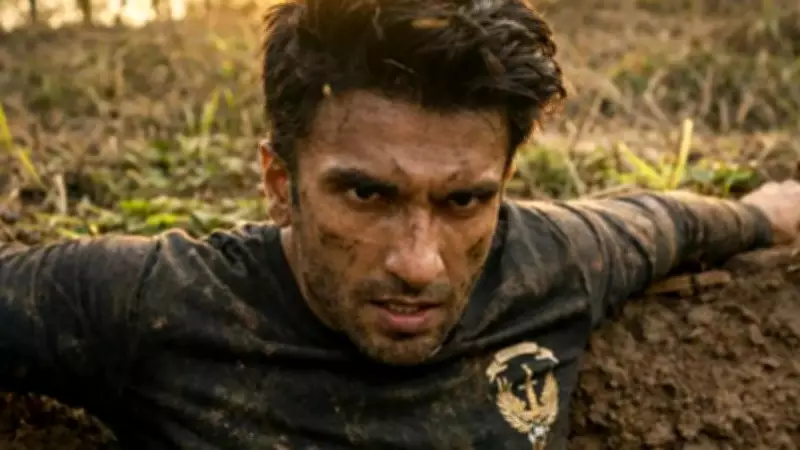
Dhurandhar The Revenge: A Bold Departure from Bollywood Conventions
The eagerly awaited sequel to the blockbuster Dhurandhar, titled Dhurandhar The Revenge, has arrived, promising to challenge audience expectations once again. This article delves into the opening chapter of the film, offering insights without spoilers, focusing on the narrative techniques that set it apart from typical Bollywood fare.
The Opening Acts: A Glimpse into Jaskirat Singh Rangi's Past
The film begins with a poignant scene featuring Jaskirat Singh Rangi, the character before his transformation into Hamza Ali Mazari. In a moment of familial joy, Jaskirat and his family attempt to capture a perfect family photo. However, this happiness is short-lived, as the subsequent scenes quickly establish a sense of unease and impending doom.
A particularly long and shocking sequence follows, one that has sparked debates about violence in cinema. Critics have often accused the Dhurandhar franchise of gratuitous violence, but director Aditya Dhar subverts this notion. The brutality is not for mere spectacle; it serves a deeper narrative purpose. The scene that succeeds the gory action reveals the traumatic events that shaped Jaskirat, offering a profound exploration of his psyche.

Flipping the Bollywood Script: Non-Linear Storytelling
Aditya Dhar masterfully employs a non-linear storytelling approach, defying the conventional linear narratives that dominate Bollywood. This technique keeps audiences engaged, forcing them to piece together the story actively. The script-flip is evident in how Dhar withholds explanations, allowing violence to impact viewers before revealing its context.
Unlike traditional films that build up to justify a hero's revenge, Dhurandhar The Revenge presents violence as a psychological blow. This method aligns with the philosophy of show, don't tell, a principle famously advocated by author George R.R. Martin. Dhar's approach treats the audience as intelligent participants, rather than passive consumers.
Comparisons to George R.R. Martin's Game of Thrones
The seismic shift brought by Dhurandhar parallels the impact of George R.R. Martin's A Song of Ice and Fire series. Both works face criticism for their violence, yet they use it to subvert genre expectations. Martin's unexpected twists, such as the death of Ned Stark, reshaped fantasy literature, just as Dhar's narrative choices are redefining Indian cinema.
Martin's emphasis on immersing readers in the action mirrors Dhar's cinematic style. By placing viewers in the midst of events without spoon-feeding explanations, Dhurandhar The Revenge fosters a more engaging and thought-provoking experience.
Technical Excellence: Elevating Every Department
Dhar's filmmaking philosophy extends beyond the script to every technical aspect of production. He empowers his team—cinematographers, editors, costume designers, and makeup artists—to contribute meaningfully to the storytelling.
- Cinematography: Vikas Nowlakha's visual language mirrors Hamza's psychological journey, using imagery to convey internal transformations without dialogue.
- Editing: Shivkumar V. Panicker's creative cuts, such as lingering on characters' faces, capture silent emotional shifts, enhancing the narrative's depth.
- Music: Shashwat Sachdev integrates retro Hindi songs organically into the plot, using music as a narrative tool rather than a distraction. Tracks like Na Toh Karvan Ki Talash Hai and Hawa Hawa underscore themes and character development.
The Audience as the Superstar
At its core, Dhurandhar The Revenge respects the audience's intelligence. Dhar trusts viewers to connect dots and interpret silences, treating them as equals to the on-screen superstars. This shift addresses a collective fatigue with Bollywood's formulaic plots and emotional manipulation.
The film's success—Part 1 grossed over 1,300 crore and became a Netflix phenomenon—proves that audiences crave intelligent storytelling. By prioritizing craft over celebrity, Dhar has set a new benchmark for Indian cinema.

Conclusion: A Cultural Reset for Bollywood
Dhurandhar The Revenge is more than a sequel; it's a masterclass in filmmaking that challenges the status quo. Through its non-linear narrative, technical brilliance, and respect for the audience, it signals a bold future for Bollywood. As the industry grapples with this change, one thing is clear: the bar has been raised, and audiences are ready to embrace it.