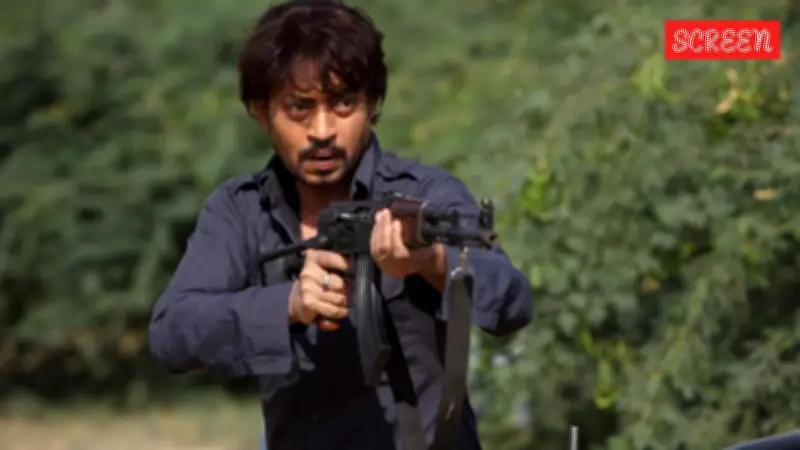
Irrfan Khan's Initial Hesitation: The D-Day Script Rejection
In a fascinating revelation that sheds light on behind-the-scenes Bollywood dynamics, filmmaker Nikkhil Advani has disclosed that the late legendary actor Irrfan Khan almost turned down the critically acclaimed film D-Day. The movie, which eventually became the only collaboration between Advani and Khan, faced significant resistance from the actor during its initial stages.
The Kal Ho Naa Ho Comparison That Almost Derailed the Project
Advani shared exclusive details about his conversation with Irrfan Khan upon presenting the D-Day script. The actor expressed serious concerns about Advani's directorial approach, specifically referencing the filmmaker's previous work on the romantic drama Kal Ho Naa Ho. Irrfan reportedly told Advani, "Yaar, tu Kal Ho Naa Ho banayega toh. Kal Ho Naa Ho ke jaise beech mein gaane daalega. Itna achha script hai, tu yeh sab kar dega uss mein." This translates to: "You'll make it like Kal Ho Naa Ho, adding songs in between. It's such a good script, you'll end up doing all that to it."
The actor's apprehension stemmed from his uncertainty about whether Advani could successfully helm a serious, no-nonsense spy action thriller. Irrfan Khan, known for his discerning script choices and commitment to substantial roles, worried that the film might deviate from its gritty premise and incorporate unnecessary musical elements typical of mainstream Bollywood productions.

Anurag Kashyap's Crucial Intervention
The turning point came when acclaimed filmmaker Anurag Kashyap stepped in to convince Irrfan Khan to reconsider. Kashyap played a pivotal role in bridging the trust gap between the actor and director. He reportedly told Irrfan, "Arey, isne Iss Raat Ki Subah Nahin likhi thi. Yeh behak gaya tha abhi, wapas aa gaya hai. Tu kar le, kar le." This translates to: "He wrote Iss Raat Ki Subah Nahin. He had gone off track for a bit, but he's back now. You should do it, go ahead."
This reference to Advani's earlier work on the film Iss Raat Ki Subah Nahin served as a testament to the director's capabilities with serious, content-driven cinema. Kashyap's endorsement carried significant weight with Irrfan Khan, who respected the filmmaker's judgment immensely.
The Irony of Unrealized Collaborations
Advani highlighted an interesting paradox in Irrfan Khan's career trajectory. Despite Kashyap's profound influence on many of Irrfan's professional decisions, the two never actually collaborated on a film together. The filmmaker revealed that several projects Irrfan undertook were based on Kashyap's informal recommendations—casual suggestions of "do this, do that"—rather than formal joint ventures.
This dynamic underscores the complex network of relationships and influences within the Indian film industry, where informal advice often shapes career paths as significantly as formal contracts and collaborations.
Rishi Kapoor Casting and Performance Insecurities
Another layer to this behind-the-scenes story involves veteran actor Rishi Kapoor's casting as Dawood Ibrahim in D-Day. Advani revealed that Irrfan Khan experienced brief moments of insecurity upon learning about Kapoor's involvement in the project. The actor expressed concern that Kapoor might overshadow other performances, particularly noting that the Dawood Ibrahim character had many of the film's best lines.
Irrfan reportedly told Advani, "Yaar, abhi toh sab kuch le jaayega woh phir. Lines bhi saari achhi ussi character ke paas hain. Rishi sir is too good." This translates to: "Man, he's going to take everything away now. All the best lines are with that character. Rishi sir is too good."
D-Day: A Career Turning Point for Nikkhil Advani
For Advani himself, D-Day represented a significant professional milestone. The filmmaker reflected on how the project transformed his career trajectory and public perception. The film marked a departure from his earlier romantic drama work and established him as a versatile director capable of handling serious, intense subject matter.

Advani noted that prior to D-Day, he struggled to be recognized as a serious filmmaker. The critical reception of the spy thriller changed this perception dramatically. He recalled reading one review that stated, "Can't believe the director of Kal Ho Naa Ho has made this film." This acknowledgment represented a crucial shift in how the industry and audiences viewed his directorial capabilities.
Industry Appreciation Despite Box Office Performance
While D-Day didn't achieve commercial success at the box office, it garnered substantial appreciation within film industry circles. Advani shared that the film received overwhelmingly positive responses during approximately twenty preview screenings. Prominent industry figures including Amitabh Bachchan and Javed Akhtar attended these screenings and expressed their admiration for the film.
The director revealed that as the release date approached, numerous industry professionals contacted him requesting private viewings, having heard positive feedback through word-of-mouth. The team organized back-to-back shows at different times to accommodate these requests, creating a buzz within film circles despite the eventual commercial outcome.
Legacy of a Unique Collaboration
The story of Irrfan Khan's initial rejection and subsequent acceptance of D-Day offers valuable insights into:
- The careful consideration Irrfan Khan gave to every role
- The importance of trust and recommendation networks in Bollywood
- The transformative power of a single film in a director's career
- The complex dynamics between commercial expectations and artistic integrity
This revelation adds another dimension to our understanding of Irrfan Khan's meticulous approach to his craft and the collaborative nature of filmmaking, where sometimes the most significant contributions come from unexpected sources and interventions.