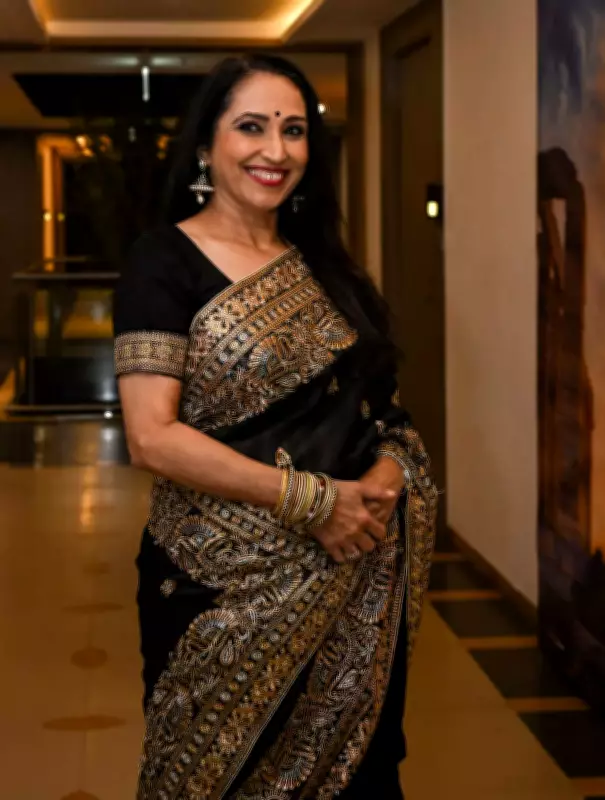
Veteran actress Ketki Dave's infectious energy and unwavering confidence shine through as she reflects on her remarkable career spanning multiple decades across television, films, and theatre. With a deep-seated passion for her craft that remains undiminished, the acclaimed performer continues to embrace every opportunity to connect with audiences through diverse mediums.
Theatre as the Foundational Pillar
Speaking exclusively about her artistic journey, the talented actress from Aamdani Atthanni Kharcha Rupaiya emphasizes that theatre serves as her creative bedrock. "Theatre is the starting point," Ketki Dave explains with conviction. "It teaches you discipline, timing, and presence in a way no other medium can."
She contrasts this with television's unique demands, noting how the small screen requires speed and adaptability as stories and characters evolve constantly. "TV teaches you how to be alert and fast, while movies give you the chance to do quality work with more preparation time," she observes. "Each medium offers its own valuable lessons, and I genuinely embrace this diversity in my artistic practice."

The Enduring Legacy of Daksha Virani
For countless viewers across India, Ketki Dave remains inseparable from her iconic character Daksha Virani, the sharp-tongued bahu from the legendary television series Kyunki Saas Bhi Kabhi Bahu Thi. Her memorable catchphrase 'Ara ra' became a pop culture phenomenon long before social media dominated entertainment, later resurfacing through memes and reels that introduced her to new generations.
Ketki attributes Daksha's lasting appeal not merely to a memorable line, but to the character's authentic portrayal. "She was very real," the actress explains. "People could actually imagine someone like her in their own household. Daksha was funny and sharp, with genuine shades of grey that made her multidimensional. That authentic complexity is why she remains remembered and cherished years after the show ended."
Why Theatre and Television Maintain Their Relevance
As contemporary audiences increasingly gravitate toward Instagram reels and OTT platforms, Ketki Dave observes this shift is partly driven by the unprecedented control viewers now exercise over their content consumption. "Reels and OTT platforms let you fast-forward through parts you don't want to see," she notes. "Society has accelerated dramatically, so naturally, entertainment consumption patterns are evolving accordingly."
Despite the convenience and immediacy of these newer formats, Ketki maintains that traditional mediums like television and theatre retain a distinctive depth and connection that short-form content cannot replicate. "Theatre will never die," she declares emphatically. "It is a live artform where the bond between performer and audience creates something magical. When people laugh, cry, or clap together in a shared space, no technology can recreate that collective human experience."
The Limitations of Artificial Intelligence in Storytelling
Ketki Dave expresses thoughtful caution about artificial intelligence's role in creative fields, acknowledging the technology's utility while recognizing its inherent limitations. "AI may be smart and efficient," she concedes, "but it cannot replicate genuine human experience. An actor draws from real sunsets witnessed, real heartbreaks endured, real joys celebrated. AI can simulate emotions but never truly feel them."
For the seasoned performer, lived experience remains essential to authentic performance—a fundamental truth she believes no algorithm can replicate. "For me, genuine performance, raw talent, and subtle nuance remain at the heart of meaningful storytelling, irrespective of the medium," Ketki asserts. "Theatre is timeless. Even as formats continue to evolve technologically, the irreplaceable experience of being physically present and witnessing a story unfold live will always matter profoundly."
Her perspective offers a compelling reminder that while entertainment platforms may transform, the human elements of connection, authenticity, and shared experience continue to define artistic excellence across generations.