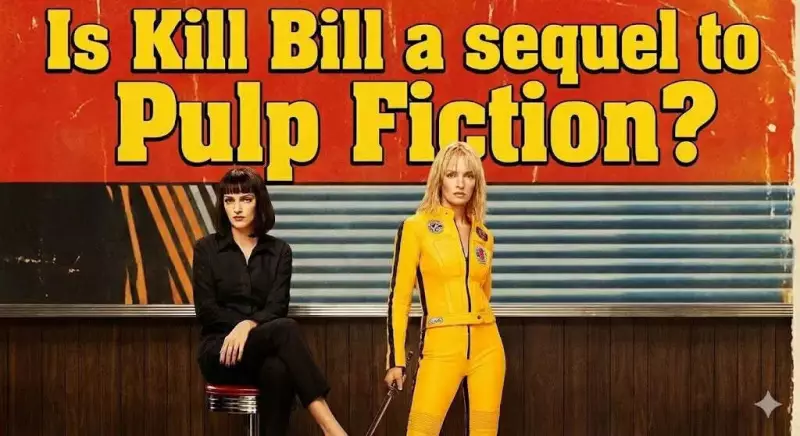
For fans of Quentin Tarantino, watching his films is just the beginning. The real obsession lies in dissecting them, treating each scene as a puzzle piece in a grand, interconnected cinematic universe. This deep-seated devotion has given birth to a persistent and compelling theory: that the hyper-stylized revenge saga Kill Bill is, in some metaphysical way, a continuation of the gritty crime classic Pulp Fiction.
The Uncanny Connection: Fox Force Five and the Deadly Vipers
The theory's foundation is a seemingly throwaway moment in Pulp Fiction. During her iconic evening with Vincent Vega, Mia Wallace recounts her audition for a failed TV pilot called Fox Force Five. She describes the team: a deadly blonde, a Japanese martial arts expert, a black demolition specialist, a seductive Frenchwoman, and a knife-wielding assassin. Years later, when Kill Bill introduced Beatrix Kiddo and her former allies in the Deadly Viper Assassination Squad, the parallels were impossible for fans to ignore. The archetypes matched too perfectly, feeling less like coincidence and more like a hidden blueprint.
Tarantino's "Two Universe" Concept: Realer-Than-Real vs. Movie-Movie
The plot thickened when Tarantino himself offered a framework that fans seized upon. The director has spoken about his films existing in two distinct realms. The first is the "realer-than-real" universe, inhabited by the flawed, talkative criminals of Pulp Fiction, Reservoir Dogs, and Jackie Brown. The second is the "movie-movie" universe, a mythic, heightened reality where genre conventions reign supreme. This is the domain of Kill Bill, Death Proof, and the Hateful Eight—worlds where epic sword fights and over-the-top violence are the norm.

This distinction didn't settle the debate; it supercharged it. If Pulp Fiction's characters live in the "realer-than-real" world, then Kill Bill could theoretically be the exact kind of stylized film they would watch. Suddenly, Mia's Fox Force Five anecdote transforms from quirky dialogue into a prophetic, in-universe trailer for a movie made years later.
Connective Tissue: Motifs, Cameos, and Fan Interpretation
Devotees of the theory point to more than just Mia's story. They weave together recurring elements across Tarantino's filmography as evidence of a hidden tapestry. The omnipresent Red Apple cigarettes, shared surnames like "McGill," and the casting of Uma Thurman in both pivotal roles are treated not as directorial trademarks but as deliberate clues. For these viewers, these are strands of connective tissue linking two layers of the same expansive Tarantinoverse.
However, a literal narrative connection collapses under scrutiny. Mia Wallace is not Beatrix Kiddo. The timeline and tone of Vincent and Jules' Los Angeles cannot logically accommodate the epic, globe-trotting vengeance of the Bride. The films operate in parallel but incompatible realities, united by aesthetic and sensibility, not plot.
And that is precisely why the theory endures and thrives. It speaks to the unique relationship Tarantino cultivates with his audience. They are invited to inhabit his worlds, to sense an internal, atmospheric logic that binds his love for pulp mythology, sharp dialogue, and self-aware characters. The theory validates the desire to see his filmography as one sprawling, interconnected mythos.
So, is Kill Bill a direct sequel to Pulp Fiction? In terms of story, clearly not. But as a conceptual successor—a film that could exist within the pop-culture landscape that Mia Wallace described—the idea holds powerful appeal. It persists because it captures the essence of Tarantino fandom: the relentless drive to map the borders of his imagination and find order in his gloriously chaotic creation.