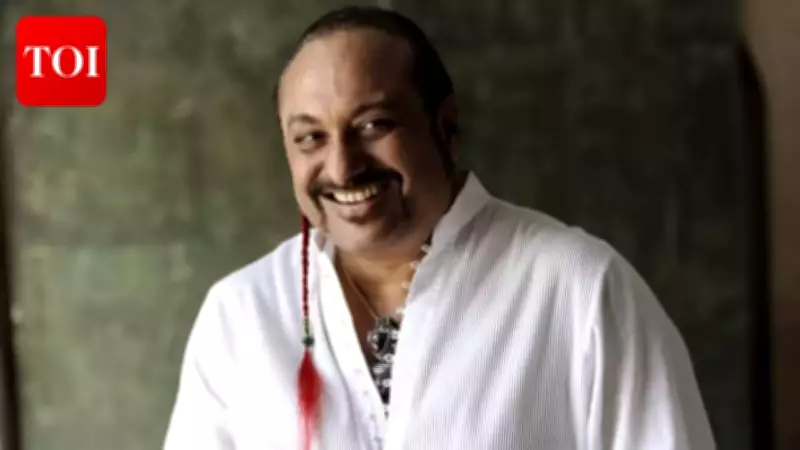
Leslee Lewis Makes a Triumphant Bollywood Return After 26-Year Hiatus
As one half of the iconic duo Colonial Cousins alongside Hariharan, Leslee Lewis played a pivotal role in reshaping the Indian pop landscape during the 1990s. Through genre-defying fusion and enduring indie-pop anthems, he established a distinctive musical identity—marked by rich melodies, deep emotion, and unparalleled originality. Now, after a gap of 26 years, Leslee is making a highly anticipated return to Bollywood as a singer with the track Zorr Ka Dhakka, signaling a full-circle moment in his illustrious career.
An Exclusive Interview on Passion, Melody, and Musical Evolution
In an exclusive conversation with ETimes, the celebrated composer-singer opened up about his decision to avoid chasing trends, how his unwavering passion keeps him feeling "26 at heart," the transformative shifts in the industry's sound, and his firm belief that melody will always outlast marketing gimmicks.
You’re returning to Bollywood as a singer with Zorr Ka Dhakka after 26 years. That’s a significant gap. How does it feel?

"It has been a long time indeed. My last Bollywood contribution was Dekho 2000 for the film Mela, which I both sang and composed for Aamir Khan. Following that, I immersed myself in projects like Coke Studio, extensive live performances, and my independent music ventures. The creative journey never halted—you don't stop making music simply because you're not active in Bollywood. Throughout the 90s, I was consistently producing music, and that momentum has carried forward."
Is this return nostalgic or emotional? Does it feel like unfinished business?
"If I'm not genuinely excited, I won't pursue it—that's just my nature. Whether it was my work on Coke Studio, the music of the 90s, or recent albums like The White Album and Phir Se Rock and Roll, I've always approached each project with the same enthusiasm I had at 17. Music has always been my priority. If I don't enjoy the process, I can't deliver my best. Iconic tracks like Pari Hoon Main, Yaaron Dosti, and Pal were born from pure love for creation, and audiences embraced them. My work has always been driven by passion."
"When Raju Singh approached me to sing Zorr Ka Dhakka, I was immediately thrilled. Rajiv and I share a long history—he's an exceptional composer and producer. I trusted that his invitation had a meaningful purpose. Upon hearing Anusha Srinivasan Iyer's lyrics, they perfectly matched the energetic vibe of a title track. Recording it was an absolute joy, and here I am, 26 years later, lending my voice to another Bollywood title track."
Collaborating on Compositions and Embracing New Opportunities
How does it feel to sing for someone else’s composition instead of your own?
"I absolutely love it. When a composer has a clear vision, they can guide you effectively—much like a film director who elicits the best performance from an actor by understanding the desired emotion. That's precisely what Raju accomplished. He knew exactly how he wanted me to interpret the song."
"In my independent projects, I take charge of every decision as the composer and producer. However, in Bollywood, the film director steers the ship, and the music director leads their department. As a singer, I step in to fulfill their vision. It's not my film or my song—I'm there to contribute as the vocalist. And I find that process equally rewarding."
Can we expect more Bollywood songs from you in the future?
"Absolutely. I'm very open to collaborations—whether as a singer or even as a music director. I would be delighted to work with emerging artists and directors. Sometimes, people perceive me as unapproachable because they grew up with my music from the 90s, leading to a sense of respect that might make them hesitant. But there's no misconception—I'm genuinely open to new partnerships."
"If I'm singing for your film, you are in command, and I align with your vision. When I'm crafting my independent music, I make the calls. That's the sole distinction. I'm not inflexible; I'm eager to create fresh music with new collaborators."

Reflecting on Industry Changes and the Timeless Power of Melody
Looking at your journey from the 90s to now, what has changed more—the industry or your relationship with music?
"Technology has revolutionized everything, and that has profoundly impacted the industry. Today, anyone with a computer can become a composer, and technology can even correct pitch. Corporate entities now wield significant influence over decisions, shifting the focus away from pure artistry. And with AI on the horizon, further changes are inevitable."
"What I find lacking is melody. In the 90s, melodies were robust and memorable. Then technology took precedence. While we now enjoy exceptional sound quality, many songs lack substance. That's why Bollywood frequently resorts to remixing old tracks—the original melodies still resonate."
"I believe melody is making a comeback. Listen to the opening of Zorr Ka Dhakka—it's melodious, not just noise. The song tells a story and is presented musically. Only a strong melody can endure a lifetime. Even in 2026, people are still singing Pari Hoon Main and Yaaron. During Navratri, Pari Hoon Main is played worldwide for nine days annually because it connected deeply with hearts. Melody is my specialty, and I sense that audiences are ready for its revival."
Addressing Industry Patterns and the Role of Passion
Recently, there’s been discussion about repetitive romantic songs following Arijit Singh's retirement from playback singing. How can that pattern be broken?
"A significant factor is algorithms. If one romantic song succeeds, streaming platforms promote 50 similar tracks, resulting in a homogenized listening experience. This isn't always the artist's fault—the algorithm favors what has previously worked."
"Take my White Album, for instance—it features six romantic songs, each with a distinct sound. But such creativity requires time. My 1991 music gained popularity in 1993, Colonial Cousins took time to catch on, and Pari Hoon Main wasn't an instant hit. Some music is ahead of its time; you release it, and gradually, appreciation grows."
What keeps you relevant even today?
"Passion. If someone invests Rs 100 in me, I deliver Rs 120 worth of content. I cannot operate without passion, which is why I remain active in 2026. I was making music in the 80s, stayed relevant then, and continue to do so now."
"I'm not striving to be different—I'm simply being myself. This is my authentic voice. If you appreciate it, fantastic; if not, that's fine too. I've never altered my music to please everyone. It has always remained true to my beliefs. Today, people tell me, 'There's something special in your songs,' which is incredibly gratifying. I've always worked from the heart, and passion is everything. Without it, longevity is impossible."
"You can pour all the marketing money into promotion, shine briefly, and then fade away. But for enduring impact, it must come from within. Check out my concerts on Instagram—you won't feel like you're watching someone who is 65. Age is irrelevant to me; I feel 26. When I began The White Album in 2020, I mentally re-aged myself to 20. So today, I'm 26, and that energy radiates in my performances. My music still rocks."
Navigating Identity and Future Aspirations
Many young composers struggle with finding their identity. What’s your perspective on that?
"Today, numerous artists grapple with identity issues. Society often tries to box you into a single category. If you're a banker, they say you can't be a cricketer. Why not? If you possess multiple talents, you should explore them all."
"But people tend to resist multi-talented individuals—they prefer clear definitions. I can't change that. From my early days with A Band of Boys to my independent work, I've consistently explored diverse sounds. The White Album is romantic and melodic, my rock projects are bold and in-your-face, and my next album might channel 90s Bollywood or indie-pop vibes. Listeners might wonder how one person can produce romantic songs, rock anthems, and retro-inspired tracks. That's my talent, and unless I keep showcasing it, how will people know my capabilities?"
Is that why returning to Bollywood excites you?
"Absolutely. It's not that I abandoned Bollywood—I've simply been incredibly busy. Post-2000, I performed globally—from London and Istanbul to Munich and Beijing. I travel constantly and rarely stay in Mumbai, so if someone wants me to sing, I might not even be in the country."
"But I adore studio sessions. I love standing before a composer and co-creating something magical. That's the real thrill. That's why I was so eager to record with Raju Singh and Anusha again—to build a song together is pure magic."
Final Thoughts on Legacy and Future Endeavors
You’ve witnessed multiple eras in the industry. What do you make of conversations about bias, like recent comments by AR Rahman?
"Honestly, I'm unaware of what he said or the context. I don't follow such political discussions. Rahman is a legend who has given us some of the biggest songs ever. If he made a statement, there's likely a context, but I'm not the right person to comment on it."
"I am my own industry. I don't spend time discussing others' remarks. I don't have many friends in the industry—my companions are my computer, my music, and my next song. Which artist releases an album annually or drops new songs every few months consistently? For the past two years, I've been doing exactly that, with eight to ten songs ready to go."
"I aim to introduce this generation to concepts from 30–40 years ago—not by copying old songs, but by reviving the underlying emotion. Why did our grandparents adore Noorjahan? Why did those melodies resonate so deeply? Our DNA remains unchanged. If something was beautiful then, it can still touch hearts today, but it must be presented anew—with modern production, fresh masala, and contemporary packaging. You don't reuse the old song; you recreate its emotion within a modern soundscape."
If you were starting out today, would you choose the film route first or build your career independently?
"Artists don't always have a clear choice—opportunities present themselves, and you decide whether to seize them. For me, 2026 feels like a new beginning. Singing in Bollywood again after 26 years is exhilarating. Simultaneously, I've been consistently releasing independent music over the past few years. When I heard the recent lyrics, I appreciated how they were crafted and how my voice was utilized—almost like reintroducing me as a new singer in Bollywood. That excites me immensely."
"I just want to reach more places, connect with more people, and keep creating. I'm thrilled about what lies ahead."