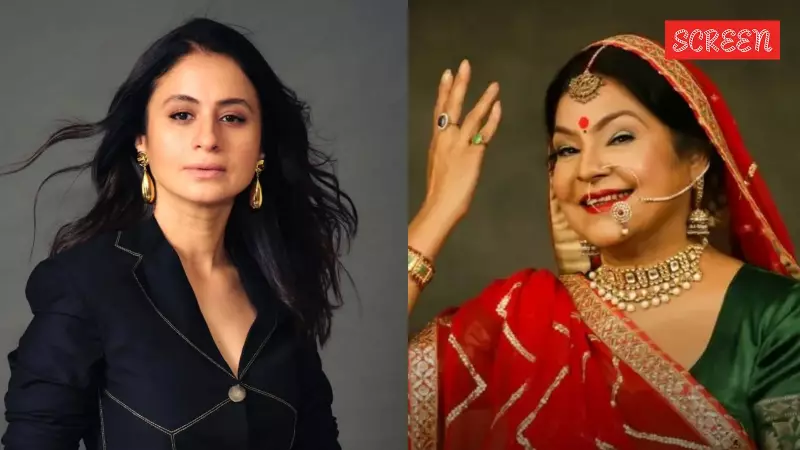
The ongoing debate in Bollywood about on-screen misogyny and an actor's responsibility has ignited a fresh controversy, this time involving actress Rasika Dugal and noted folk singer Malini Awasthi. The clash centers on Dugal's recent statement about avoiding projects that celebrate misogyny, which Awasthi has labeled as the "height of double standards," citing Dugal's own portrayal of Beena Tripathi in the hit series Mirzapur.
The Spark: Rasika Dugal's Firm Stance at We The Women Event
The controversy began when Rasika Dugal, in a conversation with journalist Barkha Dutt at the "We The Women" event for Mojo Story on December 2, 2025, outlined her non-negotiables for choosing roles. "The things I won't do are celebrate misogyny or be part of a propaganda film. Those things are non-negotiable for me," Dugal stated. When asked specifically if she would have accepted a film like the controversial Animal, starring Ranbir Kapoor, her answer was a firm "No."
Dugal elaborated on her position, drawing a distinction between playing a character with different politics and endorsing a project's overall message. "I would be very happy to play a character whose politics is not in sync with mine... But it is important to me that the politics of the project aligns with mine," she explained, using her role in Mirzapur as an example of a character she does not relate to personally.
The Backlash: Malini Awasthi's Sharp Retort and Online Uproar
Dugal's comments quickly drew criticism online, with folk singer Malini Awasthi leading the charge. Awasthi shared a clip of Dugal's interview on social media platform X on December 2, 2025, with a pointed caption: "Coming from someone who played Mrs Tripathi in Mirzapur! Height of double standards!"
This critique resonated with a section of social media users who questioned the consistency of Dugal's stance. One user argued that her character Beena Tripathi's actions, including her sexual relationships within the power dynamics of the Tripathi family, could themselves be viewed as misogynistic portrayals. Another commenter, while praising Dugal's acting skills in series like Delhi Crime and Mirzapur, concluded that her statements came across as hypocritical and damaging to her public image.
The Bigger Picture: Bollywood's Alpha Male Debate and Divergent Actor Views
This incident is not isolated but part of a larger, simmering conversation in the Indian film industry. The release of films like Animal has amplified debates across social media about the celebration of the "alpha male" archetype and the portrayal of misogyny in mainstream cinema.
Actors have found themselves in the hot seat, forced to defend their choices. Earlier, actress Rashmika Mandanna, who starred in Animal, defended her involvement by stating she saw it "as a film" and that an actor's job is to perform, not necessarily to personally relate to the character. This stance stands in direct contrast to Dugal's more selective approach, highlighting the lack of consensus within the industry itself on where to draw the line.
As of now, Rasika Dugal has not publicly responded to Malini Awasthi's criticism or the ensuing online backlash. The debate underscores the complex and often contradictory space actors navigate between artistic expression, commercial demands, and social responsibility in contemporary Indian entertainment.