The Era When VJs Were the Heartbeat of Youth Culture
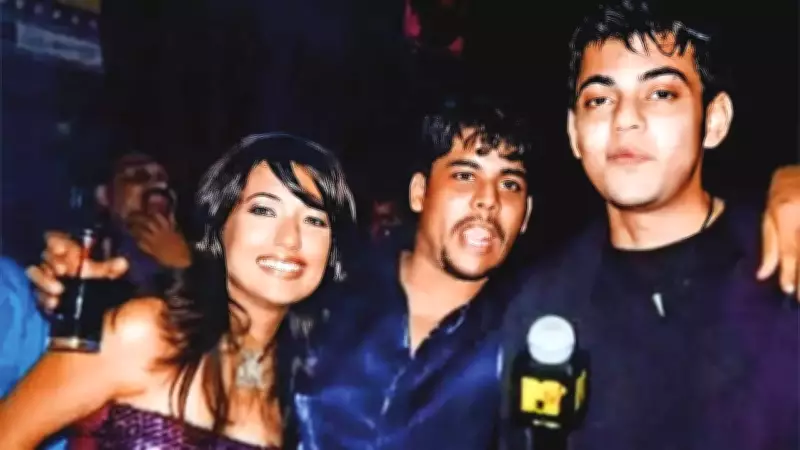
For those who grew up in the 1990s and early 2000s, discovering music wasn't about scrolling through endless social media feeds. It was a ritual. You rushed home after school, switched on the television, and waited with anticipation. You weren't just waiting for the next song—you were waiting for the person who would introduce it. Video jockeys weren't mere fillers between tracks; they were your cool older friends, your pop-culture translators, and your unofficial style guides. They were, fundamentally, the reason you stayed glued to the screen.
"We Were Influencers Before the Word Existed"
"VJs were influencers even before the word 'influencer' existed," declares former VJ Nikhil Chinapa, instantly recognizable for his spiky hair, distinctive voice, and goatee. Mini Mathur laughs at the memory, adding, "We were influencers and didn't even know it." Cyrus Sahukar reinforces this perspective: "Ten or twelve of us were doing exactly what influencers do today – trying to connect with the youth."
During that golden era, music channels were appointment viewing, and VJs served as the essential glue holding pop culture together. As Vaibhav Vishal, former Vice President of Content at MTV, explains, they were "the OG and the only influencers." Vishal elaborates on their diverse personas: "Broacha was the madcap genius, Nikhil the cool guy, Malaika the sex bomb, Maria Goretti the girl next door, Bani J the tattooed rebel." In essence, VJs taught an entire generation of Indians how to be cool.

MTV: A Cultural Revolution That Changed Everything
MTV arrived in India in 1996, and for a generation, it became nothing less than a window to a world beyond their own. It brought home the electric swagger of Britney Spears, the iconic moonwalk of Michael Jackson, and the mosh-pit madness of Green Day. While adults were engrossed in television serials about family feuds and traditional narratives, MTV empowered the youth to break free—one music video and one irreverent VJ at a time.
For Vishal, a boy from Bihar who would later rise to become Vice President of Content at the channel, MTV was profoundly life-changing. "MTV gave wings to me and many from my generation," he recalls. "The world it brought to us, that world was not known to us. For the first time, we weren't thinking only about becoming doctors or engineers. We got to see a facet of life we didn't even know existed."
When Vishal eventually joined the channel that had shaped him, he understood its core philosophy: "Humour-ise, humanise and Indianise." He poetically describes it: "Jaise Shah Rukh Khan ne apne haath failaaye, humne bhi apne haath failaaye - to receive the world."
Relatable Icons Who Made Everyone Feel Included
For young people living outside major metropolitan areas, MTV demonstrated that they too could belong to the cool gang. Nikhil Chinapa shares a poignant memory: "My friend Vaibhav Vishal, who was then a kid in Bihar, used to steal cable to watch MTV. For him, it opened up a world and made him realise, 'Hey, these people are just like me.'"
Each VJ brought a unique flavor to the screen. Mini Mathur explains: "MTV picked people who represented varied aspects of youth. Malaika brought the sexy and fashion, Nikhil was the cool guy with great music sense, and Sahukar and I represented a more desi, indie cool." The audience saw fragments of themselves in these faces, alongside glimpses of who they aspired to become.
They were aspirational yet accessible. Chinapa notes: "People saw Cyrus Broacha and thought, 'He's not a supermodel, doesn't wear designer clothes, but he's cool. I can be cool without needing a lot of money.'"
Creative Chaos: The Unscripted Magic of MTV
To some, MTV was simply a music channel. To others, it represented a global mood board curated by tastemakers long before algorithms dictated our preferences. It wasn't merely a playlist; it was a distinct point of view. Every decision—from which video to premiere to what played next—was made by real people actively shaping culture, unguided by data analytics. And those people enjoyed remarkable creative freedom.

Cyrus Sahukar attributes the magic to that very creative chaos: "We were handed a mic and told, 'Jaaiye aur kuch kar ke aaiye.' Sometimes, more information comes in the way of creativity. We didn't overthink, because when you overthink, you become fearful; that's why we did bad work and some good work, but it was all fun." Nikhil Chinapa concurs: "We genuinely had no clue what we were doing. We learnt to be creative in confined spaces. We'd just come up with something on the spot."
This spontaneity profoundly influenced a generation. Cyrus Broacha reflects on their popular show: "Bakra was like a social experiment. Sometimes the most stupid gags worked and the most planned ones failed." Because the internet wasn't waiting to critique every move, the humor had room to breathe. Sahukar adds: "It was a time when there weren't so many rules and everyone was being made fun of. There was a lot of joy in that irreverence."
The Legacy: From VJs to Today's Digital Landscape
These pioneering VJs fundamentally changed how India consumed media, shaped pop culture, and paved the way for today's digital creators—long before "content creation" became a formal career path. The MTV VJs didn't merely sell opinions; they embodied the opinion. Authentic, witty, and unfiltered, they shaped how an entire generation perceived the world.
Mini Mathur believes intent distinguishes them from contemporary influencers: "We were mindful of the language we used, of not overstepping boundaries. That responsibility is missing now. Today, people are doing anything for eyeballs." Vaibhav Vishal echoes this sentiment: "They were self-assured and aware of their specialities, not chasing likes or subscribers. Influence then was a real term. They changed lives."
Sahukar, while not dismissive of today's creators, acknowledges they face different challenges: "We were allowed to play. Today's influencers serve the algorithm. That's the tough part." His advice to modern creators is heartfelt: "Go, play and have fun. Don't only serve the algorithm. Do things which are authentic and fun for yourself. Little by little you'll find an audience if you're consistent. Don't stop yourself worrying about what will work and what won't."
An Era That Lives On in Spirit
Today, MTV India thrives primarily on reality formats like Roadies and Splitsvilla. While youth still tune in, the dedicated music programming has diminished. Cyrus Broacha sighs nostalgically: "Ayushmann (Khurrana) and Rannvijay (Singha) were the last of the VJs. VJs tiger ke jaise extinct ho gaye."
Perhaps the specific role has evolved, but the spirit endures. Every time someone picks up a microphone, stares into a camera, and genuinely attempts to connect with an audience—somewhere, an MTV VJ from the 90s smiles, knowing they started it all.