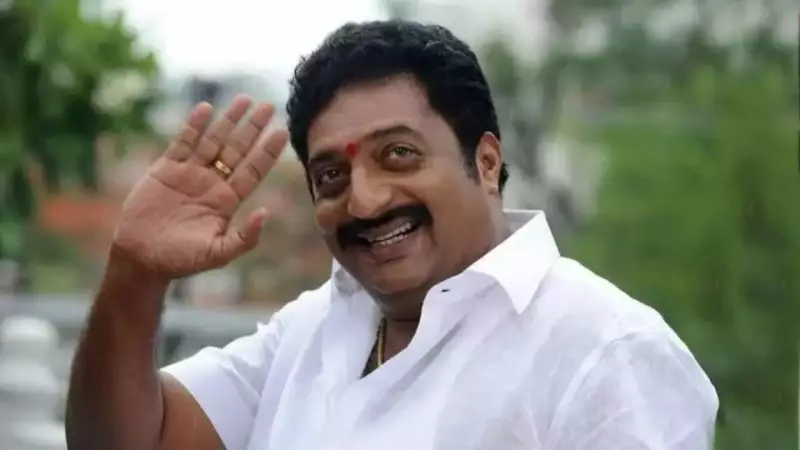
In a striking critique that has sparked conversations across the Indian film industry, acclaimed actor Prakash Raj has voiced strong disapproval of mainstream Hindi cinema, labeling it as increasingly "fake" and "money-oriented." Speaking at the ongoing ninth edition of the Kerala Literature Festival (KLF) on Saturday, Raj contrasted this with his praise for Malayalam and Tamil cinema, which he hailed for their robust, content-driven storytelling.
A Scathing Comparison: South vs. Hindi Cinema
During a session titled "The Artist I Became," the award-winning actor, renowned for his versatile work across Tamil, Telugu, Hindi, Kannada, and Malayalam films, did not mince words. He described Hindi cinema as resembling a "Madame Tussauds museum," where everything appears beautiful on the surface but lacks genuine substance. "In the present context, I feel Malayalam and Tamil cinema are making very strong films... Hindi cinema, on the other hand, has lost its roots. Everything looks beautiful, wonderful, like plastic," Raj elaborated.
Roots in Storytelling and Social Issues
Raj emphasized that South Indian cinema, particularly Tamil films, continues to engage with pressing social narratives. "We (the South) still have stories to tell, the new young directors of Tamil are talking about Dalit issues. And that gives so much of hope," he stated. This focus on meaningful content, according to Raj, sets these industries apart from their Hindi counterpart, which he believes has strayed from its foundational values.

Tracing the Decline: The Multiplex Era and Urban Shift
The 60-year-old filmmaker-actor delved deeper into what he perceives as the ailments plaguing Hindi cinema. He traced its decline to the post-multiplex era, when the industry began catering predominantly to urban audiences. Raj, known for his memorable roles in hit films such as "Singham" and "Wanted," argued that this shift led to a focus on glamour and superficial aesthetics, weakening the emotional bond with viewers.
"After multiplexes, the Bombay film industry started making films only for multiplexes. Very cute films and things like that. Because they were running well. They went into that Page 3 culture, and with that lost the touch with rural Rajasthan and Bihar," he explained. This transition, Raj contended, also contributed to the erosion of nation-building narratives that once characterized post-independence Hindi cinema.
Loss of Collective Aspirations and Social Harmony
To illustrate his point, Raj cited the 1977 blockbuster "Amar Akbar Anthony," highlighting its famous scene where three men from different religions donate blood to save one person. This, he noted, reflected shared values, social harmony, and collective aspirations that have since faded. "Now, it's not like that anymore. Today, it's all about money and appearances -- reels, page 3 coverage, and loud self-promotion. In the process, I feel the industry has lost its connection with the audience," he concluded.
Kerala Literature Festival: A Platform for Diverse Voices
The four-day literary extravaganza, KLF 2026, is hosting over 400 speakers, including notable figures such as Nobel Laureates Abdulrazak Gurnah and Abhijit Banerjee, astronaut Sunita Williams, author Kiran Desai, essayist Pico Iyer, Jnanpith winner Pratibha Ray, sports icons Rohan Bopanna and Ben Johnson, and Wikipedia founder Jimmy Wales. Now in its ninth edition, the festival is set to conclude on January 25, providing a vibrant forum for discussions on art, culture, and society.
Prakash Raj's candid remarks at KLF underscore a growing discourse on the evolution of Indian cinema, prompting reflections on authenticity, commercial pressures, and the enduring power of storytelling in regional film industries.