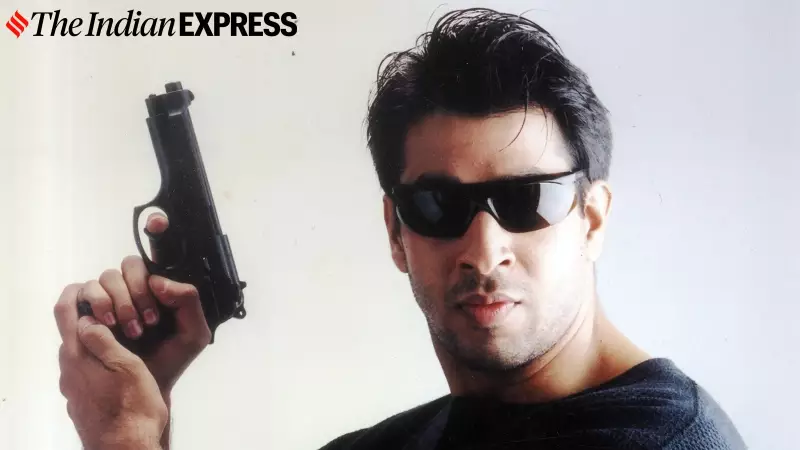
'People Think I'm Lucky, But I Made My Own Luck': Rajat Bedi's Emotional Journey
Actor Rajat Bedi, who recently made a significant return to screens with a key role in Aryan Khan's The Ba***ds of Bollywood, has opened up about the profound emotional toll of his career setbacks spanning two decades. In a candid interview with Digital Commentary, the actor known for playing villains in several Bollywood films, including the 2003 blockbuster Koi… Mil Gaya, shared intimate details of his struggles away from the spotlight.
The Pain Behind the Comeback
Rajat revealed that he decided to step away from acting in the mid-2000s after failing to reach the next level in his career. He moved to Canada to start a real estate business, but faced multiple hurdles there as well, including being cheated by business partners. Reflecting on the two decades away from the spotlight, Rajat shared, "People only see the comeback, but for the last 20 years, I have been in pain. They think I'm lucky. But I've made my own luck. I never gave up. Yes, I've been fortunate as well."
The actor emphasized that his journey has been anything but easy, with years of professional disappointment and personal challenges shaping his path. His decision to leave Bollywood was not taken lightly, and the subsequent business ventures abroad brought their own set of difficulties that tested his resolve repeatedly.

Family Support Through Difficult Times
Rajat Bedi credited his wife as being a constant pillar of support during his most challenging periods. "My wife has been a constant support for me. She's experienced a lot of sadness because of me," he added emotionally. "But because of this show, she is sharing the joy as well. She can't believe what our family is witnessing. My children have also become popular on social media. Yes, she had to bear with a lot of setbacks because of me, but she is now seeing the fruits of my labour."
This acknowledgment highlights how career struggles often extend beyond the individual to impact entire families, with partners bearing emotional burdens alongside professional disappointments.
Expert Insights on Career Setbacks and Emotional Resilience
Understanding the Emotional Impact
So, how do long-term career setbacks affect a person's emotional well-being, and what coping mechanisms can help someone build resilience? Gurleen Baruah, existential analyst, explains, "It really depends on the person, their values, and their life context. For some, a career is closely tied to identity, so setbacks can feel like personal failure, bringing feelings of not being good enough or being left behind. Over time, this can affect confidence and mental health. Coping often means shifting perspective: seeing life as a marathon, not a sprint."
She adds that resilience builds when we "reframe setbacks as temporary, seek meaning beyond just work, and lean on relationships." Practical tools, such as therapy, journaling, physical activity, or setting smaller, achievable goals, can help restore balance during difficult professional transitions.
Supporting Partners Through Career Struggles
How can partners in such situations support each other without feeling overwhelmed themselves? It's natural for partners to feel overwhelmed, Baruah notes, and supporting someone through long struggles is not easy. "The healthier way is not to deny this, but to acknowledge the weight and still stay connected. In therapy, we often see that what helps most is trust, believing in your partner when they can't believe in themselves."
Support also means holding space, but not carrying everything alone. Sharing feelings openly, creating small rituals of care, and seeking outside networks of support (friends, therapy, community) can prevent burnout. "It's less about being endlessly strong and more about being real, while still standing beside each other," Baruah emphasizes.

Balancing Struggles and Victories in Family Life
According to Baruah, families function best when both struggle and joy are given space. If only the lows are spoken of, life feels heavy; if only highs are celebrated, struggles feel invisible. Equanimity, the capacity to hold both sides together, becomes important here. This means accepting that careers have cycles, normalising ups and downs, and not tying love or respect only to success.
"Celebrating small wins, expressing gratitude, and creating family rituals of togetherness (meals, conversations, shared activities) help in balancing the emotional climate. Over time, this creates resilience, where both setbacks and successes are carried collectively, not alone," mentions the expert.
Rajat Bedi's story serves as a powerful testament to this approach, demonstrating how professional comebacks are often built on foundations of personal resilience and family support that develop over many challenging years.