For over a decade, Ranveer Singh has been synonymous with explosive, high-voltage energy on screen. From the boisterous charm of 'Simmba' to the grand, emotional scale of 'Bajirao Mastani', his career has been defined by a larger-than-life presence. However, his latest film, 'Dhurandhar', which hit theatres on 5 December 2025, presents a Ranveer Singh we have never seen before. This is not the storm at the centre of the frame, but the quiet, dangerous shadow moving silently within it.
A Stripping Down of the Persona
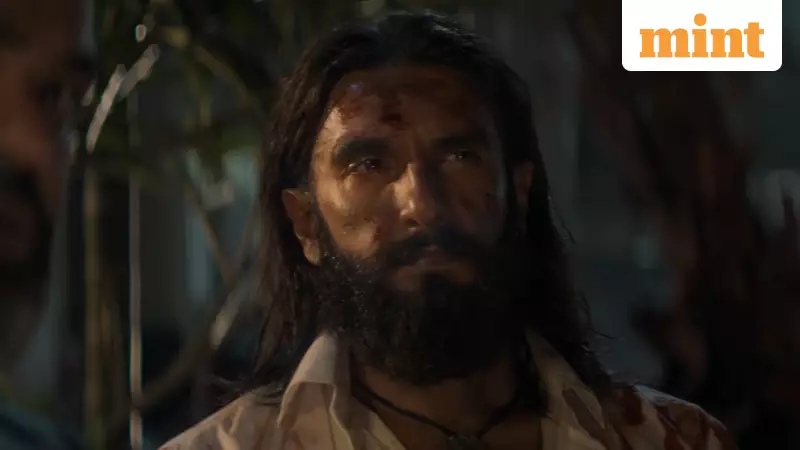
The first and most immediate change is visual. Gone are the flamboyant costumes and the expansive, physical gestures that have become his trademark. In 'Dhurandhar', Ranveer adopts a hard, stripped-down exterior. He sports long, messy hair, a contained expression, and a posture that speaks of rigorous control. This deliberate muting of his external persona is the first clue to a deeper, more significant shift in his acting approach.
Ranveer Singh has always been an intensely expressive actor, one who commands attention in every scene. In this spy thriller, he does the opposite. He pulls everything inward. The performance is built not on action, but on reaction. He works through scenes with minimal movement, allowing the tension to reside in his eyes or in the tight control of his breathing. The spaces between his actions become the most compelling part of his performance, a masterclass in subtlety.

Controlled Menace: A New Kind of Intensity
This transformation is particularly fascinating because it feels like a logical, yet radical, evolution of his craft. While some may point to his dark and gritty role as Alauddin Khilji in 'Padmaavat' as a precursor, the approach is fundamentally different. Khilji's menace was explosive and terrifyingly loud. In 'Dhurandhar', the menace is communicated through an unsettling stillness.
Ranveer lets the audience into his character's mind with nothing more than an intense, unbroken gaze. This controlled, simmering threat is a far cry from the flamboyant showman of his past roles. The film's espionage theme provides the perfect canvas for this restraint, where spy work depends on observation, calculation, and suppressed reaction. He modulates his voice carefully, letting emotional beats simmer without ever allowing them to erupt.
The power of this restraint is fully realized in the film's second half. In a pivotal, emotionally charged scene, his character breaks down, expressing anger and profound vulnerability over his failure to prevent the 26/11 attacks. This moment lands with devastating weight precisely because of the years of tightly held emotions he portrays. The release is powerful because the containment was so complete.
Not a Detour, But a New Chapter
This reinvention is a bold gamble for an actor whose natural kinetic energy is so potent. Yet, it never feels like he is suppressing himself. Instead, it appears he is refining his craft, choosing precision over volume. The flamboyant performer hasn't vanished; he has consciously decided not to lead with that aspect for this role.
For critics and audiences alike, 'Dhurandhar' does not feel like a one-off experiment. It signals a genuine and exciting shift in Ranveer Singh's career trajectory. It demonstrates his ability to merge his trademark intensity with a new, nuanced, and controlled approach to character building. With the sequel, 'Dhurandhar 2 – Revenge', already announced for March 2026, the industry is keenly watching to see how far he will carry this compelling transformation.
Ranveer Singh has convincingly played kings, charismatic cops, and historical icons. But in becoming a man who must operate in silence and survive in the shadows, he may have delivered his most daring and impactful performance to date.