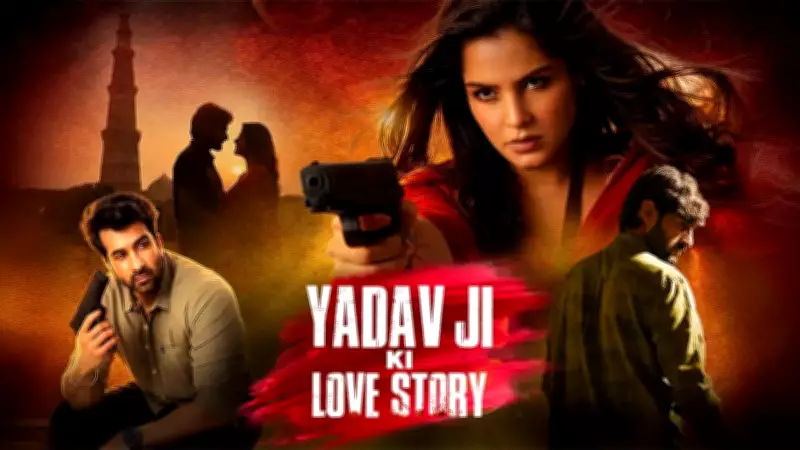
Supreme Court Rejects Plea to Ban Yadav Ji Ki Love Story, Upholds Film Title
In a significant ruling that reinforces artistic freedom, the Supreme Court of India has dismissed a petition seeking either a ban on the film Yadav Ji Ki Love Story or a change to its title. This decision comes amid a growing trend of legal challenges against film titles, following the recent controversy surrounding Ghooskhor Pandat.
Legal Challenge and Community Objections
The controversy erupted when the chief of the Vishwa Yadav Parishad approached the court, alleging that the film's title cast the Yadav community in a negative light. The petitioner's primary objection stemmed from the storyline, which revolves around a Hindu girl marrying a Muslim boy, arguing that this narrative, combined with the title, unfairly portrayed the community.
On Wednesday, a bench comprising Justices BV Nagarathna and Ujjal Bhuyan examined the submissions and firmly dismissed the petition. The court observed that the core complaint was that the film's title allegedly tarnished the community's image, but found this claim lacking merit.

Court's Reasoning and Distinction from Previous Case
Addressing the petitioner's argument, Justice Nagarathna remarked, "Therefore, the contention is that the name of the film is to be changed. We fail to understand as to how the title of a film can reflect the community in a bad light. The title of the film nowhere has any adjective or any word that portrays the Yadav community in bad light."
The bench explicitly distinguished this case from its earlier order involving Ghooskhor Pandat, where the court had directed the producer to modify the title. In that instance, the word 'ghooskhor' translates to 'corrupt' in English, attaching a negative meaning to the community. In contrast, the judges described the concerns over Yadav Ji Ki Love Story as "wholly unfounded."
The order elaborated: "In the instant case no such negativity is attached to the Yadav community. Neither of the reasonable restrictions under Article 19(2) (reasonable restrictions to freedom of speech and expression) under the Constitution are attracted. The name in no way portrays the Yadav community in bad light or any negative way. The writ petition is accordingly dismissed."
Clarifications and Final Ruling
During the proceedings, the petitioner's counsel clarified that the organisation was not opposed to inter-community marriages but objected to the depiction of a woman in the narrative. However, the bench was not persuaded, noting that the film is a fictional creation and does not warrant judicial intervention on those grounds.
This ruling underscores the judiciary's stance on balancing community sensitivities with creative expression, setting a precedent for similar disputes in the entertainment industry. The dismissal reinforces that mere titles, without derogatory language, are protected under constitutional freedoms, unless they explicitly harm a community's reputation.