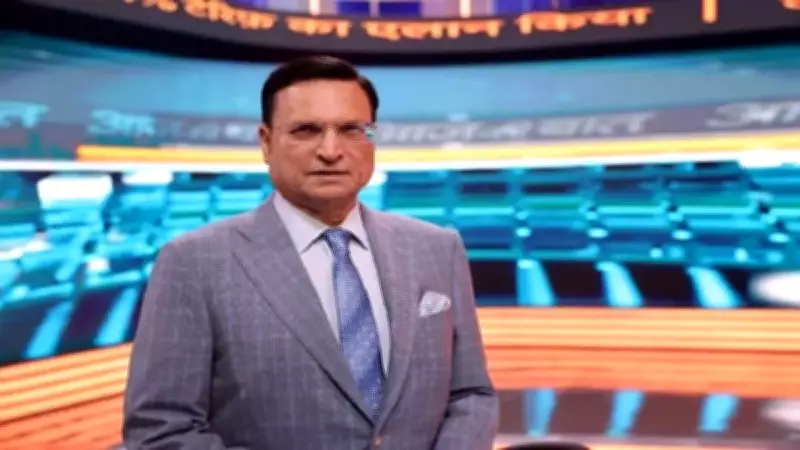
Rajat Sharma Delivers Scathing Critique of Rahul Gandhi in Opinion Blog
In a recent opinion piece published on his blog, veteran journalist and television anchor Rajat Sharma launched a sharp criticism against Congress leader Rahul Gandhi. The article, part of his series "Aaj Ki Baat," uses vivid metaphors to question the substance and credibility of Gandhi's political statements.
Metaphorical Attacks on Political Rhetoric
Sharma's central argument revolves around the idea that falsehoods in politics cannot sustain themselves over time. He famously stated, "A lie has no legs to stand on," implying that without factual backing, political claims will inevitably collapse under scrutiny. This phrase serves as a direct challenge to the narratives often presented by opposition figures, including Gandhi.
Further intensifying his critique, Sharma employed another striking analogy: "A shirtless can't be a lion." This metaphor suggests that mere appearance or bold posturing without genuine strength or capability is insufficient for effective leadership. In the context of Indian politics, this is interpreted as a comment on Gandhi's perceived lack of substantive action or policy depth, despite his prominent role.

Context and Political Implications
The opinion piece comes amid ongoing political debates and elections, where Rahul Gandhi has been actively campaigning and making statements on various national issues. Sharma's blog, dated February 25, 2026, reflects a broader discourse within media circles about the quality of political discourse and leadership accountability.
Key points from Sharma's analysis include:
- An emphasis on the importance of truth and evidence in public statements.
- A critique of what he views as superficial or empty rhetoric from political leaders.
- A call for more robust and credible opposition politics in India.
Reactions and Broader Impact
While the blog post is an opinion piece, it has sparked discussions among political analysts and the public. Supporters of Sharma praise his straightforward approach, while critics argue that such metaphors oversimplify complex political dynamics. The article underscores the role of media figures in shaping political narratives and holding leaders accountable.
In summary, Rajat Sharma's latest blog entry uses powerful imagery to question Rahul Gandhi's political stance, highlighting concerns about truthfulness and leadership efficacy in contemporary Indian politics.