Behind the Scenes: The Creative Battle for Sonu Nigam's Voice in Bhool Bhulaiyaa 3
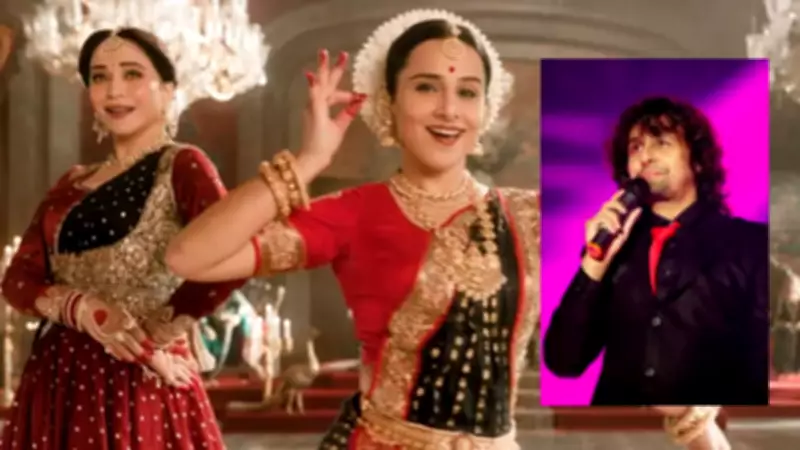
Kartik Aaryan's horror-comedy blockbuster 'Bhool Bhulaiyaa 3', which premiered in November 2024, achieved remarkable commercial success while also capturing hearts with its memorable soundtrack. The film's music resonated deeply with audiences across India, with particular praise showered upon tracks like 'Ami Je Tomar 3.0' performed by Shreya Ghoshal and the standout rendition of 'Mere Dholna 3.0' by legendary playback singer Sonu Nigam.
The Unexpected Resistance to a Musical Legend
In a recent candid revelation, composer Amaal Mallik opened up about the surprising struggle he faced to bring Sonu Nigam on board for the recreation of the iconic song. Mallik disclosed that the singer's inclusion was met with initial skepticism and was far from a unanimous decision within the production team. Many involved in the project expressed doubts about whether Sonu Nigam was the appropriate choice for the track, creating unexpected hurdles in the creative process.
Speaking about his meticulous approach to music composition, Amaal emphasized that he invests considerable thought into selecting the perfect voice for each creation. He recalled facing significant pushback when proposing Sonu Nigam for 'Mere Dholna 3.0', stating, "They didn't want someone as amazing as Sonu Nigam to sing Mere Dholna 3.0; they were not sure we should go with someone like Sonu Nigam. And now, he's everywhere. One song changes everything. Even he has to go through this! For someone as legendary, as talented as him, you put him in the witness box, take his test! Then where do we stand," Mallik expressed with visible frustration.

Navigating Internal Conflicts and Creative Vision
While the film's producers and director supported Mallik's artistic decision, the composer revealed that other key stakeholders held contrasting opinions. Elaborating on the internal dynamics, he explained, "Bhushan Kumar Sir is convinced. ANR (Artists and Repertoire) is convinced. The director is convinced. Other people from the marketing team someone's coming; from the actor's team, the manager's coming who are then suggesting 'Why shouldn't we go with Arijit Singh? Shouldn't we go with Vishal Mishra?' And I understand as my choices were these three, but I wanted a little bolder voice," Mallik clarified.
The composer went on to articulate his unwavering conviction that Sonu Nigam represented the ideal choice for the song, describing him as the embodiment of classical music in India. Mallik's vision centered on securing a voice that could authentically capture the song's intricate classical elements while delivering the emotional depth required for the cinematic moment.
The Recording Session That Silenced Critics
Recounting the actual recording session, Amaal shared an impressive anecdote that ultimately validated his selection. "He completed the song in 45 minutes. It is the toughest song on Earth that I have recomposed. Pritam da's original that I made into a new verse. That sargam at the end, ask any classical musician, who think it must have taken 5 hours to complete," Mallik revealed with admiration.
He further detailed the remarkable efficiency of the recording process: "We had booked the studio from 7 to 12 at night. He came directly from a show in the US at 10 and finished it by 10:45, around 11. And then everyone was like 'Wow, what a song!' But during the process to bring his voice for the song, they were ready to remove me from the film saying that you aren't listening to us! So when I am choosing my singer, there are times that the composer is getting replaced!" Mallik disclosed, highlighting the intense pressure he faced during production.
This behind-the-scenes revelation offers a fascinating glimpse into the complex creative negotiations that occur within Bollywood music production, where even established legends like Sonu Nigam must sometimes prove their worth against competing suggestions and commercial considerations. The eventual success of 'Mere Dholna 3.0' and its widespread appreciation by audiences ultimately vindicated Amaal Mallik's artistic instincts and persistence.