In a cinematic landscape often dominated by jingoistic spectacle, director Sriram Raghavan has delivered a profound correction with his latest film, 'Ikkis'. Released in early 2026, the movie stands as a deliberate and thoughtful anti-war statement, arriving in a cultural moment defined by films like 'Dhurandhar'. Raghavan, making his first foray into the war genre, uses it to underscore the profound human cost and ultimate futility of conflict.
A Cinematic Reflection on Trauma and Peace
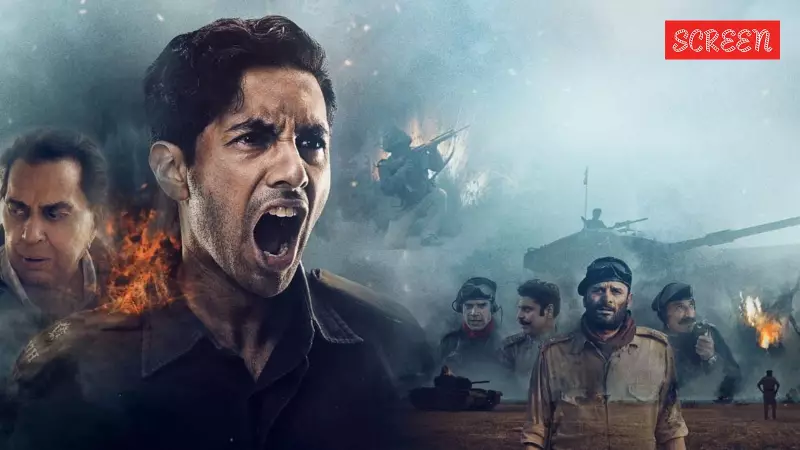
The film is built around a dual narrative. One thread follows Brigadier Madan Lal Khetarpal (Dharmendra), who returns to Lahore for his college's centenary. Born in Sargodha, now in Pakistan, he visits his ancestral home, now occupied by a Pakistani family, navigating landscapes and memories scarred by the Partition of 1947. The other timeline follows his grandson, Second Lieutenant Arun Khetarpal (Agastya Nanda), during the 1971 Indo-Pak war, where the young soldier confronts the brutal reality of the battlefield.
The casting of veteran actor Dharmendra is itself a masterstroke laden with meaning. Like his character, Dharmendra was born in a region reshaped by Partition, carrying the intimate and collective scars of that history. As one of the last superstars of his generation—alongside Dilip Kumar, Dev Anand, and Raj Kapoor—who witnessed that violence firsthand, his presence in 'Ikkis' serves as a living bridge to a painful past. The film, marking his final performance, becomes a powerful swan song that reflects his lifelong engagement with Partition's trauma and advocacy for peace.

Questioning the Pageantry of War
Raghavan consciously rejects the traditional Bollywood war movie template, which often glorifies battle and celebrates nationalist pageantry. Instead, 'Ikkis' focuses relentlessly on what war takes away. In one haunting scene, a soldier lies dead while a radio beside him casually continues to play the song "Unko Yeh Shikayat Hai." The chilling indifference of life moving on underscores the film's central theme. Later, when a ceasefire is announced via an ordinary radio broadcast, there is no grandiose victory speech—only soldiers erupting in raw, relieved joy at the mere prospect of survival and going home.
Through Arun's eyes, the film explores the disillusionment of a young man who longed for the battlefield, only to be shattered by its catastrophic reality. When a journalist asks him what war is like, he is rendered speechless. Raghavan methodically avoids inflating heroism for spectacle, instead honoring the weight of a soldier's sacrifice without cheap sentimentality. He poses a critical question: in an arena where so much is determined by chance, what truly defines heroism?
The Collapse of Borders and a Call for Humanity
A recurring realization for both Madan Lal and Arun is the unsettling similarity between the lands divided by border. Arun, upon reaching Pakistan in his tank, is struck by how much the terrain resembles his own homeland, echoing the poignant sentiment from Yash Chopra's 'Veer-Zaara'. This collapse of the familiar and the foreign challenges the very idea of enmity.
The film's most powerful moments advocate for humanity over hatred. In a key scene, a former Pakistani soldier (Deepak Dobriyal) unleashes years of accumulated anger at Madan Lal's presence. The Brigadier's response is not retaliation but a simple, healing hug. In another, Madan Lal's childhood friend (Asrani), now battling Alzheimer's, cannot comprehend the divisions created by modern borders, leading to the poignant question: "What happened to the country?"
Raghavan uses these juxtapositions to ask urgent questions of the audience: Have we grown so accustomed to violence that peace intimidates us? Have we fed our hearts so much hatred that there is no room left for humanity? 'Ikkis' argues that while generational traumas may never fully heal, they can be soothed, if only temporarily, by empathy and connection. The film, released on January 3, 2026, emerges as a vital cinematic work that mourns a fading generation of witnesses while pleading for a future free from the cycles of conflict they endured.