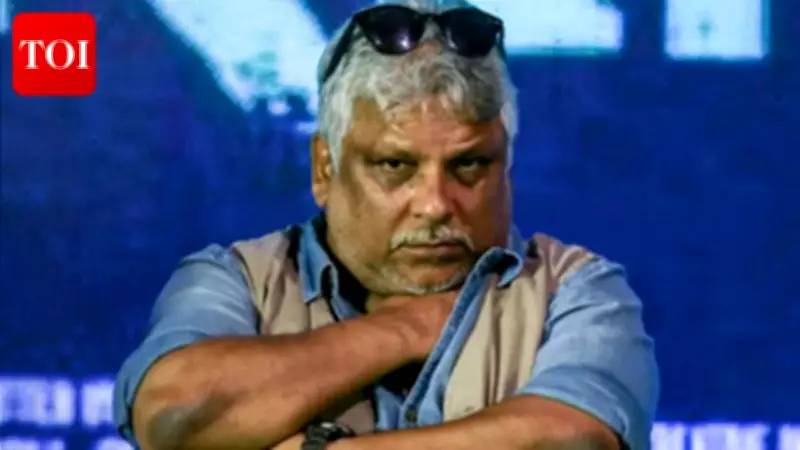
Filmmaker Sudipto Sen Voices Strong Criticism of Hollywood's Global Influence
Renowned filmmaker Sudipto Sen, best known for directing the controversial film 'The Kerala Story' and producing the upcoming project 'Charak', has recently shared his candid perspectives on cinema, censorship, and the international film landscape. During an extensive discussion, the director opened up about his personal viewing preferences and the storytelling approaches that shape his creative work.
Preference for Realistic Cinema Over Commercial Spectacles
Sen explained that his artistic choices are fundamentally influenced by the types of films he personally enjoys watching. Rather than being drawn to large-scale commercial productions, he demonstrates a clear preference for stories grounded in realism and social context. This inclination naturally directs his attention toward European and West Asian cinema instead of mainstream American filmmaking.
"I like to watch realistic films, that's why I like European cinema more," Sen stated during an interview with Moneycontrol. "I don't watch Hollywood. I like European cinema a lot. I like Iranian cinemas, Western Asian cinemas, European cinemas. I watch them a lot."

The filmmaker emphasized that these cinematic traditions focus more intently on authentic human experiences and realistic narratives, which align closely with his own filmmaking sensibilities. His comments highlight a firm belief that cinema should reflect genuine life struggles and emotions rather than relying primarily on spectacle-driven storytelling.
Strong Criticism of Hollywood's Historical Role
Sen proceeded to make particularly strong statements about the American film industry, expressing his disapproval in unambiguous terms. "I hate Hollywood from the bottom of my heart. I hate Hollywood," he declared without reservation.
When asked to elaborate on his position, the filmmaker argued that Hollywood's global influence has historically shaped narratives that reinforced specific power dynamics worldwide. According to Sen, the early development of Hollywood played a significant role in promoting a worldview centered on Western dominance.
"Hollywood was made for this purpose in early 20th century," Sen explained. "When Hollywood's studio was being made, it was made for this purpose that one day they will set the narrative of the world. There will be a hero of white skin and there will be a black villain, so the hero of white skin will go and kill the black."
Examining Narrative Construction and Visual Techniques
The director suggested that the industry frequently framed stories in ways that placed white protagonists at the center while depicting others as antagonists. To illustrate his argument, Sen referenced the film 'City of Joy' as an example of how visual storytelling can influence perception.
"Do you know which company used to make films if a white hero in black area in Africa? There was a film called City of Joy," Sen noted. "The hero was white skin and the people of Kolkata who were brown skin like me, when they used to walk with them there was a halo around them."
Sen further discussed the role of technology and camera techniques in shaping visual narratives, mentioning that "Kodak company later told that they made a special film for this purpose which will create a halo on a particular exposure."
Connecting Hollywood to Global Issues
The filmmaker connected Hollywood's narrative influence to broader global challenges, stating: "I feel that this world which is suffering in Africa so much poverty, so much starvation, in countries like ours so much communal issues, people fighting with each other from small to big, behind all this is Hollywood."
Concluding his perspective, Sen reiterated his belief that Hollywood's global dominance was intentionally designed to influence perceptions and narratives across developing nations. "So Hollywood's world was made to rule third world country, to rule second world country, so I hate it," he summarized.

Impact and Context of Sen's Remarks
These remarks have generated significant conversation online, particularly given Sen's reputation for addressing controversial subjects through his cinematic work. The director is known for films like 'The Kerala Story', 'Bastar: The Naxal Story', and his upcoming project 'Charak', all of which engage with complex social and political themes.
Sen's criticism emerges at a time when global conversations about representation, narrative control, and cultural influence in cinema are increasingly prominent. His perspective adds to ongoing discussions about how film industries shape societal perceptions and which voices dominate international storytelling.
The filmmaker's preference for European and Iranian cinema reflects a broader appreciation for narrative traditions that prioritize character development and social realism over commercial spectacle. This artistic orientation continues to inform his own filmmaking approach as he prepares new projects for audiences.