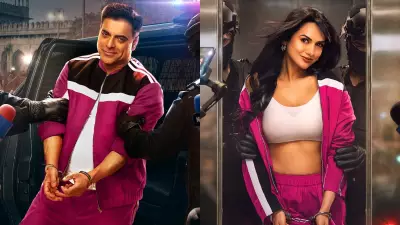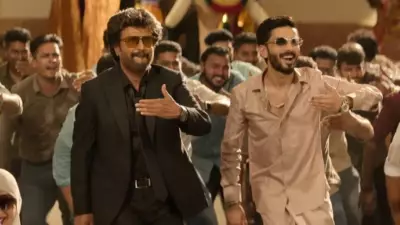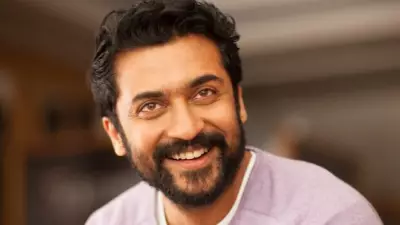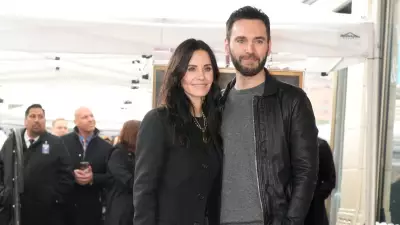
Bollywood actor turned entrepreneur Vivek Oberoi has taken a significant legal step by approaching the Delhi High Court to seek comprehensive protection of his personality rights. This move aims to curb the rampant misuse of his identity across various digital platforms, where unauthorized exploitation has become increasingly prevalent.
Legal Action Against Digital Exploitation
The suit has been formally filed through advocates Sana Raees Khan and Pranay Chitale, marking a proactive stance against digital infringement. According to detailed reports from LiveLaw, Oberoi has urgently requested the court to restrain multiple defendants, including unidentified parties listed under the John Doe category, from unlawfully exploiting or misappropriating elements uniquely associated with his persona.
Scope of Protection Sought
Oberoi's plea specifically targets the unauthorized use of his name, voice, image, and other identifiable aspects without his explicit consent or approval. The actor has also sought judicial directions for the immediate takedown of postcards, posters, videos, and social media content that allegedly violate his rights. This legal action highlights a growing concern among public figures regarding digital impersonation and commercial misuse.

Rising Threats from AI and Deepfakes
The filing reveals that several individuals have been impersonating Oberoi online by creating fake profiles using his name and likeness, selling unlicensed merchandise, and generating and circulating AI-driven content. The plea further alleges that artificial intelligence and deepfake technology have been employed to morph and superimpose his face, creating objectionable visuals that range from offensive to defamatory.
Some of the disputed content is not only inappropriate but also has the potential to unfairly benefit from Oberoi's identity by encroaching upon his market and commercial value. The suit emphasizes, "As only the Plaintiff has control over the commercial utilization of his personality, name, image, likeness and other characteristics that are uniquely identifiable and associated with the Plaintiff, no one can utilize and/or misappropriate and/or imitate any facet of the Plaintiff's personality and/or exploit the same commercially in any manner whatsoever without the consent and/or express authorization of the Plaintiff."
Precedents in Celebrity Rights Protection
This case follows a trend where the Delhi High Court has previously granted protection of personality rights to numerous celebrities, including Abhishek and Aishwarya Rai Bachchan, Kumar Sanu, Sunil Gavaskar, R Madhavan, Karan Johar, Jr NTR, and Nagarjuna. In a recent interview, Abhishek Bachchan shared insights into why he decided to move to court for safeguarding his and his family's personality rights.
Abhishek Bachchan's Advocacy
He explained in an interview with Peeping Moon, "Aishwarya and I moved to court about 3-4 years ago to protect our daughter. The internet can be a tricky place. Previously, people never responded because we were taught there is dignity in silence. But there are some things which are off limits as far as I'm concerned. Being personal with my family is off limits. If I have the ability, I will fight tooth and nail to protect them. There were some rather nasty, unnecessary things done on the internet vi sa vi my daughter. So, we moved to court, under the advice of the platforms. The Honourable court was extremely generous in seeing the validity in what we were requesting, she's a minor. We won that case and it protected her rights."
He further added, "That then led to me thinking that the next person whose digital rights, appearance rights I'd like to protect would be my father's. We won that two years ago and it was a landmark judgment. After which, many celebrities have started doing that. It is to ensure that people can misuse your likeness, your being, or my voice. With AI coming in, the lines are getting blurred today. These are steps necessary in today's day and age and I would urge all public figures to consider it."

Broader Implications for the Entertainment Industry
Oberoi's legal action underscores a critical issue in the digital age, where advancements in technology like AI and deepfakes pose new challenges to personal and commercial rights. As celebrities increasingly turn to the courts for protection, this case could set important precedents for how personality rights are enforced in India, particularly against emerging threats from digital platforms.
The entertainment industry is witnessing a shift towards proactive legal measures, with public figures advocating for stronger safeguards to prevent misuse and ensure control over their identities. This trend reflects a growing awareness of the need for robust legal frameworks in an era where digital content can be easily manipulated and disseminated without consent.