T-Mobile's Super Bowl Strategy: Backstreet Boys Take Center Stage
As Bad Bunny prepares to headline the halftime show at Super Bowl 60, T-Mobile is making a bold move by featuring the Backstreet Boys in its major advertising campaign. The telecommunications giant is banking on '90s nostalgia to capture audience attention during the highly anticipated game between the Seattle Seahawks and New England Patriots at Levi's Stadium in Santa Clara, California.
Nostalgic Campaign with Modern Execution
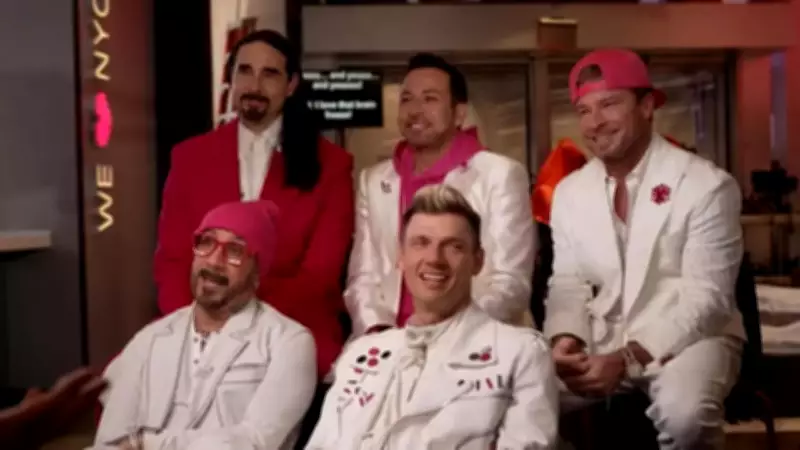
T-Mobile's 13th consecutive Super Bowl campaign features a 60-second commercial scheduled for the second quarter of the game. The spot showcases all five Backstreet Boys members—Nick Carter, Howie Dorough, AJ McLean, Brian Littrell, and Kevin Richardson—in coordinated pink and white outfits, delivering tongue-twisting lines about T-Mobile perks while comedian Druski prepares for what the company calls a "big call" in a separate clip.
Brian Littrell perfectly captures the campaign's spirit with his enthusiastic declaration: We're so back! This line serves as the emotional anchor for T-Mobile's entire Super Bowl push, designed to resonate with millennial viewers who grew up with the boy band's music.

Strategic Teasing and Production Details
The campaign rollout began with carefully orchestrated teasers released throughout the week leading up to the game. One clip shows the Backstreet Boys backstage, running through vocal warmups that cleverly incorporate T-Mobile's marketing language. Nick Carter practices with the line Power pack perk on terrific T-Mobile Tuesday, while AJ McLean tackles Switching swiftly to save smarter—a playful approach that intentionally recalls the group's television-friendly charm from their peak popularity years.
Another teaser features Druski, T-Mobile's "chief switching officer," nervously rehearsing a phone call before finally dialing his "boys." This spot debuted first, with the Backstreet Boys reveal following shortly after to complete the narrative connection.
Behind the Scenes: A Major Production Effort
This is far from a simple commercial shoot. The Super Bowl campaign represents a significant production effort directed by Steve Pink, known for Hot Tub Time Machine, and produced by Panay Films, the entertainment studio led by Wedding Crashers producer Andrew Panay. The entire spot was filmed during one intensive weekend in late January, following what Panay describes as the typical Super Bowl advertising timeline: I'm usually shooting Super Bowl spots...two weeks before [the game]. It's scary, but it's also kind of awesome, because I'm moving with culture.
Panay revealed that the decision to feature Backstreet Boys came after watching their performance at the Sphere in Las Vegas last summer. His immediate reaction was definitive: I knew right away I wanted them. They are the delivery mechanism. He further emphasized their enduring appeal, noting, They're as hot now, if not hotter, than they ever were.
T-Mobile's Consistent Celebrity Strategy
Pairing Backstreet Boys with Druski continues T-Mobile's established pattern of leveraging recognizable faces and light comedy in its advertising. Over recent years, the brand has featured celebrities like Zach Braff and Donald Faison in an Oscars spot, along with Gwen Stefani and Blake Shelton in a video-call mishap scenario. The consistent strategy involves attracting casual viewers with familiar personalities before seamlessly integrating product messaging through humor and music.
This year's approach unfolds within a Super Bowl already packed with star power. Beyond Bad Bunny's halftime performance, artists including Benson Boone, Sabrina Carpenter, Lady Gaga, and KATSEYE are connected to various brand advertisements. Pre-game musical performances feature Charlie Puth, Brandi Carlile, and Coco Jones handling "The Star-Spangled Banner," "America the Beautiful," and "Lift Every Voice and Sing" respectively.

Why This Nostalgia Play Makes Strategic Sense
T-Mobile's decision to center its campaign around Backstreet Boys represents a calculated bet on generational nostalgia. The company recognizes that many NFL fans spent their formative years with the group's music as the soundtrack to their first highlight tapes and high school playlists. By tapping into these shared memories, T-Mobile aims to create an emotional connection that transcends typical commercial interruptions.
The timing aligns perfectly with the Backstreet Boys' broader career momentum. The group has been announced as headliners for BottleRock Napa Valley 2026, maintaining their festival presence while the Super Bowl exposure places them before an enormous casual audience. For viewers unable to attend their Sphere Las Vegas shows this month, the T-Mobile commercial offers a nationwide dose of millennial nostalgia.
Social Media Integration and Fan Engagement
T-Mobile has planned extensive supplementary content for its Instagram, TikTok, and YouTube channels both before and after the game. This multi-platform approach extends the campaign's reach beyond the television broadcast, engaging younger audiences who might otherwise skip traditional commercials.
Fan speculation about the campaign began even before official teasers dropped. Pop-culture account Deux Moi posted video of the Backstreet Boys leaving T-Mobile's Times Square flagship store alongside a caption that read: SPOTTED: A serious production build-out inside the T-Mobile flagship in Times Square AND a late-'90s track running on a loop! The post then posed the question many fans were already asking: This raises the obvious question: are Backstreet Boys revisiting something from the past, or quietly working on what comes next?
Commenters quickly connected these clues to Super Bowl week, with one fan accurately predicting: I smell a t-mobile Super Bowl commercial in the making.
The Big Game Payoff
If the finished commercial delivers on the promise of its teasers, T-Mobile's Backstreet Boys campaign could achieve more than just nostalgic appeal between football drives. It has the potential to become one of those rare advertisements that keeps viewers engaged during commercial breaks rather than reaching for their phones while teams reset for the next series.
By combining proven nostalgia with contemporary production values and strategic celebrity pairings, T-Mobile is attempting to create what Panay describes as current NFL moment on the field, heavy nostalgia off it. The company's substantial investment in this approach demonstrates its confidence that Backstreet Boys' enduring popularity can cut through the Super Bowl's crowded advertising landscape and resonate with a key demographic of football viewers.