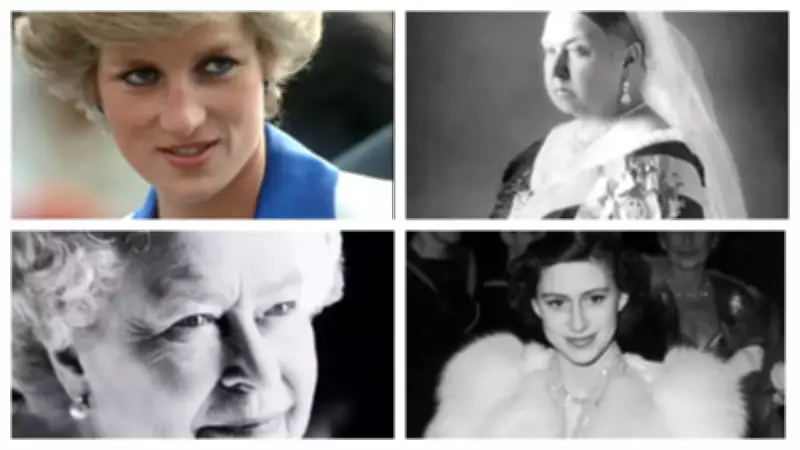
The royal families have always captivated the world, and historically, it has been the women who truly stole the spotlight. While kings and princes managed state formalities, royal women silently captured public imagination, broke molds, and reshaped the rules of the crown. From political heavyweights who held empires together to modern pop-culture icons who outshone the institution itself, their lives were a chaotic mix of intense public duty and deeply complicated private struggles. Here is a closer look at five of the most famous and genuinely fascinating women to ever grace the UK monarchy.
Queen Elizabeth II
When Elizabeth took the throne as a quiet 25-year-old mother, few could have predicted how much the world would change around her. She did not just rule; she became the ultimate anchor for a shifting nation, steering the monarchy through everything from the collapse of the British Empire to the rise of the digital age. For seven decades, she kept her thoughts entirely private, maintaining an air of mystery that is practically impossible in modern times.
Behind the heavy velvet curtains and formal state dinners, Elizabeth had a surprisingly practical, no-nonsense streak. During World War II, she fought her family for permission to join the war effort, training as a mechanic and truck driver. That grit stayed with her for life. Whether calmly navigating assassination attempts or handling messy palace scandals, she kept a steady hand on the wheel, ultimately becoming the longest-reigning and most universally recognized monarch in British history.

Diana, Princess of Wales
Lady Diana completely transformed the royal narrative the moment she walked down the aisle in 1981. Before her arrival, royals were expected to be distant, untouchable, and perfectly stoic. Diana was the exact opposite. She was warm, openly emotional, and wore her heart on her sleeve. Her natural ability to connect with everyday people on a deeply human level instantly earned her the title of the "People's Princess," making her the most photographed woman in the entire world.
Her real power came from her willingness to use her massive global platform to shine a light on issues the palace preferred to ignore. She shocked the world by shaking hands with an AIDS patient without gloves at a time when the illness was deeply misunderstood, and she walked through active minefields to campaign against landmines. Even when her marriage crumbled in a very public, painful fashion, she refused to go quietly, cementing her legacy as a modern cultural force whose influence is still loudly felt today.
Queen Victoria
Do not let the stern, black-clad portraits fool you—Queen Victoria was an absolute firecracker who completely reshaped the world. Standing at just under five feet tall, she took the throne at just 18 years old and ended up ruling over a massive global empire that covered a quarter of the globe. She was fiercely independent, stubborn, and completely obsessed with her husband, Prince Albert. When he died tragically young, she plunged herself into deep mourning, wearing nothing but black for the remaining forty years of her life.
Despite her immense grief, Victoria remained a master political chess player behind the scenes. She orchestrated the marriages of her nine children into royal families across Germany, Russia, Spain, and beyond, earning her the famous nickname "the Grandmother of Europe." Her long reign was so massive and transformative that an entire global era of industrial growth, literature, and culture is still named entirely after her.
Queen Elizabeth, the Queen Mother
Elizabeth Bowes-Lyon never expected to be queen, but when her brother-in-law suddenly abdicated the throne for love in 1936, she and her stuttering husband were thrust directly into the hot seat. She quickly became the driving force behind King George VI, helping him find his footing just as World War II broke out. When London was being heavily bombed, she famously refused to leave the city or send her daughters away, earning the deep respect of the working-class public.

Her defiant attitude during the war was so incredibly effective at keeping British morale high that Adolf Hitler reportedly called her "the most dangerous woman in Europe." She lived to the age of 101, managing to hide an incredibly tough, shrewd political mind behind a veil of feather boas, pastel hats, and a famous love for gin cocktails, remaining one of the most beloved royal figures to ever live.
Princess Margaret
While her older sister Elizabeth was born to carry the heavy weight of duty, Margaret was born to bring the glamour, drama, and rebellion. Blessed with movie-star looks and a sharp, wicked wit, she found the stuffy, rigid rules of 1950s palace life suffocating. She preferred to spend her nights turning her Kensington Palace apartment into a smoky cultural salon, partying until dawn with rock stars, actors, and artists.
Her personal life was a constant, heartbreaking battle against the unyielding British establishment. When the government and the Church blocked her from marrying the true love of her life—a divorced wartime pilot named Peter Townsend—it changed her trajectory forever. She went on to live a highly unconventional, thoroughly modern life that included a turbulent marriage to a society photographer and a high-profile divorce, paving the way for future generations of royals to live their lives outside of ancient, unrealistic rules.