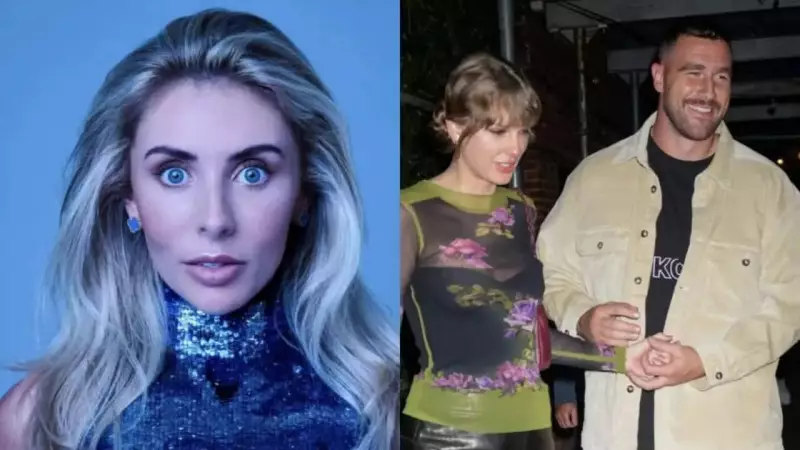
In a statement designed to grab headlines, controversial personality Bonnie Blue has made bold claims about Kansas City Chiefs star Travis Kelce, directly referencing his high-profile relationship with global pop icon Taylor Swift. The comments, made to The Mirror US, have ignited a predictable firestorm on social media, but they reveal a deeper narrative about how public figures use calculated provocation to stay in the spotlight.
Bonnie Blue's Direct Challenge to Taylor Swift
Bonnie Blue, whose real name is Tia Billinger, did not hold back when asked about Travis Kelce. She expressed clear admiration for the NFL tight end, stating she finds him "quite hot" and praised his athletic skills, saying he's "quite good with his hands." However, she quickly escalated her remarks into a direct challenge. "One hundred per cent. We're both blonde. She sings and I have all the talent so I say I would win over Taylor Swift," Blue declared.
This soundbite is a classic piece of tabloid fodder, perfectly crafted to generate clicks and reactions from the massive fan bases of both Swift and the Chiefs. Analysts see it less as a genuine romantic declaration and more as a strategic move to maintain public relevance.

A History of Courting Shock Value
To understand the context, one must look at Bonnie Blue's established public persona. She first gained attention through Channel 4's documentary 1,000 Men and Me: The Bonnie Blue Story and has consistently pursued boundary-pushing stunts. Her brand is built on brashness and spectacle, making the comments about Kelce a consistent extension of her strategy to stay in the headlines through controversy.
Her history positions her as someone who actively trades in shock value. The claim about "winning" Kelce's attention aligns with this pattern, serving to reinforce her image rather than outline a literal plan. It is a professional gambit in the economy of fame, where provocation often translates to visibility.
The Person Behind the Provocateur
Beyond the inflammatory quotes, Blue shared personal details that add a layer of humanity to her public image. She spoke candidly about her personal life, from meeting a partner at an event to the nature of her past divorce. She recalled a recent encounter, wondering if a good-looking man was "here for me or is he in the wrong queue?"
She was frank about her current priorities, noting that serious dating is on the back burner. "Dating for me will come later on in life. If it happens and they are able to travel with me and join me in this journey, then I wouldn't dismiss it," she explained. Regarding her marriage, she clarified it ended without "bad blood, cheating, aggression or anything."
These glimpses remind the audience that behind the headline-grabbing statements lies a complex individual with a real private life. For Taylor Swift and Travis Kelce, who are officially engaged after a dreamy garden proposal, such comments are merely another blip in the constant media noise surrounding them. For Bonnie Blue, they are currency that strengthens her brand of spectacle.
For the public, the episode serves as a crucial reminder to distinguish between manufactured controversy and genuine substance. In the digital age, the line between a personal revelation and a professional tactic is often deliberately blurred, making it essential to consume such news with a critical eye.