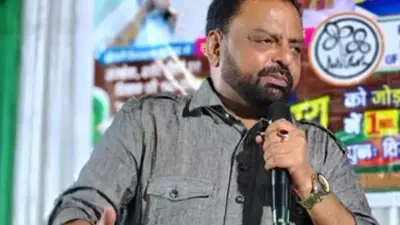
At comedian Pranit More’s recent show, during a crowdwork segment, an audience member recounted a ‘date’ with an older woman. He said, “We ate chicken biryani, it must have cost around 360-370 rupees, then she said drop me home, I said it cost ₹370… I will recover it.” The audience laughed. The comedian laughed. The crowdwork continued because, apparently, it was funny.
The Apology
“I should have challenged the remark instead of laughing and moving on. That was a lapse in judgement on my part,” More said later, issuing an apology. Online, people called out his behaviour, with women pointing out that even basic female hygiene products are priced above ₹370.
Normalizing Entitlement
But do we really need social media backlash to realise that consent is not transactional? When did we start normalising this attitude – ‘I paid for a meal and now you owe me something in return’? The joke is not about ₹370 ki biryani, it’s about entitlement. About the assumption that spending money on a woman somehow earns you access to her body. And because we’ve heard versions of this joke for years, many people are no longer questioning it.

The Role of Comedy Shows
Sometimes, at a comedy show, we don’t realise when something is not funny but simply offensive. The atmosphere is light, your guard is down, and someone says something outrageous. Before you have even processed it, you are laughing because everyone else is. Maybe that’s why social media reactions feel so different. Online, people can pause, replay, question and isolate that one moment from the rest of the show. Suddenly, you are not hearing a joke anymore; you are hearing the problem. The laughter disappears and what’s left is the assumption underneath it. And maybe that’s why this particular incident struck a nerve.
Comedians' Responsibility
One never knows how an audience will behave during crowdwork. Nothing is rehearsed, so standup comics often must react in the moment. But that’s also why many comedians end up calling people out. As the person running the show, you don’t get to control what someone says, but you do get to decide what happens next. You get to decide whether a comment deserves a laugh, a follow-up question, or a challenge. You get to decide whether you amplify that behaviour or call it out. If you’re a comedian and something like this comes up during crowdwork, don’t laugh and move on. Do the simplest thing possible – ask them to explain the joke. They’ll get their answer.