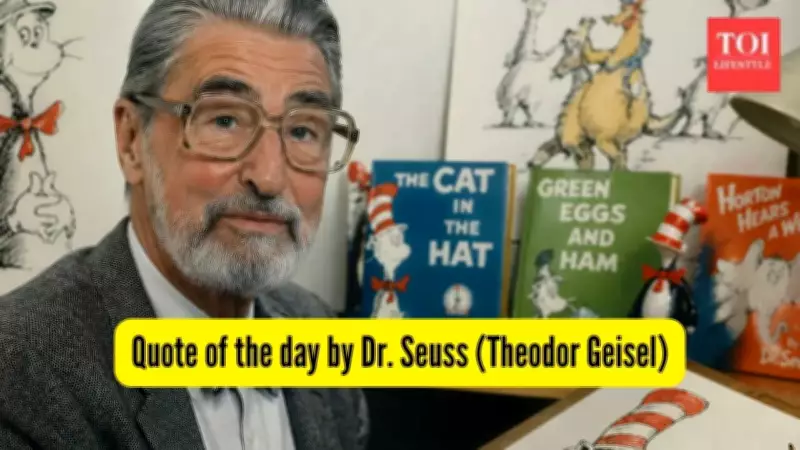
Dr. Seuss, whose real name was Theodor Seuss Geisel, remains one of the most beloved children's authors of the 20th century. Born on March 2, 1904, in Springfield, Massachusetts, he captivated young readers with silly rhymes, bizarre animals, and vibrant illustrations. Beyond writing, he was an illustrator, cartoonist, filmmaker, advertiser, and cultural icon who transformed children's literature.
Early Life and Influences
Geisel's German-American heritage shaped his upbringing. His father managed parks and later the Springfield Zoo, inspiring the fantastical creatures in his books. He studied at Oxford University in England, where he met Helen Palmer, his first wife, who encouraged him to pursue art professionally. Although he did not complete his degree, Oxford proved pivotal for his career.
Career Beginnings
Before achieving fame as a children's author, Geisel worked in advertising and drew cartoons for magazines like Life and Vanity Fair in the 1920s and 1930s. His successful ad campaigns, such as those for Flit bug spray, honed his ability to combine words and images memorably. During World War II, he created political cartoons and propaganda films to comment on global events and support the war effort.

Literary Breakthrough
His first major children's book, And to Think That I Saw It on Mulberry Street (1937), introduced his signature style. Over the following decades, he produced classics including The Cat in the Hat (1957), Green Eggs and Ham (1960), Horton Hears a Who! (1954), How the Grinch Stole Christmas! (1957), and Oh, the Places You'll Go! (1990).
Unique Writing Style
Dr. Seuss's writing was instantly recognizable. His use of rhyme created a rhythmic, musical quality that made reading aloud fun. He employed made-up words like "Thneeds" and "Sneetches," repetition, and alliteration to make language playful. Books like The Cat in the Hat used simple vocabulary to engage reluctant readers, contrasting with dull school primers.
Illustrations and Themes
His illustrations were equally distinctive, featuring curving buildings, tiny hats, oversized mustaches, and oddly shaped animals. These visuals complemented his energetic text, creating whimsical worlds. Beyond entertainment, his books carried deeper messages: Horton Hears a Who! teaches respect for all, The Sneetches addresses prejudice, The Lorax warns about environmental destruction, and Yertle the Turtle critiques dictatorship.
Cultural Impact and Controversies
Dr. Seuss revolutionized children's books, making them fun and imaginative rather than moralistic. His works have been adapted into movies, TV shows, stage plays, and merchandise. His birthday, March 2, is celebrated as Read Across America Day, promoting literacy. However, some of his early cartoons and lesser-known books contain racist stereotypes, leading to recent removals from publication. These controversies highlight both his influence and the biases of his era.
Personal Life and Death
Theodor Geisel died on September 24, 1991, in La Jolla, California. His legacy endures through his timeless stories and iconic quotes, such as: "I have heard there are troubles of more than one kind. Some come from ahead and some come from behind. But I've bought a big bat. I'm all ready you see. Now my troubles are going to have troubles with me!" This quote reflects his belief in facing challenges with courage and resilience.