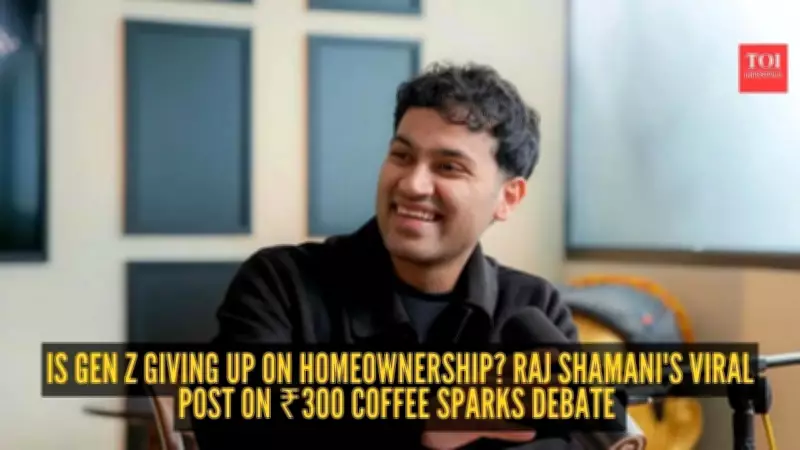
A Rs 300 cup of coffee should not be this controversial. Yet, it has become a symbol of a much bigger question: Why does Gen Z spend so freely on little luxuries while seeming less interested in traditional milestones like owning a home?
The Debate Ignites
The debate picked up after entrepreneur and podcaster Raj Shamani shared a thought that struck a chord with thousands online. 'The reason Gen Z spends comfortably on small luxuries like high-end coffee is that long-term milestones like buying a home feel entirely out of reach in this economy. So they prioritize immediate quality of life over distant financial milestones.'
The post quickly spread across social media, crossing three lakh page views and attracting hundreds of comments. But instead of ending the discussion, it seems to have started a much bigger one. Is Gen Z really choosing coffee over houses? Or are homes simply getting too expensive for many young people to even think about?

Voices in Favor
Quite a few people felt Raj Shamani was onto something. Buying a home used to be one of those goals people assumed they would achieve sooner or later. That assumption does not feel as strong anymore. Prices have shot up, everyday expenses keep rising, and saving for a house can feel overwhelming. Many users said that when a goal feels years away – or even unrealistic – it makes sense to spend on things that make life enjoyable right now, whether that is a favourite coffee, a short trip with friends, a gym membership, or other small pleasures that brighten an ordinary week.
Counterarguments
But not everyone agreed. Some commenters pointed out that financial realities vary widely within Gen Z. Many argued that a section of young adults today comes from families that have already built homes or accumulated assets over the years. That financial cushion, they said, gives them the freedom to spend more casually on lifestyle choices. Others felt the discussion itself was too simplistic. A cup of coffee, they argued, is rarely just coffee. For some, it is a small reward after a difficult week. For others, it is a place to work, socialize or simply take a break. Judging an entire generation's financial habits based on a few visible spending choices, they said, misses the larger picture.
Social Image and Freedom
Then there was another angle: social image. Some users believed that spending on premium products is often tied to the desire to project a certain lifestyle. Others pushed back, saying people should be free to spend their money however they like, especially on purchases that bring them joy.
The Bigger Picture
Perhaps that is why the conversation resonated so widely. It was never really about coffee. It was about how young people see the future, what they believe is achievable, and whether success today still looks the way it did for their parents. And judging by the flood of opinions online, that debate is far from over.
Disclaimer: This article is based on a post shared on social media. The views expressed are those of the individuals concerned and do not necessarily reflect the views of The Times of India.