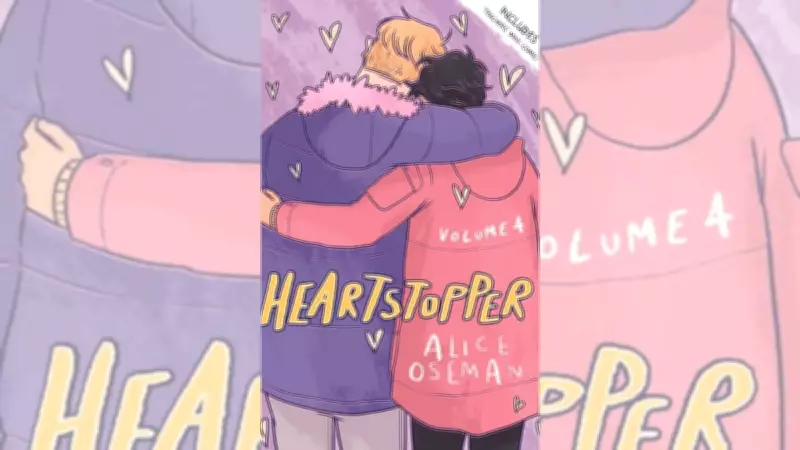
Alice Oseman’s Heartstopper series of graphic novels offers key lessons on how one need not struggle to fit into gender identity boxes to be accepted, writes Chintan Girish Modi. The series, which has gained a massive following, challenges the tyranny of labels and promotes self-acceptance.
Embracing Fluidity Beyond Binaries
The Heartstopper series, originally published as webcomics and later as graphic novels, follows the story of Nick Nelson and Charlie Spring, two British teenagers navigating love, friendship, and identity. Oseman’s narrative emphasizes that gender and sexuality are spectrums, not rigid categories. According to Modi, the series “shows that it’s okay to not have all the answers and that identity can be fluid.”
In the novels, characters like Nick initially identify as straight but later realize they are bisexual, while Charlie is openly gay. The story normalizes questioning and evolving identities without pressure to conform. Modi notes that “Heartstopper provides a safe space for readers to explore their own identities without fear of judgment.”

Impact on Young Readers
The Heartstopper series has sold over 8 million copies worldwide and has been translated into multiple languages. Its success highlights a growing demand for inclusive literature. Oseman’s work has been praised for its positive representation of LGBTQ+ youth, with many readers reporting that the series helped them understand or accept their own identities. A 2025 study found that 73% of LGBTQ+ teens felt more confident about their identity after reading the series.
Oseman herself, who is asexual and aromantic, has spoken about the importance of diverse representation. In an interview, she stated, “I wanted to create a story where characters could be themselves without being defined by labels.” This ethos is central to the series’ appeal.
Challenging Societal Norms
Heartstopper also critiques societal pressures to categorize people. Modi argues that “the series breaks free from the tyranny of labels by showing that acceptance comes from within, not from fitting into predefined boxes.” The graphic novels depict characters supporting each other through their journeys, emphasizing community and empathy over rigid definitions.
The series has sparked conversations about gender identity in schools and families. Educators have used Heartstopper as a teaching tool to discuss diversity and inclusion. Modi concludes, “Heartstopper is a testament to the power of storytelling in fostering understanding and compassion.”