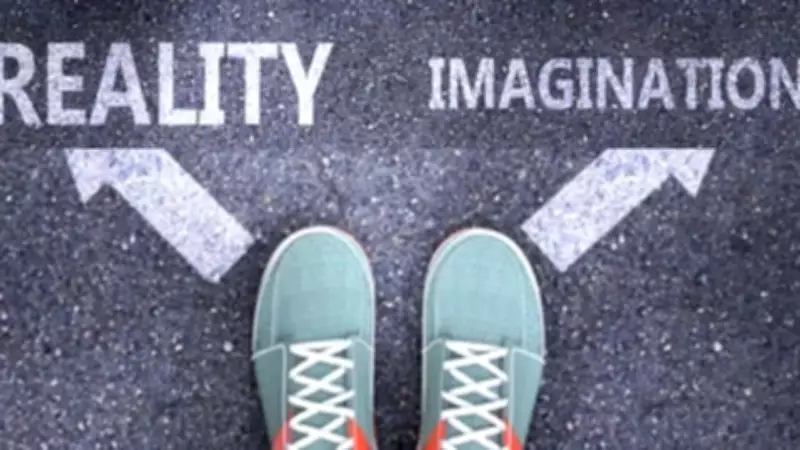
Humour often contains an element of truth, and this day's quote is no exception. The statement, "Stories of imagination tend to upset those without one," appears funny on the surface, but its essence lies in how it criticizes certain people's views on imagination and related notions.
The Core Idea
Indeed, the main idea underlying this quotation is that humans are uncomfortable with things that escape their understanding. Imagination, by its very nature, is the ability to go beyond the limitations of rules, traditions, and conventions. However, not everyone feels at ease with this concept, and that is when the joke takes on its full meaning.
Consider how often a novel thought is brushed aside as "too much," "unrealistic," or "impractical." Whether it involves a business venture, a work of fiction, or an original perspective on life, imagination is constantly under fire. The humorous suggestion of the quote implies that it isn't the concept itself that makes people uneasy, but rather their lack of imagination.

Everyday Resonance
This experience likely resonates with many in their daily lives. Creative individuals often spend more time defending their ideas than others. For instance, someone with a vivid imagination might tell a story with theatrical flourish, only to receive blank looks. Instead of admiration, their creativity may be misinterpreted.
Socially, the quotation touches on another aspect: in a pragmatic society, imagination is often perceived as a luxury rather than a strength. Differently-minded people can easily be labeled as "too dreamy" or "not serious enough." However, imagination is the beginning of everything—every invention, story, or achievement first appeared as a dream.
The Humor of Reversal
The humor of the quoted lines is based on a reversal of the situation. Instead of asking someone how the story goes, the speaker indirectly criticizes those who cannot perceive imagination. It is not the story that causes the problem, but the lack of appreciation for it.
Modern-Day Significance
In the modern age, this holds even more significance. On social media, one finds an abundance of creativity—stories, reels, concepts, and ideas. While some revel in these aspects, others quickly criticize such creativity without appreciating its merit, often due to an inability to see beyond normal thinking processes.
It is equally important to take a step back and examine oneself. Are we willing to allow room for imagination, or do we tend to fight it? Do we nurture our creativity, or are we quick to judge? The quote may amuse us, but it also forces us to be open-minded about differing views.
Storytelling and Imagination
Another fascinating aspect of this quotation is its relationship with storytelling. Both real and fictional stories have great power; they create cultures, drive change, and unite people. However, a person who does not relate to imagination may find stories overblown and superfluous, setting the stage for this type of comedy.
In other words, the quotation praises imagination and those who allow themselves to use it. Imagination is a quality not necessarily appreciated by many, but that does not mean it should be neglected.
Conclusion
In conclusion, the phrase "Imagination stories irritate people who don’t have any" is not only humorous but also an astute comment on human nature and psychology. It will surely make one chuckle but also provoke thought. Perhaps this is the secret to a great quote: it should amuse while uncovering some profound truth.
And the next time someone ridicules a fanciful concept or imaginative story, keep this quote in mind—for it may very well be a clash between imagination and a lack thereof.