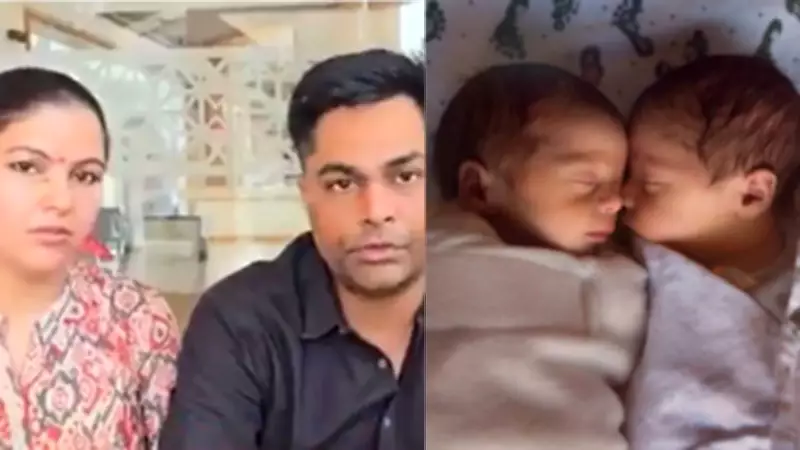
In 1978, Kolkata scientist Dr. Subhash Mukhopadhyay introduced IVF in India, marking a breakthrough for couples struggling to conceive. Over the years, it has become a standard procedure for realizing family dreams. However, like any medical process, IVF can go terribly wrong. A harrowing incident in Gurugram has come to light, where a couple approached the judiciary after genetic testing revealed that the twins born via IVF bear no biological relationship to either parent.
The claims have gone viral, sending shockwaves through the medical community and intensifying scrutiny on assisted reproductive technology regulations in India. The nightmare unfolded months after the twins' successful delivery. During a routine medical evaluation for a minor health issue, doctors noticed unusual physiological traits and recommended comprehensive genetic profiling. The DNA reports delivered a catastrophic revelation: a complete genetic mismatch, confirming that neither the mother nor the father shared any biological link with the infants. The family alleges that the facility either implanted embryos belonging to another couple or misplaced their babies after birth.
Seeking clarity, the distressed parents contacted the IVF center's management and embryology team multiple times. Their appeals for internal logs, cross-verification data, and medical files were met with silence. "The younger baby looked North-Eastern," said father Rahul Rathore. "Where are our children? We went there to have children of our own," added the mother.

Attempts to file an FIR were delayed for three months, prompting the couple to file a formal petition in court. Rathore further alleged that even after a June 5 court order for police to seize key IVF documents from the center, nothing has been done. Legal experts note that this incident highlights a severe breach of the Assisted Reproductive Technology (Regulation) Act. In a compliant embryology laboratory, electronic barcoding and mandatory dual-signing by two independent embryologists are required before any embryo transfer. The allegation of a total mismatch suggests these critical verification steps were either bypassed or systematically ignored.
This is not the first such case. Previously, the National Consumer Disputes Redressal Commission (NCDRC) fined a prominent Delhi-based clinic Rs 1.5 crore for negligence after a genetic mix-up resulted in a child with a different blood group and DNA profile than the parents. As of now, the case of Rahul Rathore and his wife remains under investigation.