The Majlis-e-Sham-e-Ghariban is a tradition that cannot be fully understood without grasping the tragedy of Karbala. The term 'majlis' refers to a gathering, 'sham' means evening, and 'Ghariban' denotes the distressed and plundered. Thus, it is the evening of the oppressed.
Annually observed on the 10th of Muharram, the day of Imam Hussain's martyrdom, this gathering takes place in imambaras and homes worldwide. This year marks a century since its inception.
At Imambara Ghufran-e-Maab in Lucknow, the Majlis-e-Sham-e-Ghariba continues the essence of Karbala's tragedy, having been first held there in 1926.

In 680 AD, Imam Hussain, the younger grandson of Prophet Mohammad, along with 72 companions, was massacred by the army of the tyrant King Yazid in the Battle of Karbala in Iraq. Yazid demanded Hussain's allegiance to his corrupt version of Islam, but Hussain refused, choosing death over submission.
After three days of hunger and thirst, with food and water cut off, Hussain and his followers fought valiantly. The evening after the bloodbath left only women, children, and Imam Zainul Abedeen. Hussain's entire male line perished, including his six-month-old son, Ali Asghar.
Hungry, thirsty, and destitute, the women and children spent that night under the open sky amid burned camps and scattered bodies. In 1926, this devastating scene was named Sham-e-Ghariba in Lucknow.
During the Majlis-e-Sham-e-Ghariban, the faithful relive the pain of Hussain's family. Attendees come barefoot and sit in darkness on mud floors.
The initiation of this gathering in 1926 is equally remarkable. After the evening prayer on 10th Muharram 1926, a small group sat in Imambara-e-Ghufran-e-Maab in Chowk. Exhausted from a day of fasting and barefoot visits to local Karbalas, someone suggested reciting the masaeb of that evening in Karbala.
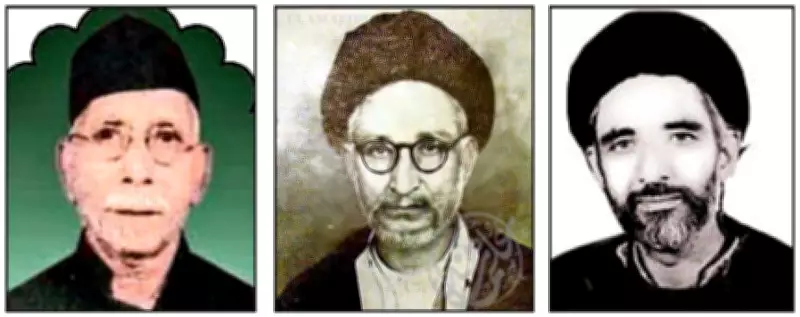
Among the participants was an Arab cleric named Mohammad Saleh. Senior cleric Syed Sibte Mohammad Hadi, known as Kallan Sahab, addressed the impromptu gathering. The bayan evoked such lamentation that Syed Dildar Ali, also known as Munne Agha Raaz Ijtehadi, recalled in his memoirs that after the majlis, he suggested naming it Majlis-e-Sham-e-Ghariban from the next year. He likely did not realize this coinage would become a worldwide tradition.
From 1927, a formal majlis with this name was organized in the imambara. Maulana Kalbe Hussain, known as Kabban Sahab, addressed it until 1963, followed by his elder son Maulana Kalbe Abdi, and now Maulana Kalbe Jawad. During the majlis, speakers raise their volume to be audible to over a lakh people lamenting in unison.
With efforts from Maharaj Kumar Mohammad Hasan Khan of Mahmudabad and poet Fazl Naqvi in the 1930s, All India Radio began airing a recording of this majlis at 10:30 PM on the same evening. People across the subcontinent remained glued to their radios. Gradually, majlis by this name spread to other cities and has become a worldwide essential for Ashura.
The most poignant scene is the small procession bearing candle lights, pots of water, and trays of rotis made from coarse grains, circling the imambara premises. This recalls when Zauja-e-Hurr brought food and water for the women and children of Hussain. Hurr was a commander in Yazid's army who joined Hussain on the fateful day and gave his life for justice, freedom, honor, and free will.
This majlis was among the first public gatherings, apart from political meetings of Mahatma Gandhi and Jawaharlal Nehru, to use loudspeakers.
After the 1947 partition, the Awadh diaspora carried little Lucknow in their hearts to Pakistan. The Majlis-e-Sham-e-Ghariban was replicated in Nishtar Park, Karachi. Allama Rashid Turabi, a muhajir himself, addressed it in Lucknow style. Later, Allama Talib Jauri also addressed this majlis. Since 1951, Radio Pakistan has broadcast it.
Dismantled shamiana structures scattered in pitch darkness, with people sitting barefoot on uncovered mud floors, strongly portray the extreme distress and deprivation of that evening in Karbala on 10th Muharram 680 AD.